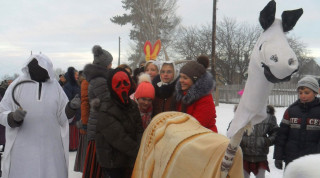
Kas tur rībina gar istabiņu? Ķekatiņas dancina savus kumeliņus.
Arhlatviešu vidusskola saulgriežu vakarā bija pilna ar ķekatniekiem, tautu meitām un tautu dēliem, koklētājām, stabulētājām, bluķa vilcējiem un bluķa stūmējām. Baškīri, krievi, tatāri, čuvaši un visiem pa vidu latvieši trokšņoja, dziedāja, baidīja mošķus un ķēmus Arhlatviešu ciemā. Tikai šoreiz trokšņotāju starpā bija ne tikai Baškīrijā mītošie latvieši, saulgrieži svinēt bija ieradušies arī Sibīrijā (Omska, Omskas apgabala Augšbebru ciems) dzīvojošie latvieši.
Vēstures avotos teikts, ka vislielākais ieceļotāju skaits Krievijā no Latvijas bija laikā no 1894. līdz 1914. gadam. Šajā laika posmā Sibīrijā izveidojās ap 200 latviešu koloniju. Visā Krievijā tajā laikā bija vairāk nekā 200 000 latviešu. Bezzemnieki, kalpi, amatnieki, rentnieki pameta savu dzimteni, devās uz Sibīriju, kur bija iespējams iegūt zemi. Pēc 1928. gada ziņām Krievijā bija 372 lielākas latviešu kolonijas, tajās bijušas 11 650 saimniecības un nodibinātas 106 latviešu skolas.
Augšbebru ciems ir dibināts 1897. gadā, kad tajā ir reģistrēti pirmie ieceļotāji no Latvijas. Lielākoties Augšbebros dzīvojušie ieceļotāji no Nīcas un Bārtas. Aizbraucēji no Latvijas ar visu iedzīvi zirgu pajūgā uz Sibīriju braukuši apmēram trīs mēnešus. Dažas ģimenes no Omskas uz Augšbebriem braukušas laivās pa Irtišu.
1937./ 38. gadā Lielā genocīda laikā arī Augšbebros tiek arestēti cilvēki. Visiem ciemata iedzīvotājiem bija jāpamet savas viensētas un jāpārceļas uz dzīvi ciemā. Mājas nojauca un pārzāģēja uz pusēm, jo jaunā valdība tik lepnas mājas ar 12 durvīm neatļāva celt, tāpēc pusi mājas pārdeva, otru pusi pārveda uz ciemu.
1912. gadā Augšbebros nodibina skolu. Skolā bērni mācījās latviešu valodā. Mācības latviešu valodā notika līdz 1937. gadam, vēlāk skolā mācības notiek krievu valodā. 2001. gadā skolai atjauno nacionālās skolas statusu un latviešu valoda ir viens no mācību priekšmetiem. Diemžēl jau divus gadu skolotājs no Latvijas uz Augšbebriem nebrauc, latviešu valodas un kultūras saglabāšana ir pašu augšbebriešu rokās. Latviešu valodas aģentūra sūta skolotāju uz Baškīriju un Omsku.
Gan Augšbebriem, gan Omskas Latviešu biedrībai „Zvaigznīte” ir sadraudzība ar Cēsu pilsētu.
Šogad bluķa vakars pulcināja kopā daudzus jo daudzus ciema iedzīvotājus. Lielos un mazus, vecus un jaunus. Katrs centās kaut gabaliņu pavilkt bluķi, lai noveltu no sevis gada laikā sakrāto smagumu, kas spiedis plecus, katrs centās pieskarties nāvei, lai nodrošinātu sevi ar labu veselību un garu dzīvi. Skolas direktore Nadeža Freimane deva ugunij ziedu – maizi, sāli, ūdeni, naudu un dzīparu. Tas viss tāpēc, lai Arhlatviešu ciema iedzīvotāji spētu sevi nodrošināt ar nepieciešamo dzīvei, tajā pat laikā neaizmirstu par domu un dvēseles skaidrību un tīrību. Gan lieliem, gan maziem aizraujošas likās Omskas un Augšbebru latviešu vadītās spēles „Kaza un vilks”, „Vilks un aitas”, „Danco, lāci”, „Nāves rotaļa” un, protams, neiztika bez ierastajiem dančiem, ar kuriem latviete Raja no Omskas prata aizraut ikvienu.
Šorīt ārā puteņo. Ceļš aizpūsts, redzēt nevar it neko, bet vakar, šķiet, pašas debesis mūs lutināja, jo spīdēja saule, bija silts un patīkams laiks. Liekas, arī daba priecājās kopā ar mums, ļaujot izbaudīt noslēpumaini mistisko saulgriežu nakti ar savējiem – latviešiem.