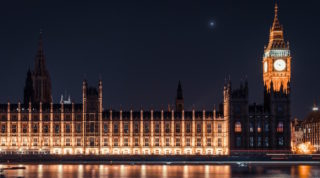
The first thing that has to be said about the referendum held in Great Britain this past Thursday on whether or not to withdraw from the European Union is that as soon as it became clear that the “leave” side had won, the value of the British pound plummeted to its lowest point in 30 years. That is what the business world thought about the decision.
Readers, I am sure, will know that the “leave” side won by a margin of about four points, 52 to 48 on a 72% turnout. Turnout in the last presidential election in the United States was 57% percent, which is dismal for a democracy, but it does show the level of interest that there was in Britain about the issue at hand.
That said, I am equally sure that a great many, if not most of the Britons who went to the polls last week did so without much information at all. The campaign for and against membership in the EU was a series of exaggerated claims, outright lies and lots and lots of yelling and screaming. Oh, if we withdraw, the British economy will collapse right away! Oh, it we don’t withdraw, all of Turkey will move to the UK in the near future! We send endless amounts of money to faceless bureaucrats in Brussels who do God only knows what with it, and we get hardly anything back in return! Wrong, because the British economy is one of the world’s largest. Wrong because Turkey is not in the EU, and thus its citizens do not have access to the EU’s free-movement-of-people principle. Wrong because the truth is that Britain gets around 10 times more money from the EU than it pays in (for Latvia, it is a ratio of around 4:1). There were people who tried to analyze the situation rationally. A group of lawyers put out an open letter saying that they had studied all of the pros and cons, and on balance they had concluded that it would be better to stay in. No one much listened.
The lawyers, of course, were not the only ones. Withdrawal from the EU was formally and officially opposed by the International Monetary Fund, the World Bank, the OECD, the G-7, the G-20, presidents and prime ministers from all over the world, groups of scientists, groups of cultural workers, groups of economists. Never mind. Nativism prevailed. Xenophobia prevailed. Racism prevailed. Shortly before the referendum the truly odious Nigel Farage of the truly odious United Kingdom Independence Party (UKIP) put out a poster reading “Breaking point! The EU has failed us all. We must break free of the EU and take back control of our borders.” Behind him on the poster was a long line of refugees — people of color, women in headscarves, a couple of turbans. The message could not have been more clear — people are invading our country, and they are not like you. They are not like us.
There was a reason why most of the world said in advance that Britain should not leave the European Union. That is the fact that there is no question whatsoever that the decision was a bad one. It was wrong. Above all it was wrong because it casts into utter doubt the world of business in Britain and in countries that do business with it. Certainly the UK can expect foreign investment to plummet. Who is going to invest in a country which may be in a totally different economic, political and trade situation two years down the line? No one. That’s the answer.
According to the EU’s Lisbon Treaty, what happens once a country decides to leave the bloc is that it must formally request the implementation of Article 50 of the treaty or, if it does not, the European Commission can implement it on its behalf. That launches a two-year process of negotiations to figure out just what kind of relationship the departing country will have with the EU once it leaves. If at the end of those two years agreement has not been reached, the negotiations can be extended with the express authorization of all other EU member states (27 not counting Great Britain), and if not, the country is out of the EU, and its economy is governed no longer by Brussels, but instead by the World Trade Organization. In practice, that would mean that each EU member state, and every other country in the world, would be free to negotiate its own trade arrangements with London. Tariffs, customs fees, import restrictions, the lot. Similarly, the UK would no longer have access to the EU’s trade agreements, of which there are a great many. It, too, would have to strike out on its own. No wonder the country’s businesses and banks are aghast.
British Prime Minister David Cameron resigned in the wake of the referendum, but postponed his resignation until October, pending the identification of a new prime minister and a new cabinet. By law, a British prime minister may not resign until such time as his or her successor has been identified. In political terms, the next head of government should probably be former London Mayor (and current MP) Boris Johnson, who was the most visible representative of the “leave” leave campaign. The problem is that Mr. Johnson is something of a loose cannon, sort of like a British version of Donald Trump, only not as vulgar. He, too, is capable of making the most astonishing claims such as, during the referendum campaign, that the EU bans shops from selling bananas in bunches of more than two or three. First of all, “two or three” is not a hard rule and, most importantly, that is simply not true. Asked once why people should vote for his Conservative Party, Johnson replied, “voting Tory will cause your wife to have bigger breasts and increase your chances of owning a BMW M3.” Channeling Bill Clinton and his non-inhalation of marijuana, Johnson declared that “I think I was once given cocaine, but I sneezed, so it didn’t go up my nose. In fact, it may have been icing sugar.” In short, this man is something of a loose cannon, and he is going to be heading up Britain’s withdrawal negotiations with the EU? What is more, EU leaders have already made it clear that they expect the UK to start the negotiations forthwith, and October is not forthwith.
There is also the fact that the EU is not likely to be particularly charitably inclined toward Britain’s wishes in this process. The UK has always been a problem child as a member state, whether it was Margaret Thatcher banging her purse on the table and yelling about Britain’s rebate, Britain’s refusal to accept the EU’s social charter and the euro, Britain’s refusal to join the Schengen border-free zone, or the UK’s withdrawal from the European Exchange Mechanism on what has ever since been known as “Black Wednesday.” It is also true that the to-do list for the EU is already overflowing — Greek profligacy, sanctions against Russia and whether to extend them, the European Central Bank and its negative interest rates, the whole migration issue, the TTIP agreement with America. Who needs another bit of business that will probably prove to be one, big hassle?
On the other hand, there is also reason to believe that the European Commission, at least, will choose to be pragmatic about this. The EU did not want the UK to withdraw, because with all of its fussing, it has been a major partner therein. Options are not unlimited, and there will probably be no way for London to say “well, we didn’t really mean it, let’s just leave things as they are.” One possibility will be an arrangement of the type that Norway and Switzerland have with the EU — being part of the free trade bloc while not being part of the organization as such. The problem with that is that being part of the free trade bloc means accepting all of the EU’s trade regulations, of which there are a great many. A decade or so ago I visited Norway and interviewed people who wanted their country to join the EU and those who did not. Both of them told me the same thing — that most of Norway’s laws are written in Brussels, and Norway has to accept them even though it has had no part in drafting them. Is that what Britain really wants?
There is also the fact that there were parts of the UK in which people voted very much in favor of remaining in the EU. London, where the country’s economic processes are concentrated, was one, but the others were Northern Ireland and Scotland. Readers will know that Scotland held a referendum of its own a few years back on leaving the UK, with a narrow majority preferring to stay in. The leader of the governing Scottish National Party has already said that a second referendum is on the table. As for Northern Ireland, it shares an island with Ireland proper. Would one group of Irishmen have to put up border controls against another group of Irishmen?
As for Latvian interests, from the national perspective the withdrawal is no good thing, because in most cases Britain has been a staunch ally for our country’s interests. From the perspective of the almost countless Latvians who are making a living for themselves in the UK, there will now be a time of uncertainty. Until such time as the aforementioned negotiations are complete, Great Britain will remain a full member of the EU, and so the rules under which Latvians moved there and found jobs will remain in place. What will happen after that, however, is very much up in the air, and it is also true that the ugly nativism that underpinned much of the “leave” campaign may mean increased hostility among “natives” toward the “migrants.” Psychological pressure and even violence are very much not out of the question.
The bottom line here is this: a majority of voters in the United Kingdom of Great Britain and Northern Ireland made a mistake last Thursday. It is going to take a long, long time to clean up the mess that they have created.
Kārlis Streips was born in Chicago, studied journalism at the University of North Illinois and University of Maryland. He moved to Latvia in 1991 where he has worked as a TV and radio journalist. He also works as a translator and lecturer at the University of Latvia.