While still serving as Latvia’s ambassador to the United States, Ojārs Kalniņš in August 1999 was confirmed by the Cabinet of Ministers as the new director of the Rīga-based Latvian Institute. He replaced Vaira Vīķe-Freiberga, the institute’s first director, who had recently been elected president of Latvia.
The Latvian Institute is a government-funded nonprofit organization. Created in September 1998, its charge is “to promote a positive image of Latvia both at home and abroad, primarily by organising educational activities in Latvia, developing contact networks abroad, and co-ordinating pursuits that involve shaping the image of the country,” according to the institute’s Web site.
For Kalniņš, his new job may have been a dream come true. Having lived most of his life in the United States, Kalniņš yearned to “return home” to Latvia. As head of the Latvian Institute, he could do just that, as well as continue a career that has long been focused on shaping Latvia’s image abroad.
Kalniņš, who grew up in Chicago, now lives in Rīga. In an e-mail interview, he discussed the Latvian Institute and its role in shaping Latvia’s image.
Question: The Latvian Institute, according to your own materials, has as its mandate “to promote a positive image of Latvia both at home and abroad.” Could you be more specific about what is meant by a “positive image”?
Kalniņš: Any country’s image consists of several elements—its political and economic system, society, history, culture, geographical setting. Between 1940 and 1991 these aspects of Latvia were presented to the world largely through the distorted ideological prism of the Soviet Union. As a result, the world today either knows very little about Latvia, or is misinformed. In my view, a “positive image” is simply the truth. That means an honest appraisal of our history, culture and society, a complete picture of our natural setting and open access to information about our politics and economy. Our goal is to present interesting information about Latvia that will compel people to want to know more. Ultimately, we want them to come and visit. After that, they can judge for themselves. During the seven years I spent as ambassador in Washington, I found that 95 percent of the Americans who visited Latvia for the first time came back delighted by what they saw. It was totally different than what they expected, and it gave them a new respect for the country and people of Latvia.
Q: It has been nearly a year since your appointment as the new director of the Latvian Institute was confirmed. What have been the major accomplishments of the Institute in that time?
Kalniņš: First and foremost, we have developed a clear marketing and communication strategy, and a short- and long-term plan for implementing it. In simple terms that means developing a reliable body of information about Latvia in several languages and presenting it creatively through various media—the Internet, printed materials, video, films, CD-ROM, exhibitions, etc. To be successful, the LI must have financing and broad-based support in Latvian society. During the first part of this year we focused on informing the Latvian public of who we are and what we are trying to do. The response has been very favorable. We no longer have to seek partners; they are now seeking us. The services of LI have been sought by the president’s and state chancelleries, the ministries, government agencies and scores of nongovernmental organizations. To be successful, the LI must work with all sectors of Latvian society, because they are the ones who are shaping Latvia’s image. Our job is to help them get their message out.
One of our most successful programs concerns foreign press visits to Latvia. Since January 2000, the LI has organized over 15 such visits for journalists from Spain, Israel, Portugal, France, the US, Sweden, Finland, Denmark, Brazil etc. We have worked with French and Finnish TV, National Public Radio and have an ongoing project with Latvian TV and CNN. One of our short-term goals is to quickly develop a data base of journalists, editors and producers throughout the world who have (or could acquire) an interest in Latvia. While any country can spend a lot of money to promote itself to the world, it is what others write about you that establishes your image in the minds of people. We want to reach the people who write about Latvia.
Q: As you look ahead to the next year—and beyond—what are some of the major challenges and concrete projects facing the Institute?
Kalniņš: The major challenge is funding. In order to do things we have planned, we need to expand our staff and budget. There is no shortage of projects and opportunities. The challenge is in making the most of the opportunities with limited resources. For the moment we have focused on low-cost information dissemination projects—the Internet, brochures, fact sheets. In time we would like to develop videos and CD-ROMs. In April 2001 the LI will be hosting a Baltic Sea Region Identity Workshop, which would bring scholars, journalists and cultural figures from throughout the Baltic Sea region to Riga for three-day conference on regional cultural issues. As soon as we can get the funding we would like to start translating classic Latvian literature into English. We will focus on historical novels that tell a compelling story and provide a personal, human insight into various aspects of Latvian history. We’d also like to translate favorite Latvian fairy tales and children’s books. And we desperately need a good English-language Latvian history book.
Q: What is the Institute’s funding situation? How much support has the state given the Institute? Has the Institute received any financial or other assistance from Latvian emigres?
Kalniņš: Most of our start-up budget comes from the state, although we have received support from the Swedish Institute, the American Latvian Association, the World Federation of Free Latvians and private donations. I am hoping to get support from Latvian companies for individual projects, such as films and books. At the moment, however, the State subsidy is LVL 90,000, which covers administrative costs and the production of brochures. We clearly need a lot more to expand into other media. The Latvian émigré community has helped us with donations, but in this cyber age, their network of contacts throughout the world is even more valuable to us. We Latvians have often talked about a global Latvian community—the Internet is making that a reality.
Q: From time to time, Latvia’s name gets into the Western press. In the past few months, we’ve seen accomplishments such as Prata Vetra’s third-place showing in the Eurovision Song Contest or victories by various athletes. But we’ve also seen the fall of another government, continued scandals, news of corruption, and the painful questions emerging from Latvia’s Nazi and Soviet past. What role does the Latvian Institute have to play in all this? Does the Institute, for example, get involved in publicizing the achievements of the country’s artists and athletes? Does it get involved in countering negative (or erroneous) information?
Kalniņš: We get involved in everything in some fashion. I would like to see the LI function less like a bureaucracy and more like an ad agency—flexible, creative and ready to respond constructively to any given opportunity or problem. One of our jobs is to promote Latvian achievements, and BrainStorm (Prata Vetra) and the Latvian hockey team have given us a lot to cheer about. The LI worked with LTV to get the story of Latvia’s hockey craze on “CNN World Report,” and we are talking about a project with BrainStorm. But there are many other artists, musicians and athletes doing remarkable things in Latvia, and we would like to help them get recognition as well. If the success of BrainStorm can bring exposure to other Latvian talents, we all gain from their success.
When it comes to political ups and downs, Latvia is no different than any other country in the world. However, like most post-communist European countries, Latvia has had to struggle through a difficult period of transition. The LI does not make policy or speak for the government. Political and legal issues are handled by the parliament and ministries, and they produce press releases commenting on these issues. Our job is to help the government and parliament communicate what they are doing to the outside world. The LI is presently participating in a government working group that is reviewing the state’s public information mechanism. Often, government policy is misunderstood simply because it hasn’t been fully explained.
We are working closely with President Vīķe-Freiberga’s Historians Commission. This is an international panel of experts who are thoroughly reviewing the events that took place in Latvia during WWII, particularly the Holocaust. The LI plans to distribute materials about this Commission and its findings, as well as other Holocaust-related issues.
As far as responding to negative information goes, our approach is determined by the source. If the story contains substantial errors of fact and appears in an influential publication, we respond. We are also surveying all Internet home pages, encyclopedias, international guides and reviews, to make sure the information they are presenting about Latvia is accurate. But if a reporter expresses a subjective opinion, like the sour Der Spiegel (a leading German magazine) review of the Latvian pavilion at Expo 2000 in Hanover, it’s usually unproductive to complain. You rarely win arguments of taste. However, that shouldn’t keep others from letting him know how they feel.
Q: The Latvian Institute’s Public Council includes 19 members, only one of whom appears to be an ethnic Russian (Vitalijs Gavrilovs, general director of the brewery A/S Aldaris). Is this so? And if so, isn’t the Latvian Institute open to criticism that its advisory council doesn’t accurately represent the interests of Latvia’s population?
Kalniņš: The Public Council was created under Vaira Vīķe-Freiberga’s directorship and was drawn from social, cultural and business leaders who expressed an interest in working with the LI. I don’t think you can artificially create a council through rigid quotas or fixed criteria. It has to be based on people who understand the mission of the LI and want to contribute to it. As more people understand what the LI is doing, I’m sure there will be a greater desire to participate. In the coming years changes in the council membership will reflect this.
Q: The Institute’s sphere includes both “home and abroad.” How much of the Institute’s work is done in Latvia? How does that work differ from what is done abroad?
Kalniņš: The LI is located in Latvia, but its work is targeted abroad. Our goal is to get information out to the world about what is happening in Latvia. In order to know what is happening in Latvia, we have to be in touch with everything that is going on. We have to keep track of festivals, concerts, conferences, seminars, sporting events and civic celebrations. We have to know the artists, writers, filmmakers, musicians, athletes and scientists who are making things happen, and we have to be familiar with their work. At the same time, they need to be aware of the LI and what it can do to help promote their activities. Just like an ad agency serving a client, we have to spend most of our time on-site at the plant before we can start marketing the product overseas.
Although we do participate in some international events (I was in President Vīķe-Freiberga’s delegation at Latvian National Day at Expo 2000), our goal to is get broader and more effective Latvian participation at all international events.
Q: What has the Institute done in terms of addressing Latvia’s image in North America?
Kalniņš: We haven’t focused on regions yet, although all our initial information is being produced in English and thus is suited for North America. We will be working closely with the American Latvian Association and other groups in Canada, and have a very good working relationship with the embassy in Washington, D.C. We are helping the New York-based Latvian Cultural Organization “TILTS” with promotion for the October 2000 U.S tour of the Riga Dom Boys Choir. A lot of U.S. press contacts I developed for the embassy in Washington are now also LI press contacts. We recently helped National Public Radio produce a special news report on Latvia.
Q: What does the institute do, if anything, to address Latvia’s image in Russia?
Kalniņš: We have a Russian version of our Internet home page and as the budget allows, hope to produce printed materials in Russian. As director of the LI, I am also on the advisory boards of several organizations that have Russian-oriented programs. For example, the President Guntis Ulmanis Fund, of which I am a founder, has information programs targeted toward Russia. (The fund is focused on fostering democracy and integration in Latvia.—ed.)We need to do a lot more to inform the Russian public, but unfortunately the channels of communication to Russia are hampered by Moscow’s politics.
Q: You personally have been involved in telling Latvia’s story for most of your adult life, whether writing for Čikāgas Ziņas, working as the public information representative for the American Latvian Association, or as Latvia’s ambassador to the United States. How is the work for the Latvian Institute different?
Kalniņš: It’s like an astronomer who has studied the moon all his life and finally gets a chance to go there and touch it. Personally this is the culmination of a lifelong goal: to live and work in a free Latvia. For me this is a dream job, because it allows me to get the know the best, brightest and most talented people in Latvia. I not only promote what they are doing but can work with them on joint projects. I am learning history from the top historians, exploring architecture with the specialists, getting inside tours of museums, castles, manor houses and archeological sites from the experts. When I lived in the United States, I had to read about Latvia in order to prepare information about it. Now I can experience it all first hand. Plus, the beer, bread and strawberries here are much better than what you can buy in the States. Most of my life I talked about what was happening in Latvia—there’s a lot more to talk about when you are a part of the process.
(Editor’s note: This article originally appeared on SVEIKS.com.)
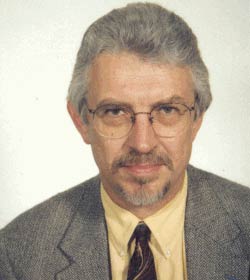
Ojārs Kalniņš is director of the Rīga-based Latvian Institute.
Andris Straumanis is a special correspondent for and a co-founder of Latvians Online. From 2000–2012 he was editor of the website.