The Latvian folklore ensemble Tarkšķi, based out of Iecava, released an album for younger listeners entitled Sadziedam? in late 2020. Featuring the youngest members of the ensemble, the digital only album collects performances of children’s folk songs. The album includes such popular children’s songs as ‘Aiz kalniņa dūmi kūpa’, ‘Kur tad tu nu biji’ and ‘Kur tu teci’, among many others. The album also includes instrumental-only versions of the songs.
The songs were arranged by the ensemble’s director Kristīne Karele, and feature instruments such as the Latvian kokle, mandolin, violin, and others. The group includes children from 2 to 18 years of age.
The recording was made in the Lauska studio, with producer Kaspars Bārbals, and the American Latvian Association helped finance the recording.
The album can be heard via multiple streaming services.
Egils Kaljo is an American-born Latvian from the New York area . Kaljo began listening to Latvian music as soon as he was able to put a record on a record player, and still has old Bellacord 78 rpm records lying around somewhere.
Latvijas Republikas Ārlietu ministrija un PBLA aicina piedalīties tiešsaistes seminārā “Diasporai par aktualitātēm Latvijā” 2021. gada 19. maijā pulksten 15.00 (pēc Latvijas laika).
Noslēdzošais seminārs trīs semināru ciklā tiks veltīts diasporas jauniešu izglītības iespējām Latvijā. Tajā piedalīsies Ārlietu ministrijas parlamentārā sekretāre Zanda Kalniņa-Lukaševica un Izglītības un zinātnes ministrijas parlamentārais sekretārs Reinis Znotiņš. Ministriju pārstāvji informēs par ārvalstu studentu iespējām iegūt izglītību Latvijas augstskolās un valsts nostāju šajā jautājumā. Par studiju iespējām diasporas un ārvalstu studentiem latviešu valodā, kā arī par piedāvātajām mācību programmām un kursiem angļu valodā informēs Latvijas Universitāte, RTU – Rīgas Tehniskā universitāte, Rīgas Stradiņa universitāte (Riga Stradins University) un Latvijas Lauksaimniecības universitāte.
Seminārs norisināsies platformā Zoom.
Iespēja piedalīties diskusijā ir, rakstot uz e-pasta adresi pbla@pbla.lv. Pēc reģistrācijas tiks nosūtīta Zoom saite. Interesenti semināra tiešsaisti varēs vērot Ārlietu ministrijas Facebook un PBLA Facebook kontos.
Jautājumus var iesūtīt iepriekš, rakstot uz e-pasta adresi pbla@pbla.lv.
The choir works of Latvian choral composer Ēriks Ešenvalds have been sung and heard all over the world. Even if a listener does not understand the language of the text, Ešenvalds’ skills with melody and harmony allow him to speak clearly and personally to an audience.
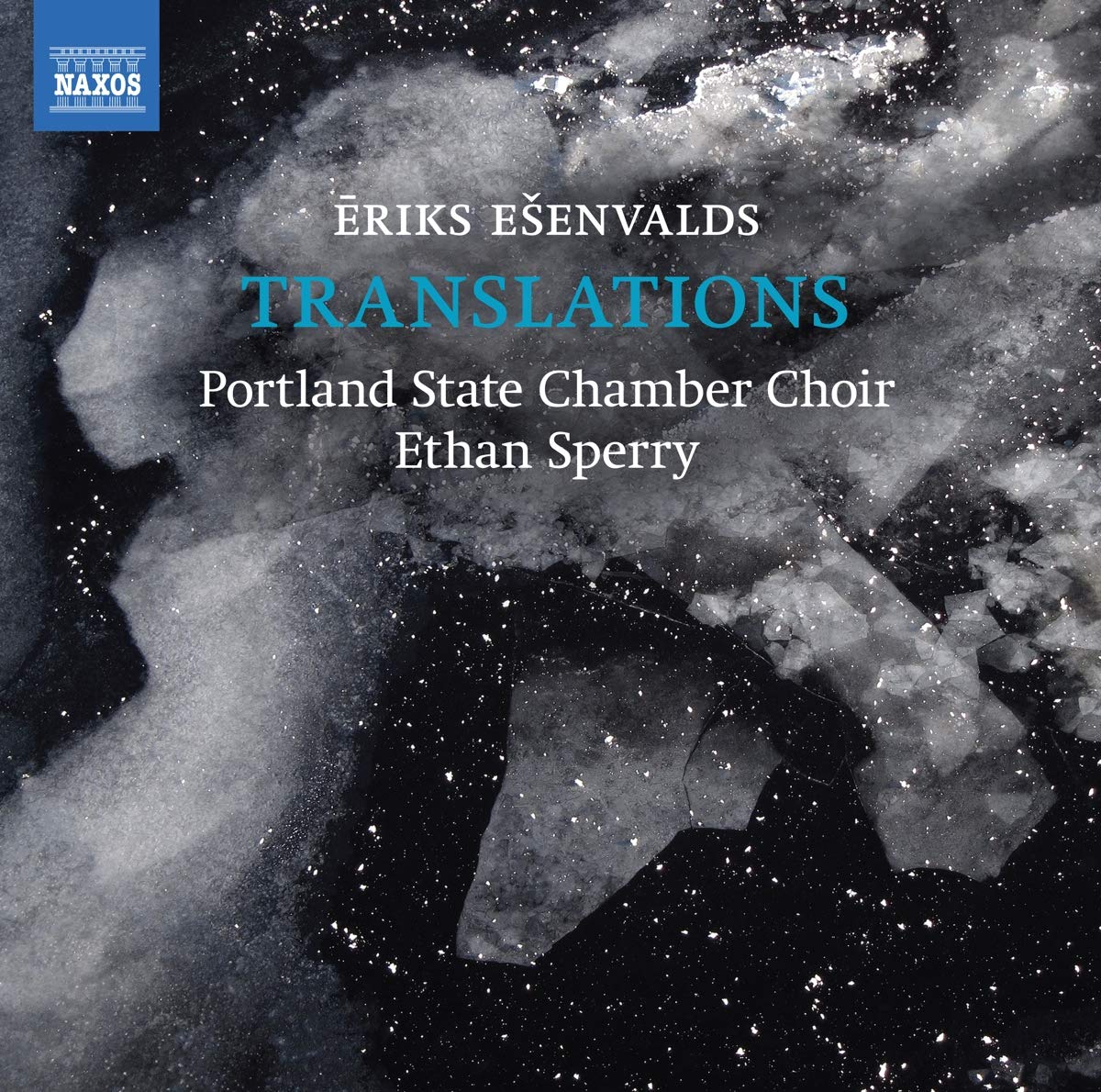
Many choirs internationally have actively championed Ešenvalds’ works, among them being the Portland State Chamber Choir, conducted by Ethan Sperry, who released an album of Ešenvalds’ choir compositions, entitled The Doors of Heaven, in 2017. The choir has followed that recording up with Translations, released in 2020, which contains seven of Ešenvalds’ compositions.
One of Ešenvalds’ most popular choir works is the spiritually moving ‘O salutaris hostia’, a prayer for peace. The piece features many of Ešēnvalds’ trademark compositional approaches, such as the rich harmonies of the choir, spiritual longing, and beautiful textures. Combined with the performance of the soaring soprano soloists Kate Ledington and Maeve Stier, whose duet elevates this work to a truly heavenly level, this work has rightfully become one of the most performed of the composer’s choir songs.
Scored for a quartet of soloists, as well as a background choir quintet, the work ‘Translation’, with poetry by Paulann Petersen, is a reserved, meditative work. The soloists, whose voices flow together as if in a deep meditation, are enhanced by the wordless background vocalists, as well as the performance of handbells, which gives the work an otherworldly sound – appropriate, considering Petersen’s text referencing the moon.
Ešenvalds often presents stories in his music, allowing a choir to become a storyteller or a narrator, and one such legend presented on this CD is the story of Vineta, a mythical city on the Baltic Sea that was lost in a flood, due to its excessive ways. For the text, Ešenvalds used the poetry of German poet Wilhelm Müller. The choir creates an immersive performance – at times fearful, other times mystical, expressing a longing for this lost city. Bells are often heard throughout the work, perhaps to represent the tolling of the church bells of Vineta.
The tragic ‘Legend of the Walled-In Woman’, based on an Albanian folksong about a young maiden Rozafa, who, to ensure the castle remained standing, was sacrificed by being walled in in the walls of the castle that bears her name. A vocal quintet tells the tale in Albanian, in a Balkan singing style, with grief and woe expressed vividly in the performance. In a somewhat disconcerting moment, the choir (in a different key) joins in, giving the song an almost unearthly atmosphere. The song concludes with the English translation of a text by Albanian poet Martin Camaj, which, through the voice of the soprano soloist, emphasizes the sorrow and sadness of the legend.
The collection concludes with the epic ‘In Paradisum’, which begins with the mournful sounds of the cello, and a wordless vocalize sung by the choir about this journey into Paradise. The work builds into a crescendo as the choir sings the text of the Catholic liturgy, which leads into a seemingly random burst of sound from the strings as the choir’s voices soar higher. The powerful and reverent performance then slowly dissipates, as the strings play a gentle, tender melody to conclude the work.
The Portland State Chamber Choir and conductor Ethan Sperry, who have been performing the choir works of Ēriks Ešenvalds for more than a decade, have, with their intimate familiarity with the composer and his works, again displayed their skill on Translations. The choir and Sperry reveal the many nuances and layers of Ešenvalds’ works, confirming his status as one of the premiere living choir composers. Filled with moments of both breathtaking beauty, as well as spiritual richness, Translations confirms Ešenvalds’ ability to move audiences worldwide with his music.
Portland State Chamber Choir, Ethan Sperry conductor
Naxos 8.574124, 2020
Track listing
O salutaris hostia
The Heavens’ Flock
Translation
My Thoughts
Vineta
Legend of the Walled-In Woman
In paradisum
Egils Kaljo is an American-born Latvian from the New York area . Kaljo began listening to Latvian music as soon as he was able to put a record on a record player, and still has old Bellacord 78 rpm records lying around somewhere.