Naumova does it her way on French album

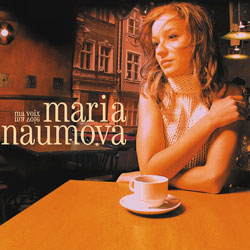
Ma voix, ma voie

During a year when a number of pop artists in Latvia turned to English as the language of their music, Marija Naumova decided on French. Her Ma voix, ma voie (My Voice, My Way) showcases not just her French-language skills, but also her ability to modify her singing style and image to fit the mood.

Ma voix, ma voie is Naumova’s third album. The first, in her native Russian, saw little exposure in Latvia. But her second, the Latvian-language album Ieskaties acīs, had her teamed with Niks Matvejevs in an effort that resonated with audiences, sending the record to platinum status.

Released late last year, Ma voix, ma voie features 11 tracks. Several are compositions by Raimonds Pauls, whom Naumova credits for helping launch her career. Lyrics were written by several songwriters, but in “Une voix” we are treated to a translation of Vizma Belševica’s words, while in “Cher ami” it’s Imants Ziedonis’ work. Also lending a hand with the lyrics was Astra Skrabane, an instructor of French.

Listening to this album, don’t expect to hear Naumova trying to emulate such well-known French singers as the late Edith Piaf or the contemporary Patricia Kaas. Instead, Naumova here tries to carve out her own style, sounding more like an up-and-coming bistro singer. In doing so, she’s gone as far as to change her looks from her previous album, as well as the presentation of her name. On Ieskaties acīs, she was Marija Naumova, but on Ma voix, ma voie the “j” disappears. Naumova also will represent Latvia in the 2002 Eurovision Song Contest in Tallinn, where she will be known as Marie N.

The album opens with the jazzy “Sous le soleil du nord” (Under the Northern Sun). Credited to Pauls and Skrabane, the song is about a person’s search for her way in the world. It sets the mood for the rest of the album, both emotionally and musically.

Naumova’s voice on this recording is soothing, not as throaty as with other French singers. She succeeds in using her voice to set the tone of each song.

My favorite track is “Je t’aime!” (I Love You!), in which the singer acknowledges her love for another, but not yet publically, to the world. I’ve been calling this a “2 a.m. song”: as a private moment wanes, perhaps the last sways of a slow dance in a subdued bar, a rising saxophone heralds the lights coming up, signalling that it’s time to part.

A feeling of nostalgia seeps through several songs. In “Ecris-moi” (Write Me), for example, the singer laments that she once made fun of a clumsy fellow who used to write love notes to her in school. Now, years later, she longs to be with him, to have someone send her something written on paper, not in e-mail.

Some bright songwriting comes through in “Aux coins du vieux Riga” (On the Corners of Old Rīga). Credited to Matvejevs and Skrabane, the song has Naumova walking through the cobbled streets of the city while musing on the vagaries of fate in relationships: “Un pas, Et tu ne partiras jamais…” (One step, And you will never leave…).

While not a consistently strong album, nothing overly bothersome leaps out, either. If anything, listeners who aren’t huge fans of Pauls’ style of piano music might be irritated by his presence on songs such as “Cher ami” (Dear Friend), where his work on the keyboard seems just a bit out of place. However, on “Souviens-toi” (Remember) his playing is more reserved and fits better with the song.

The liner notes are a linguistic challenge. The lyrics and the acknowledgements are all in French. Short descriptions of the songs are provided in Latvian and Russian.

Listen to this album at the end of a long day and you might just find your mind drifting away to the French quarter of Rīga.

Details

Ma voix, ma voie

Marija Naumova

Baltic Records Group,  2001

BRG CD 114
Andris Straumanis is a special correspondent for and a co-founder of Latvians Online. From 2000–2012 he was editor of the website.

On comeback trail, Credo appears stuck in neutral

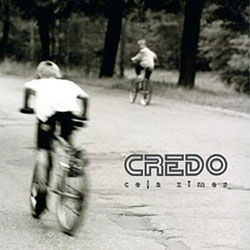
Ceļa zīmes

Hot on the heels of their excellent 2000 release Viss mainās…, Latvian rock institution Credo released their album Ceļa zīmes in 2001. With Credo on the comeback trail, Ceļa zīmes—though not a bad album—seems to find the band stuck in neutral, rather than moving forward.

The lineup on Ceļa zīmes is almost the same as on the 2000 album. Aivars Vīksna provides vocals, as well as Guntis Veits. Armands Alksnis is credited with guitar and keyboards. The change on this album is the presence of Gundars Lintiņš on drums.

The theme of the album seems to be "signals," whether by communication or by signs (hence the title of the album: Road Signs). A number of the songs are about communication of some kind.

My favorite song on the album is probably "Tāpat vien," an uptempo number about the most common of rock song topics: women! When meeting someone new, often a guy will be nervous, but if things are meant to happen, then, as the song goes, they will happen "just the same."

Guntars Račs is back to provide a number of the lyrics on the record, particularly for another favorite, "Tur aiz mākoņiem ir saule." This is a slower song, with perhaps overly simplistic lyrics, but it has a very pretty melody and perhaps the simple lyrics work best in this case. It is a song of hope, about looking beyond the clouds to the sun and the morning that lies there.

But besides those two songs, there was not that much on the album that got my attention. There are some more interesting lyrics from Račs, especially on the song "Es dzīvoju," including the line “Es jūtos kā mauka uz Marijas ielas" (I feel like a whore on Marijas Street). Perhaps Račs is lamenting how most every band in Latvia uses his lyrics!

"Īsziņa" is an ode to the mega-popular (at least in Europe) SMS message, called an "īsziņa" in Latvian. The singer is worried because he thinks he has lost a text message he received on his mobile phone. Fortunately, he is able to retrieve the message and to write back to his beloved to say that he will be there soon.

A poet whom a number of other Latvian artists (including Pērkons and Kaspars Dimiters) have put music to is Klāvs Elsbergs. On Ceļa zīmes, Credo put music to two of Elsbergs’s works: "Uz Meku" and "Spīdi spoži."

This is not a bad album at all, it just seems that there is nothing particularly memorable about it. After I’m done writing this review, I think it unlikely that I will listen to this album very often. Credo is obviously a very talented group, their long history a testament to their ability to write great songs. Their last album, Viss mainās…, was a great effort, but it seems that they are just coasting now, as if they realize that with their great degree of talent, putting together an album that is reasonably good is not too difficult. Instead of presenting a merely "average" album, one wishes they had put in a bit more effort to make a truly "great" album, which they are clearly capable of.

Details

Ceļa zīmes

Credo

MICREC,  2001

Egils Kaljo is an American-born Latvian from the New York area . Kaljo began listening to Latvian music as soon as he was able to put a record on a record player, and still has old Bellacord 78 rpm records lying around somewhere.

Laiksne sings of weddings and cuckoos

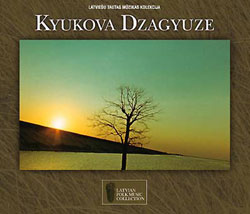
Kyukova dzagyuze

Laiksne specializes in the music of eastern Latvia, and all of the songs on Kyukova dzagyuze (The Cuckoo Called) are sung in the Latgallian dialect. None of the singers is a native speaker of the dialect, but they do a good job. They have employed linguistic consultants, as well as specialists in traditional singing and music, and the result is a very professional recording.

Laiksne’s style of singing is not "rough." It is not the almost-shouting style of singing that some people associate with songs in dialect. The five young women (Lauma Garkalne, Dina Kalniņa, Dace Prūse, Baiba Suško and Vineta Romāne) are all very strong singers with rich, beautiful voices. If you happen to have heard Bolta eimu, the third album in UPE’s Latvian Folk Music Collection featuring the music of Biruta Ozoliņa, then you will understand when I say that Kyukova dzagyuze sounds much like Biruta Ozoliņa times five—and turned up a notch or two in volume and in the variety of instruments.

The recording begins with "Zynu, zynu brūļu sātu," a dreamy song that does not mention the namesake of the album, the cuckoo, but speaks nonetheless about the heartache a grown daughter has for her childhood home.

The album is built around the theme of the cuckoo, a bird that is associated with sorrow, heartache and ill fortune in Latvian—and especially Latgallian—folklore. The cuckoo motif shows up in funeral songs, but also in many wedding songs, because marriage was thought of as a type of death (the woman left a relatively carefree life with her family and was "reborn" into a harsher life as a young wife in her husband’s home). Kyukova dzagyuze focuses on these wedding songs referring to the cuckoo. They are a very appropriate theme for a group of young women, and Laiksne has selected the songs and arranged them very well.

The calmer, slower songs—such as "Kyukova dzagyuze," "Kū es beju sarībuse," "Tymsā dzymu, tymsā augu," and "Kyukoj ōra dzagyuzeite"—all tend to have that dreamy feel to them. Considering the usually heavy emotion in these songs, some sound surprisingly light. "Vanadzenis tupēja" is least like the rest, reminding me of the Lithaunian "sutartine" singing style. Every time I listen to the compact disc I seem to pick out a new favorite song: "Mani mōte radeja," "Palākais vanadzeni," "Tōli mani tēvs atdeve"…

Laiksne is usually considered a "post folklore" group, but they’re not rocky, plugged in or too far out there. In fact, despite the careful arrangements, I would consider their music quite traditional. The accompaniments are heavy on the kokle, the ancient Baltic stringed instrument, but Laiksne also play violin, whistles, bass, drum and bagpipe. A cool switch from major to minor key in "Tev mōseņ zeile vēsti nese" caught my ear as something unusual, but otherwise the harmonies and arrangements do not travel far from the Latvian singing tradition.

For the most part the Kyukova dzagyuze songs are not well-known, but they definitely grow on you and provide for good and beautiful listening.

Details

Kyukova dzagyuze

Laiksne

UPE Recording Co.,  2001

UPE CD 025