Album introduces listeners to songs about birds

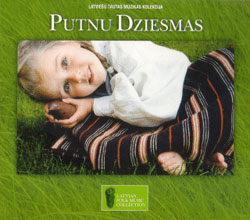
Putnu dziesmas

Putnu dziesmas is a strange little recording. It is a collection of children’s songs about birds. But between the songs one hears not only actual recordings of real bird songs, but also the bird song imitations and interpretations (“bird languages”) that have become a part of Latvian folklore. Think “chick-a-dee-dee-dee” and “whip-poor-will.”

Thus, the compact disc includes a great variety, from the long songs “Meža malā klausījos,” “Zvirbuli zvirbuli” and “Visi putni skaisti dzied,” to the standards “Kur Tu teci gailīti mans” and “Skaisti dziedi lakstīgala,” to the very short bunting’s, chaffinch’s and cuckoo’s ditties. The credits on the liner notes even mention an ornithologist, so Putnu dziesmas is obviously well-researched.

The style of Putnu dziesmas is quite similar to Labrītiņi rītiņā, another album in UPE Recording Co.‘s “Latvian Folk Music Collection.” Both reflect the vision of Ilga Reizniece, who also produced both CDs. Following Reizniece’s philosophy that children’s music should be very natural and not pretentious or over-produced, Putnu dziesmas has simple arrangements: kokle, violin, guitar, and whistles—but no synthesizers. All of the songs and verses are sung and said by normal, everyday young children, complete with giggles here and there. It sounds like they had fun during the recording process!

The kids are cute, but not overly so.  Still, Putnu dziesmas may not be for everyone. It fits well into our household, though, because our young children really pay attention to the children’s voices.

Although there truly are many songs and verses about birds in Latvian children’s folklore, many of those on Putnu dziesmas seem to be a bit less well-known, at least to Latvians outside Latvia. That said, I hope this recording will serve to introduce these songs to many children and adults, too.

Details

Putnu dziesmas

Latviešu tautas mūzikas kolekcija

UPE Recording Co.,  2002

UPE CD 040

Soviet-era film is now a Jāņi tradition

Limuzīns Jāņu nakts krāsā (Limousine the Color of Midsummer Night) is perhaps the favorite film of Latvians. Like the American Christmas tradition of watching It’s a Wonderful Life, it has become a staple on Latvia’s television screens around Jāņi, the Latvian celebration of the summer solstice. Written by Māra Svīre, it is director Jānis Streičs’ best film.

It is a film that can be watched on many levels. At the surface it is a broad comedy with universally recognizable characters and themes that are also uniquely Latvian.

Aunt Mirta (Lilita Bērziņa) wins a car in a lottery and faster than you can say “priekā,” relatives and acquaintances descend on poor Mirta’s house like locust. There’s her nephew (Uldis Dumpis) who, with wife and son in tow, gets off a tour bus in mid-excursion and hitchhikes to Mirta’s house for a visit the moment he hears of her windfall. There’s her former daughter-in-law, with husband and daughter along, who pop in for a visit out of the blue. Even her next door neighbors, hard working and earnest farmers, are suddenly more helpful and attentive. None of this is lost on Mirta and she makes the most of it.

It’s a very Latvian film. There’s a Latvian folk tale about a poor traveler who stops by a farmstead. Being hungry he asks the farmer’s wife for some food and she promises him a meal in exchange for work. The labor is backbreaking, but he does it without complaint. When he finishes, the stingy farmer’s wife tries to renegotiate. Pleading poverty, she offers him some thin soup. He doesn’t complain, but as he sips the watery brew he remarks that the soup is missing something. It needs something to go with the broth. The farmer’s wife apologizes and says she has nothing else to offer. All she has left is an old axe.

The axe will be good, he replies. The farmer’s wife is incredulous, but he reassures her that in his travels he has often had axe soup and its one of the best meals he has ever had. You just have to know how to prepare it properly and it will be as tender and savory as the finest cut of meat. The farmer’s wife, seeing an opportunity to make something out of nothing, drops the axe in the pot. But no matter how long they wait, the axe stays, well, as hard as an axe.

The traveler recalls that the last time he had axe soup it also had some potatoes in it. Maybe that’s what’s wrong? The potatoes tenderized the axe. Suddenly the farmer’s wife remembers that she might have some potatoes. Into the pot they go. The axe still is hard. Maybe it was the carrots? There’s carrots. Cabbage? Here’s cabbage. On and on and into the pot they all go. Of course the axe never becomes any softer, but in the meantime the traveler has himself quite the meal.

Limuzīns Jāņu nakts krāsā is like that folk tale in reverse. It’s the poor old farmer Mirta who exploits the greed of her guests. It doesn’t take long before they are cutting her grass, building her a new cellar and doing all of her cooking and cleaning—all on the chance they’ll be ones to end up with the car.

The film also can be viewed as one of those typical Soviet morality plays about bourgeois values being a corrupter of the human spirit.

However, most importantly, it’s a film that, between the lines, managed to pillory and parody the Soviet system. Where else but in the Soviet Union would an 80-year-old woman who can’t drive end up with a car that she has no use for and doesn’t really want, while everyone else has to scrape and then wait for years to end up with one? Even the title itself is a sarcastic reference to a car that was the Soviet equivalent of a Ford Pinto in a color that can be best described as off-white.

Limuzīns Jāņu nakts krāsā works on all of those levels. Like most of Streičs’ films, it’s about characters and relationships. The film is filled with humor and warmth and great performances. But it is the film’s ability to amuse—while parodying a system that didn’t tolerate being parodied—that is perhaps its greatest achievement.

Details

Limuzīns Jāņu nakts krāsā

Jānis Štreics

Rīgas kinostudija,  1981

Notes: In Latvian. Comedy, color, 79 minutes. Screenplay: Māra Svīre; director of photography: Harijs Kukels; music: Raimonds Pauls; principal cast: Gundars Āboliņš, Romualds Ancāns, Lilita Bērziņa, Olga Dreģe, Uldis Dumpis, Baiba Indriksone, Līga Liepiņa, Boļeslavs Ružs, Ēvalds Valters and Diāna Zande.

CD offers overview of composer Stabulnieks

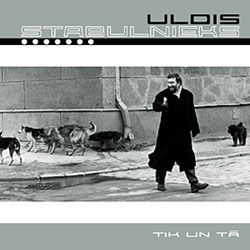
Tik un tā

As a young devourer of all things musical, I was fortunate that my family had friends in Latvia who would send us many of the latest recordings. One of my favorite releases was Mikrofons 81, which covered the best songs of 1980, including “Dāvāja Māriņa” by Raimonds Pauls, “Princesīte” by Kaspars Dimiters and “Zelta dziesma” by Ivars Vāgners, among many others.

One song that was a favorite of mine was “Tik un tā” by Uldis Stabulnieks. The song is the title track of a recently released compilation of Stabulnieks’ work, the fifth in MICREC’s series, “Latviešu populārās mūzikas izlase.”

Though a mellow song, “Tik un tā” stayed with you due to its simple melody sung by Stabulnieks, as well as the lyrics by Māra Zālīte, which were borderline patriotic (with words like “Mums viņa ir visskaistākā, tik un tā,” or, “Just the same, to us she (Latvia) is the most beautiful”)—still a bit of a no-no in 1980.

According to the Latvian music magazine Mūzikas Saule, “Tik un tā” was the most popular song of 1980 and should have been awarded first prize, instead of that year’s winner, “Dāvāja Māriņa.” Tough call for me, as “Dāvāja Māriņa” is just about my favorite Pauls song. I can see how it could be close. Besides, a rigged election in Soviet Latvia? Say it ain’t so!

Because most of the songs from that era have not been available on compact disc, and I don’t go that frequently into my vinyl archives, “Tik un tā” faded from memory as the years went by. But upon hearing that MICREC had released a comprehensive collection of Stabulnieks’ best works on a CD simply titled Tik un tā, I picked it up on a trip to Latvia.

Prior to buying the CD, I only knew the title track. I had no idea what to expect from a full CD (70-plus minutes) of 25 songs by Stabulnieks. I am glad I bought it, because it is full of original and catchy songs.

Stabulnieks composed all of the music on this album and he sings on almost all the songs. The bulk of the songs on this CD were taken from his two LP records,  Tik un tā (1985) and Svētki daudzskaitlī (1986).

An unexpected but very pleasant surprise was learning that “Tik un tā” was not the only song I knew by Stabulnieks. A song that was a favorite of mine in my pre-teen days, but since then had been forgotten, is “Solījums.” I had originally heard this song on the Mikrofons 82 record, but I had not known that it was performed by Stabulnieks. The song again shows his ability to write an appropriately beautiful melody to match beautiful lyrics, this time by P. Zirnītis. Though it is a simple love song, the words are quite moving.

The variety of styles contained on this CD also shows Stabulnieks’ versatility. Whether it is the Middle Eastern-tinged “Alibeka” (written for the Leļļu teātris), or the folksongy “Dziesmiņa par buciņu” (from the theatre production Aug buciņš, lauž radziņus), or the satirical “Dziesmiņa par diplomātiju,” or the comedic “Ananās” (from the musical comedy Svētki daudzskaitlī), Stabulnieks is adept at writing the appropriate music to fit the lyrics and the mood.

The variety of styles on the CD does detract from the flow a bit. I’ve also never been a fan of overly liberal use of strings in pop songs, but where the strings are used in Stabulnieks’ songs, they are tastefully done.

Some of the songs also have a Raimonds Pauls influence, mainly due to some of the lyrics being written by frequent Pauls collaborator J. Pēters, as well as Margarita Vilcāne and Ojārs Grīnbergs showing up to sing on “Margarita” and “Zirgu tirgus.”

The booklet that comes along with the CD reprints the original liner notes that came with the Tik un tā vinyl record, as well as a new write-up by Gunārs Freidenfelds, both of which provide for some interesting reading about a composer for whom information is not that readily available. Unfortunately, no lyrics are included, but there are a few pictures.

MICREC deserves great thanks for reminding all of us what a great composer and talent Stabulnieks is. This CD hopefully will raise his profile to a loftier perch, where he so clearly deserves to be.

Details

Tik un tā

Uldis Stabulnieks

MICREC,  2002

MRCD 189

Egils Kaljo is an American-born Latvian from the New York area . Kaljo began listening to Latvian music as soon as he was able to put a record on a record player, and still has old Bellacord 78 rpm records lying around somewhere.