Restberga-Zalta, former consul in Argentina, dies

Mirdza Restberga-Zalta, an art historian, singer and Latvia’s former honorary consul in Argentina, has died at the age of 78.

Restberga-Zalta (known in Spanish as Mirdza Restbergs de Zalts), died April 26 in Buenos Aires, according to a May 18 report by the World Federation of Free Latvians (Pasaules brīvo latviešu apvienība, or PBLA).

She was born March 30, 1931, in Kuldīga into the Alberts Restbergs family. Restberga-Zalta left Latvia with her family in 1944 to escape the Soviet occupation during World War II. She arrived in Argentina in 1948.

She worked first as a seamstress, then in a medical laboratory and then in a sweets shop, Restberga-Zelta told the Liepāja newspaper Kurzemes Vārds in a 1998 interview. She learned stenography, typing and Spanish, and then became a secretary. At the University of Buenos Aires she earned a degree in art history. Under the stage name of Mirdza Kalve, according to the PBLA, she performed as a singer on the Buenos Aires city radio station and in several operas.

She published a small Spanish-Latvian dictionary to help the non-Latvians in mixed marriages learn something of the Latvian language. Restberga-Zalta also taught at the University of Buenos Aires.

The Latvian Ministry of Foreign Affairs in 1997 appointed Restberga-Zalta as honorary consul in Argentina. Among her duties was organizing polling in the Buenos Aires area during elections in Latvia. She served as honorary consul until 2007 and for her service was awarded Latvia’s Cross of Recognition, Third Class. Restberga-Zalta also was active in the Latvian Association of South America (Dienvidamerikas Latviešu apvienība), serving on its board of directors and representing Argentina.

In 2001, she teamed up with Ilgvars Ozols to publish Latvieši Argentīnā, Čīlē un Urugvajā, a history of Latvians in three Latin American countries. Restberga-Zalta also published a 50,000-word Latvian-Spanish dictionary in 2006.

Restberga-Zalta had a son and a daughter from her first marriage and helped raise two daughters with her second husband, according to the PBLA.
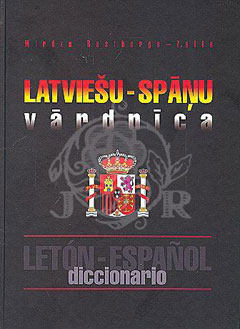
Latvian-Spanish dictionary

A Latvian-Spanish dictionary published in 2006 by Mirdza Restberga-Zalta is still available in Rīga bookshops.

Andris Straumanis is a special correspondent for and a co-founder of Latvians Online. From 2000–2012 he was editor of the website.

Court overturns ban on Rīga ‘pride’ march

A May 16 “pride” march in downtown Rīga by supporters of sexual minorities is on again after a Latvian court overturned a ban on the event.

The Administrative District Court in Rīga ruled May 15 that the Rīga City Council’s Commission on Meetings, Marches and Demonstrations erred when it decided to disallow the march, Latvian media report.

The march, scheduled to begin in the Vērmaņdārzs park and then move into surrounding streets, is being organized by the Mozaīka organization as part of Baltic Friendship Days. City officials originally had approved the event. After conservative politicians and religious leaders complained about the decision, the commission on May 14 cited security concerns when it decided to halt the march.

Mozaīka, an organization that advocates for the rights of gays, lesbian, bisexuals and transgender people, appealed to the administrative court.

In a statement applauding the court’s decision, Mozaīka said it hopes the event will be peaceful.

Andris Straumanis is a special correspondent for and a co-founder of Latvians Online. From 2000–2012 he was editor of the website.

Mozaīka appeals Rīga ban of gay pride parade

A group representing sexual minorities in Latvia has appealed a decision by Rīga officials to ban a planned May 16 march in the city’s downtown.

Mozaīka, a Rīga-based organization advocating for the rights of gays, lesbian, bisexuals and transgender people, has been organizing the Baltic Friendship Days event. The march was scheduled to begin at noon in the Vērmaņdārzs park and then move into surrounding streets.

Mozaīka filed its appeal May 14 with the Administrative District Court in Rīga asking it to overturn a decision by the Rīga City Council’s Commission on Meetings, Marches and Demonstrations disallowing the parade.

The city commission initially approved the march on May 8, but repealed its decision on May 14 citing security concerns.

“We believe this decision to be unlawful, without any legal justification whatsoever, and based on political pressure,” Mozaīka said in a press release.

The commission suggested Mozaīka could hold the march just in the park without going into surrounding streets, or along 11th November Shoreline. Mozaīka, however, rejected the alternatives, arguing the commission’s decision “have no legal justification.”

Numerous conservative politicians and religious leaders protested the commission’s initial approval of the march. In an open letter to Rīga Mayor Jānis Birks, the Rev. Jānis Šmits on May 12 wrote that the commission’s approval was illegal and against the wishes of the majority of city residents. He called on the mayor to overturn the decision and to sack Rīga City Administrator Andris Grīnbergs. Šmits, a member of the conservative First Party of Latvia (Latvijas Pirmā partija), posed a question to Birks: “In whose interests does the Rīga council work—those of 50 amoral homosexuals or those of 1 million Rīga inhabitants?”

Linda Freimane, chair of Mozaīka, said in a statement that the city council had yielded to political pressure.

“All of this foments hatred in Latvia,” she said, “and causes Latvia to become an object of mockery among other European countries.”

Andris Straumanis is a special correspondent for and a co-founder of Latvians Online. From 2000–2012 he was editor of the website.