Health minister steps down as Latvia faces budget reforms

Latvia’s Health Minister Ivars Eglītis has resigned, saying he will not be responsible for what cuts in the government budget will mean to medical care in the country.

Eglītis, a member of the People’s Party (Tautas partija), announced his resignation June 17, a day after the Saeima approved a sweeping LVL 500 million reduction in the national budget. He is the first minister to leave the coalition government headed by Prime Minister Valdis Dombrovskis.

A significant portion of the cuts—LVL 45 million—is to come from the Ministry of Health and will require changes to health care delivery. The amended national budget now foresees spending LVL 4.6 billion, but taking in just LVL 4 billion. The health ministry’s revised budget anticipates spending LVL 453 million this year.

“Without creating the social protection system for those patients to whom the lack of money already forbids to receive timely and qualitative medical help, further health budget cuts were not acceptable because those are disproportionate to the social responsibility of the sector,” Eglītis said in a statement released by the health ministry. “As (a) doctor and health care specialist I cannot accept that.”

Dombrovskis has accepted Eglītis’ resignation.

“In this crisis situation the minister for health has chosen the easiest way as it is clear that the health care system is facing a process of complicated, urgent and essential reforms,” Dombrovskis said in a prepared statement. “The decision will require political will and determination, and conviction that the end result is adequate for such a health care model which should already have been introduced some years ago. If the minister honestly admits to be unable to manage these reforms, his resignation is sensible and acceptable.”

Dombrovskis also said he is awaiting the People’s Party’s recommendation on who should replace Eglītis.

After a meeting with the prime minister, President Valdis Zatlers told a press briefing that Latvia needs a health minister who is confident in their abilities.

“And this minister must be found as soon as possible,” Zatlers said. “I would even say today, so he could start work tomorrow.”
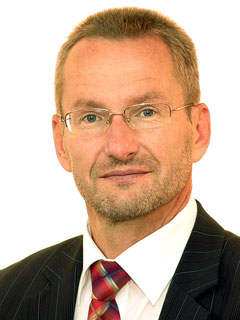
Ivars Eglītis

Ivars Eglītis

Andris Straumanis is a special correspondent for and a co-founder of Latvians Online. From 2000–2012 he was editor of the website.

Institute: Latvia drops in global peace ranking

Political instability and internal conflict have contributed to Latvia dropping to 54th place in the Global Peace Index compiled by the Australia-based Institute for Economics and Peace.

Last year Latvia improved its ranking to the 39th most peaceful nation in the world, up from 47th in 2007. However, economic and political events late last year—which spilled over into a large Jan. 13 demonstration that ended with some protesters rioting—contributed to the country’s slip in the ranking, according to the institute.

The third annual ranking, now listing 144 countries, was released June 2 in London and Washington, D.C.

The Baltic nation is not alone in becoming less peaceful, according to the institute, which reported that the worldwide change “appears to reflect the intensification of violent conflict in some countries and the effects of both the rapidly rising food and fuel prices early in 2008 and the dramatic global economic downturn in the final quarter of the year.”

No. 1 on the Global Peace Index is New Zealand, which swapped positions with last year’s most peaceful nation, Iceland, which now is No. 4. Iraq remains the least peaceful nation, the same spot it has held in all three years of the index.

Within the Central and Eastern European region, Latvia is in the middle of the pack at 11th. Slovenia, which ranks ninth overall, is listed as the most peaceful in the region. Russia, close to the bottom of the world rankings at 136th, is last in the region.

The index gives each country an overall score from 1, indicating most peaceful, to 5, meaning least peaceful. Latvia’s score in this year’s index is 1.773, the same as Egypt.

Estonia, with a score of 1.661, ranks 38th, down from 35th last year. Lithuania, with a score of 1.687, slipped from 41st last year to 43rd this year, the same ranking it had in the first Global Peace Index.

Further information on the Global Peace Index is available by visiting www.visionofhumanity.org.

Andris Straumanis is a special correspondent for and a co-founder of Latvians Online. From 2000–2012 he was editor of the website.

Washington events to commemorate deportations

The first Baltic Remembrance Day is scheduled June 14 in Washington, D.C., to commemorate the Latvians, Estonians and Lithuanians who were deported by Soviet authorities in 1941.

The event, coordinated by the Joint Baltic American National Committee (JBANC), is scheduled at 4 p.m. at the Victims of Communism Memorial at the intersection of Massachusetts and New Jersey avenues, according to a JBANC press release.

Organizers of the event will call on the Russian government “to take responsibility for its history, and to acknowledge and apologize for these acts, which it has never done,” according to the press release.

Nearly 15,500 Latvian men, women and children were rounded up and deported to Russia from June 13-14, 1941, according to historians. Many of those deported worked for or had ties to the Lavian government, or work social or cultural leaders. Similar deportations took place in Estonia and Lithuania.

A second deportation, aimed largely at people resisting collectization of agriculture, took place in late March 1949. More than 42,000 people were forced to leave Latvia.

Names of those deported will be read aloud during the ceremony.

The Victims of Communism Memorial Foundation will follow Baltic Remembrance Day with two other events.

In a June 16 afternoon ceremony at the U.S. Capitol, the foundation will award the Truman-Reagan Medal of Freedom to U.S. House of Representatives Majority Leader Steny Hoyer; to Romanian Bishop Laszlo Tokes; and, posthumously, to former Secretary of Housing and Urban Development Jack Kemp.

Later that day, the foundation will launch the Online Global Museum of Communism during a reception at the home of Romanian Ambassador Adrian Cosmin Vierita in Washington, D.C. The Web site will be available at www.globalmuseumoncommunism.org.

Andris Straumanis is a special correspondent for and a co-founder of Latvians Online. From 2000–2012 he was editor of the website.