Latvia sells old embassy in Washington

Four years after opening its new embassy in Washington, D.C., Latvia has sold the old building that had served as the government-in-exile’s legation since the 1950s.

The residential property in the city’s Crestwood neighborhood sold in a Jan. 7 auction to the sole bidder for USD 460,250, according to a press release from the government-owned State Real Estate (Valsts nekustamie īpašumi). The buyers, according to the Latvian Embassy, are Jean Kornfeld and Miljodrag Miljanic.

The Latvian Legation acquired the property at 4325 17th Street N.W. in 1953.

The property had a 2009 assessed value of USD 778,010, which was projected to drop to USD 669,360 this year, according to District of Columbia property records. The assessed value is the one used to figure property tax. The actual market value typically is greater than the assessed value.

However, State Real Estate noted in its press release, given the economic situation in the United States, differences in the legal systems between the U.S. and Latvia, and the fact that the building has stood vacant for several years while its condition has deteriorated, the auction can be viewed as successful. The value of the property set by the real estate service was USD 460,000.

To save on the expense of sending representatives to the United States, according to the government real estate service, the auction took place via videoconference between Rīga and Washington.

The buyers have three weeks to complete the sale.

Kornfeld and Miljanic, according to the Latvian Embassy, plan to remodel the building but respect its historical significance.

Latvia in 2001 bought the new embassy building at 2306 Massachusetts Ave. N.W. for $2.5 million, according to District of Columbia property records. Known as the Barney Studio House, the building on Embassy Row was remodeled and opened in December 2005.
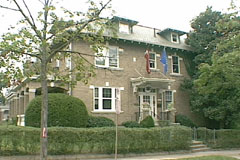
Latvian Legation

Latvia’s old embassy building in Washington, D.C., has been sold at auction. (Photo by District of Columbia Office of Tax and Revenue)
Andris Straumanis is a special correspondent for and a co-founder of Latvians Online. From 2000–2012 he was editor of the website.

Magazine: Despite economy, Latvia still ranks well in living standards

While Latvia’s economy is not much to boast about, the country still ranks pretty high in a list of the best places in the world to live, according to International Living magazine.

The Ireland-based publication, which according to its Web site reports on “the best places in the world to live, retire, travel, and invest,” ranked Latvia 40th out of 194 countries surveyed.

Both Lithuania, at 22nd, and Estonia, at 32rd, scored higher than Latvia.

The rankings are based on statistics garnered from a number of official sources and cover cost of living, leisure and culture, economy, environment, freedom, health, infrastructure, risk and safety, and climate. The editors of the magazine admitted to a Western bias in terms of what constitutes a high standard of living.

Topping the list was France.

“Its tiresome bureaucracy and high taxes are outweighed by an unsurpassable quality of life, including the world’s best health care,” the magazine’s editors said.

Australia was second and Switzerland third. The bottom three countries in the list were Sudan, Yemen and Somalia.

Latvia scored highest on the measure of freedom (92 out of a maximum possible score of 100), but lowest on its economy (40).

In last year’s index, Latvia was ranked 31st.

Andris Straumanis is a special correspondent for and a co-founder of Latvians Online. From 2000–2012 he was editor of the website.

Folk club in Vecrīga offers taste of Latvian music, food traditions

It may be surprising that in the “land that sings” there are very few places where a visitor can actually hear traditional Latvian music unless they attend a particular scheduled concert. However, a young foreign-born Latvian and some enterprising locals recently got together to fill the gap by opening a Latvian folk club in downtown Rīga.

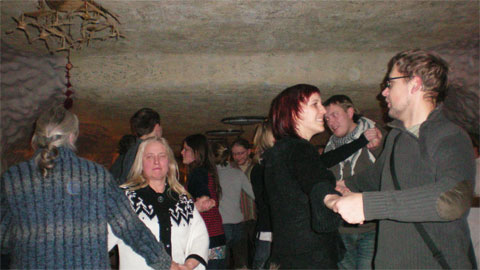
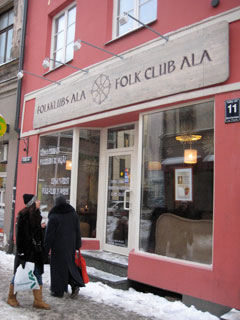
Folkklubs Ala, a spacious cavern-like venue at 11 Audēju iela in Vecrīga, is a joint venture between 22-year-old Australia-born Latvian Krišjānis Putniņš and locals Didzis Felsbergs and Baiba Apine.

Putniņš, who had previously worked in hostel management and in catering, was introduced to Felsbergs, who provided the start-up capital, by a mutual friend. Putniņš had prepared the banquet at the friend’s wedding and the latter was so impressed that, knowing that Felsbergs had the idea for the folk club, recommended Putniņš’ catering skills.

Through advertising on a Latvian social networking site Felsbergs found a number of people interested in working on the concept. After a number of planning meetings, it crystallized into a group of three people with Apine joining them. Apine also brought in her experience in the tourism industry.

All three had a keen interest and contacts in Latvian folklore.

Quality service and low pricing for food and drinks—as well as having live music as often as possible—is their secret to bringing in the patrons when the purse strings are tight. The formula should be attractive not only to locals, but to tourists and foreign-born Latvians as well.

Putniņš, who was born and raised in Adelaide and moved to Latvia 10 months ago, said that a lot has been achieved by word-of-mouth recommendations. The spacious venue, which has a large basement, has been used for parties as well and people are pleasantly surprised that there is no charge for having them there. Catering can also be arranged and a bar service is available. 

As well as traditional Latvian music, Latvian dishes using local produce and presented innovatively are on offer and at very reasonable prices (around 1 to 4 lats). The food can be washed down with an assortment of local brews, with Brengulis beer available at 1.20 lats per half litre. Local Latvian wines and teas made from various fruits and berries can also be tried and there is also a range of spirits available.

Traditional Latvian music is played live by local groups on Friday and Saturday nights. Friday is jam session night, when those with musical talent and those who want to try out their hand can join in with the local folk band.

There is also a folk dancing night and an evening for karaoke, with the latter taking place downstairs to spare the sensitive ears of other patrons. Programmes for tourist groups showcasing Latvian culture, music and cuisine are also planned for the future.

Folkklubs Ala is open from 11:30 a.m to 1 a.m. during the week and from 11:30 a.m. till the last patrons call it quits on weekends. The club is planned as a place to drop in during the day, with various board games available for customers.

The club’s Web site is www.folkklubs.lv.

Folkklubs Ala

Patrons take to the dance floor in the cavernous Folkklubs Ala. (Photo by Uldis Brūns)

Folkklubs Ala exterior

Folkklubs Ala is found at Audēju iela 11 in Rīga’s Old Town district. (Photo by Andris Straumanis)