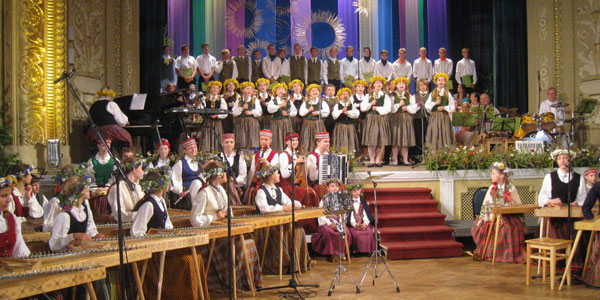
Direktore: Skolu jaunatnes svētki ieliek lūpās dziesmu, kājās deju

Tautas mūzikas koncerts

Rīgas Latviešu biedrības namā skolēni dzied un muzicē Tautas muzikas koncertā “Saule sēja sidrabiņa”. (Foto: Arnis Gross)

Šajās dienās, no 6. līdz 11. jūlijam, Rīgā dzied un dejo 31 000 bērni un jaunieši no visas Latvijas. Tie visi ir dalībnieki X Latvijas skolu jaunatnes dziesmu un deju svētkos – svētki, kas palīdz nodrošināt, ka jaunākās paaudzes manto dziesmu svētku tradīcijas.

Svētki notiek ik pa pieciem gadiem. Maijā noslēdzās svētku atlases skates un konkursi, kuros piedalījās vairāk nekā 100 000 skolēni. Pirms svētkiem, svētku organizācijas centrā tiekos ar svētku izpilddirektori Agru Bērziņu.

Dace Micāne Zālīte (DMZ): Agra, iztēlosimies, ka šobrīd Rīgā ir uzcelti Dziesmu svētkiem vārti, un Jūs stāvat vārtos un sagaidāt svētku dalībniekus, kas brauc no visiem Latvijas novadiem autobusos ar lauku ziedu vītnēm, ar vainagiem, ar tautas tērpiem – ar gribu sniegt savu sagatavoto repertuāru svētku klausītājiem. Ar kādiem vārdiem, ar kādām jūtām Jūs viņus sagaidāt?

Agra Bērziņa (AB): Es sagaidu ar vārdiem: “Mīļi, laipni gaidīti, mīļi aicināti visi svētkos!” Mēs svētkus gaidām patiesi ar lielu prieku, gandarījumu un sajūsmu, jo zinām to lielo darbu, ko ir ieguldījuši skolotāji, lai iedvesmotu, lai aizrautu, lai iemācītu, lai sagatavotu bērnus, jo tas ir pats sākums visai dzīvei. Tas nebūt nav vienkārši – iemācīt palēcienus, pēc tam polkas soli vai galopu. Iemācīt sabalsot un dziedāt ansamblī, dziedāt korī un būt lielajā kopkorī, lai sajustu to dziesmas un mūzikas varu un spēku, kas virmo Mežaparka Lielajā  estrādē. Lai sajustu gan kopkora 12 500 balsu dziedājumu, gan lielā pūtēju orķestra skanējumu, kur vienkopus spēlē apmēram 1500 dalībnieku, un lai veidotu šos krāšņos un vienreizējos, tikai Latvijai raksturīgos deju rakstus Tautas deju lielkoncertā.

Mēs visus gaidām, mēs visus aicinām un priecājamies par to aizrautību un iedvesmu, ar kādu bērni gatavojas svētkiem. To visu varēja redzēt pavasarī skatēs: pārdzīvojumus, gaidot rezultātus, un saviļņojumu un prieku, uzzinot, ka viņš ir kļuvis par svētku dalībnieku, un to bērnu sāpes, kuri nebija izturējuši lielo konkursu. Latvijā mēs esam unikāli ar lielo dziedāt un dejot gribētāju skaitu, un tas ir ļoti liels gods – kļūt par svētku dalībnieku. Un tad droši vien var izvērtēt – vai es kā skolnieks esmu apmeklējis visus mēģinājumus, vai esmu mācījusies un darījusi visu, to ko man skolotājs ir veltījis un ir gribējis iemācīt? Vai varbūt arī skolotājs kādā brīdī ir domājis tā mazliet vieglāk pa dzīvi pastaigāt un vienkāršāk uz to lietu skatīties… Latvijā demogrāfiskā situācija ir diezgan skumīga – ar lejupslīdošu līkni, tomēr interešu izglītībā, dziesmu svētku procesā, rudenī bija iesaistīti 100 000 Latvijas skolēnu. Ir tādi, kuri dzied, dejo, spēlē orķestrī, bet kopumā svētkos mēs varam uzņemt tikai 30 000 dalībnieku. Mežaparkā uz estrādes var atrasties vienlaikus 12 500 dziedātāju, Daugavas stadiona ietilpība ir tāda, lai vieni varētu dejotu, bet otri gaidītu savu uzstāšanos.

DMZ: Ir lasītāji, kas dzīvo ASV – tālu no Latvijas, bet viņiem interesē Latvijas kultūra. Lai viņi izprastu šo svētku apjomu, varbūt ieskicēsim faktus un statistiku, kas rāda svētku mērogu, jo tas ir globāli unikāls notikums, ko sniedz Latvijas skolu jaunatne.

AB: Dziesmu svētku skatēs piedalījās no 118 Latvijas novadiem, bet līdz svētkiem konkursa rezultātā dalībnieki netika tikai no pieciem novadiem. Mēs redzam – šeit ir Latvijas visaptveramība, visa Latvija piedalās svētkos. Varbūt kādam tas nav izprotams, bet, lai iekļūtu svētku dalībnieku pulkā, ir jāiziet atlases konkurss, labi jāapgūst svētku repertuārs, jāiztur cīņa par savu vietu. Runājot vēl par mērogu – ir iesaistītas gandrīz visas Latvijas skolas sagatavošanas posmā. Ir novadi, piemēram, Mazsalacas novads, kur nav mājās palicēju, visi, kas gatavojušies, svētkos piedalās, par ko mums liels prieks! Latvijā bērnu skaits samazinās, demogrāfiskā līkne slīd uz leju, un par to ir lielas bažas, bet tieši interešu izglītībā ir paradoksāla situācija, ka procentuāli skolēnu skaits ir vai nu uz vietas, vai pat nedaudz palielinājies. Ar ko mēs to izskaidrojam? Ar to, ka skolēni grib dziedāt, grib dejot, grib kaut ko darīt!

DMZ: To mēs vērojam laikā, kad virtuālais vilinājums bērniem ir tik milzīgs – sākot ar datoriem un citām jaunajām tehnoloģijām. Vai tā nav zināmā mērā izcila īpašība mūsu Latvijas bērniem, ka viņos ir šī tieksme sevi izteikt caur mākslas formu?

AB: Jā, Dace, kā Tu saki, tā arī ir. Tā ir pārmantojamība, un tiem, kas piedalās svētkos, ir emocijas, pārdzīvojums. Viņš ar lielo gandarījumu aizbrauc mājās un dalās iespaidos ar pārējiem, un ļoti daudziem arī gribas tur būt klāt, lepoties: “Jā, es biju 2005. gadā Dziesmu svētkos, es piedalījos 2008. gadā pieaugušo svētkos, un atkal es piedalos Skolēnu Dziesmu svētkos 2010. gadā!” Tā ir tā neizskaidrojamā kopības sajūta, kas ir Latvijā, kas ir tikai mums. Es gribu uzsvērt, ka mēs tiešām lepojamies ar vecākiem, kuri rosina, mudina savus bērnus dziedāt, dejot, aizrautīgi darboties. Mēs lepojamies ar skolotājiem, kuri ir būtībā entuziasti, fanātiķi, brīžiem man pat liekas, ka misionāri, kuri veic savu misijas darbu, iedodot bērnam jaunas zināšanas, jaunas prasmes. Braukājot pavasarī pa Latviju un noskatoties skates un konkursus, mēs sajutām lielo gribu un vēlmi – būt Rīgā, būt svētkos! Vienalga, cik grūti ir klājies, tomēr gribas būt klāt un būt kopā, neslīgt depresijā, bet izjust svētku gaidīšanas laiku un izjust svētku prieku!

DMZ: Jums ir bijusi tikšanās ar desmitiem tūkstošu svētku dalībniekiem, braukājot pa Latviju, noskatoties skates, priekšnesumus. Kā Jūs varētu raksturot Dziesmu svētku dalībniekus, viņu rakstura īpašības?

AB: Visi bērni ir smaidīgi, viņi visi ir laimīgi un ar starojošām acīm!

DMZ: Viņos Jūs nejūtat to, ka viņi ir stresā par to, kā viņi uzstāsies? Vai viņi ir laimīgi šajā procesā?

AB: Viņi ir laimīgi ,un tik, cik man ir nācies satikties un saskarties, redzu, ka dalībniekos darbojas tas milzīgais gaidīšanas prieks un satraukums, saviļņojums, jo viņi grib būt klāt Dziesmu svētkos! Viņi ir ar tādu starojumu, mirdzumu un ar attieksmi – es dziedu priekam!

DMZ: Kāds ir repertuāra pamats Dziesmu svētkiem un kā tas veidojas?

AB: Repertuārs top diezgan tradicionāli. Lai izveidotu skaistu koncertu, repertuārā iesaista gan zināmas dziesmas un dejas, kas ir dejotas iepriekšējos svētkos, pat no tiem svētkiem, kad es biju maziņa, kad mēs abas bijām maziņas, gan gluži jaunas – īpaši veltītas šiem svētkiem. Svētkos varēs izjust tā laika dejas raksturu un formu. Šogad būs skaisti jaundarbi, piemēram, ar dzejnieces Ineses Zanderes vārdiem ‘’Upju dziesma”, kuri izskanēs koncertā “Radītprieks”. Veidojot repertuāru liela vērība tiek pievērsta – vai tas ir laikam atbilstīgs, vai ir saglabātas klasiskās vērtības, vai ir dziesmas un dejas, kas pašiem bērniem patīk!

Man bija liels pārsteigums, kad bērni teica, ka grib dziedāt 1886. gadā komponista P. Jurjāna sarakstīto kantāti “Tēvijai”. Bērni ar asarām acīs apgalvo: “Man patīk!” Šajā pavasarī intervijās svētku dalībnieki saka – mīļākā dziesma ir J. Vītola :Gaismas pils” ar Ausekļa vārdiem. Tātad viņu dvēselēs un viņu personībās Latvijas mīlestība un patriotisms ir dzīvs, un viņi to paudīs!

DMZ: Kur jums tik brīnišķīgi dzima ideja par svētku simbolu un svētku moto – vilciņš? Iegriez vilciņu – par enerģijas tapšanas mirkli, kad sanāk visi kopā ar labām domām.

AB: 2007. gadā tika izsludināts konkurss par svētku koncepciju. Režisorei Ingai Krišānei bija ideja par svītru kodu – par to, cik mēs katrs esam dažādi. Mūsu dzīve veidojas dažādās svītrās un joslās, tā mēs veidojam savus darbus, savu mākslu. Tad sekoja logo konkurss, kurā uzvarēja māksliniece Antra Auziņa no Talsiem ar ideju par latvieši bērnu rotaļlietu vilciņu – “tas rūca , dūca, dancoja, tas dziedāja un smējās…” Tā ir ievirpuļošanās, skanējums, kustība, dzīvība, viss, kas mūsu bērniem ir apkārt.

DMZ: Es domāju, ka Rīga, Latvija, pasaule būs ļoti aplaimota no diviem tik stipriem spēkiem; svētki, ko rada bērna enerģija,  jaunieša tieksme būt tādā pilnziedā pasaulē. Šinī brīdī viņiem tiek ielikta lūpās dziesma, kājās deja un rodas apbrīnojama enerģija, un viņi ar šo enerģiju svētīs visu Latviju, savu tautu, savus vecākus, kas viņus līdz šim punktam ir aizveduši. Savus skolotājus. Ko Jūs vēl gribat pateikt, svētku vārtos stāvot un bērnus sagaidot?

AB: Lai šis mūsu dziesmu, deju, krāsu, rakstu virpulis, kas iegriezīsies svētku laikā, palīdz sasparoties, nezaudēt optimismu un cerību tam, ka ar kopējo visu svētku dalībnieku spēku var padarīt lielas lietas! Un mēs varam parādīt ikvienam, ka bērnos Latvijā ir spēks un Latvijas jaunieši ir spēcīgi, zinoši, gudri, varoši! Es novēlu izturību svētku nedēļā- tas nekas ,vai spīdēs karstā un sildīs mūs svelmainā saule, vai uzlīs kādas lietus piles, bet kopumā visam jābūt labi. Un jābūt kopīgai svētku sajūtai un izturībai.
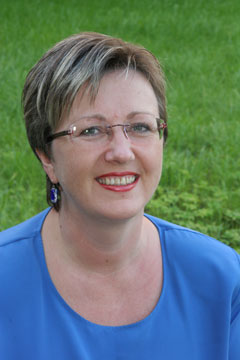
Agra Bērziņa
Agra Bērziņa

Vienotība: Next Saeima should amend law to allow dual citizenship

Latvia’s citizenship law should be amended by the next parliament to allow dual citizenship, the board of directors of the political association Vienotība announced July 8.

Vienotība, one of the political groupings favored to see at least some of its candidates elected Oct. 2 to the 100-seat Saeima, includes New Era (Jaunais laiks), Civic Union (Pilsoniskā savienība) and the Society for a Different Politics (Sabiedrība citai politikai).

The amendments should allow dual citizenship for Latvians living abroad, for Latvian citizens who are working long-term abroad, and for descendants of Latvian citizens who were born abroad, according to a press release from Vienotība.

“The Latvian state must proceed wisely and with far-sightedness,” Vienotība chairman Ģirts Valdis Kristovskis said. “The current law’s norms, which prohibit dual citizenship, came about in the context of pre-war international practice and do not match with the global, dynamic processes in the world today.”

After the nation regained independence in 1991, Latvian law allowed Latvian exiles and their descendants to request citizenship without giving up the citizenship of their country of residence. However, the provision expired in July 1995 and since then dual citizenship is not allowed. Several attempts to restore dual citizenship have failed to raise enough political support.

An estimated 23,000 Latvians abroad—exiles and their descendants—did not or could not register before the deadline, according to the Vienotība press release, citing the World Federation of Free Latvians (Pasaules brīvo latviešu apvienība, or PBLA) as the source for the figure. However, the PBLA did not provide such a number to Vienotība, Jānis Andersons, head of the PBLA’s office in Rīga, told Latvians Online in an e-mail. The United States alone is home to at least 50,000 exiles and their descendants, he said.

Latvia’s attitude toward dual citizenship is also a question about the future of the nation, Kristovksis said in the press release. He noted that many Latvian children born in Ireland are getting Irish citizenship and, because of that, cannot be registered as Latvian citizens.

“That means that the Latvian nation distributes and loses its children,” Kristovskis added. “This cannot be allowed.”

It is unclear how many other political parties would support amendments to the citizenship law. Spokespersons could not be reached for Harmony Centre (the five-party, center-left and Russian-oriented Saskaņas Centrs, whose Nils Ušakovs is mayor of Rīga); the four-party socialdemocratic Atbildība; the two-party coalition Par labu Latviju!, which unites the conservative People’s Party (Tautas partija) and the First Party of Latvia (Latvijas Pirmā partija); the two-party Union of Greens and Farmers (Zaļo un Zemnieku savienība); or the leftist For Human Rights in a United Latvia (Par cilvēka tiesībām vienotā Latvijā).

The nationalist parties For Fatherland and Freedom (Tēvzemei un Brīvibai/LNNK) and Visu Latvijai!, which recently announced their affiliation for the parliamentary election, agree with Vienotība’s stance.

“We fully support this proposal on dual citizenship and it is also part of our association’s program,” Raivis Dzintars, Visu Latvijai! co-chairman, told Latvians Online in an e-mail.

Andris Straumanis is a special correspondent for and a co-founder of Latvians Online. From 2000–2012 he was editor of the website.

Summertime festivals abound in Latvia, featuring music, art, more

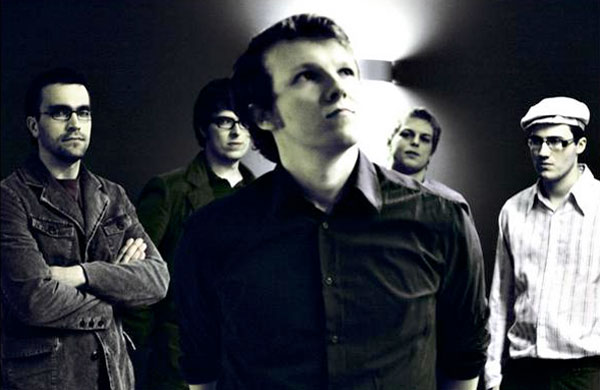
Alternative rock band S.P.B.

Alternative rock band S.P.B. is among Latvian bands scheduled for the Positivus Festival, which runs July 16-17 in Salacgrīva. (Publicity photo)

If you missed the Jāņi festivals across Latvia last month and will not make it in time for the 10th Latvian Youth Song and Dance Celebration in Rīga (July 6-11), the 16th International Early Music Festival (July 7-10), or the rock music celebration Saldus Saule (July 10), plenty of other cultural events are in the offing for the rest of the summer.

Many of them involve music and cover the range from folk to schlager to rock—with a few twists along the way—and there are events for art lovers, history students and just general sightseers, too. Here is a rundown of just some events, but keep in mind something is going on somewhere in Latvia all summer long:

Through July, the International Organ Music Festival “Rīgas Doms” will bring a series of local and world talent to the Rīga Dom, or cathedral, in the capital city’s Old Town district. Performances began July 2 and run until July 30. This is the 23rd year of the festival, the central component of which is the cathedral’s organ, built from 1883-1884 by Eberhard Friedrich Walcker. “This year,” according to the cathedral’s website, “the concert programmes will be devoted to the centenary of the distinguished Latvian composer and writer Marģers Zariņš, the 325th anniversary of the birth of the German composers Johann Sebastian Bach and Georg Friedrich Händel, the 200th anniversary of the birth of Robert Schumann, and the 175th anniversary of the birth of the French composer Camille Saint-Saëns.” A complete schedule of festival concerts, as well as other musical performances in the cathedral, is available from www.doms.lv.

British alternative rock band Muse and American glam rock band Scissor Sisters will headline the fourth annual Positivus Festival, set July 16-17 in the seaside town of Salacgrīva. More than 40 musical acts will perform during the festival. The festival grounds will include two main stages, a dance tent, a stage for local and international independent acts, as well as stages for cinema, theater and literature presentations. A 12-piece experimental folk band from England called Sons of Noel and Adrian will join the Estonian indie-folk trio Ewert and the Two Dragons as headliners on the I Love You stage for local and independent artists. Also on tap are such Latvian artists as El Mars, Mona De Bo, Martin Confused, Tramplīni and S.P.B. Among other Latvian acts performing during the festival will be rock band Astro’n’out, singer Goran Gora and performance band Trīanas parks. A one-day ticket costs EUR 35 and a two-day ticket is EUR 45. Extra charges apply for those who wish to camp on the festival grounds. Children younger than 10 years will be admitted free if accompanied by an adult. For further details, visit www.positivusfestival.com.

The sea festival Kolkas ragam 970, marking the anniversary when the name of the cape was first mentioned, is scheduled July 17. It is just one of several festivals celebrating Latvia’s relationship with the sea that take place during the summer. Cape Kolka (Kolkas rags) is where the Baltic Sea meets the Gulf of Rīga. During the Kolka festival, attractions are to include beach volleyball, the annual fair, a photography exhibit, a commemoration of those lost at sea, a number of musical performances and other activities. For more details, visit www.kolkasrags.lv.

Another of the big summertime seaside festivals is the Baltic Beach Party in Liepāja. The festival, which runs from July 22-24, this year celebrates its 10th anniversary. When the festival started in 2001, it drew an estimated 7,000 participants, according to organizers. Last year, Baltic Beach Party saw 50,000 visitors, down from the 55,000 who came in 2008 and the 62,000 participants in 2007, but an impressive showing nonetheless. Over the years the beach party has drawn some well-known acts from around Latvia and the rest of Europe, and this month’s event is no different. Among special guest acts are Finland’s Rasmus; Audiosmog and Sash!, both from Germany; and Tuklan from Nigeria. A treat for fans of Latvian rock band Brainstorm (Prāta Vētra) will be a performance by Reigani, which is none other than Brainstorm’s members dressed up in Ronald Reagan masks and singing as a self-described Estonian country punk band. More than 20 Latvian musical acts will perform during the festival, including Labvēlīgais tips, Double Faced Eels, Eolika, Z-Scars and The Briefing. Performances will take place in a dozen venues. Tickets bought in advance range from LVL 5 to LVL 16, varying based on the number of days of attendance. For more information, visit beachparty.lv.

Just as with the sea festivals, a number of cities around Latvia have their hometown festivals. One of the bigger ones will be the Cēsis 2010 art festival, running from July 23 to Aug. 15 in Cēsis. Events include classical music concerts, contemporary art exhibits, and theater and cinema performances. Visitors will be able to view a screening of Japanese film director Akira Kurosawa’s Rashômon on July 27 or catch a performance of “Vectēvs” by the Jaunais Rīgas Teātris on Aug. 7. With funding from the Nordic Culture Point, the festival this year also features a July 24 conference and exhibit focused on how contemporary art and academic music are developing in the Baltic and Scandinavian countries. Details about the festival are found at www.cesufestivals.lv

Even though it has little to do with Latvian music and is focused on talent from farther east, the Jaunais Vilnis (New Wave) competition is a noteworthy annual event in Jūrmala. It is scheduled July 27 to Aug. 1 in the Dzintari Concert Hall. The competition, hosted by popular Latvian composer Raimonds Pauls and Igors Krutojs, is for young talent ages 16-30. Performers this year will be coming from around Eastern Europe, as well as from Brazil and Israel. In all, 17 contestants from 12 countries are in the competition. Latvian acts competing are the girl group Lady’s Sweet (Jolanta Strikaite, Vineta Elksne and Karīna Tropa) and the boy group PeR (Peteris Upelnieks, Edmunds Rasmanis and Ralfs Eilands). Latvian singer Intars Busulis won the contest last year. For further information, visit www.newwavestars.com

The fifth annual underground music festival Zvērā, offering a mix of musical genres, is scheduled July 30-31 in Saldus. Performers from Latvia and the rest of Europe, as well as from Brazil and Canada, are set for the festival. Among the main attractions are The Ocean from Germany, As We Fight from Denmark, and Paura from Brazil, as well as Inokentijs Mārpls from Latvia. Tickets are LVL 13 in advance and LVL 15 at the door. For further information, visit www.zverafest.lv.

The community of Stelpe, northeast of Bauska, hosts the Rock Festival Pīlādzis (Rokfestivāls Pīlādzis). The two-day affair, set Aug. 13-14, features open-air performances by a number of Latvian rock bands old and new. Pērkons, Linga and Pienvedēja piedzīvojumi are scheduled, as are Ēnas, Triānas parks and Goran Gora, to name just a few. For children, the festival includes a performance of the play “Brēmenes muzikanti” by the Kabata and UMKA.LV theater troupes. Tickets start from LVL 3 to LVL 9 for the first 1,000 customers, but go up after that. Children to age 12 will be admitted free if accompanied by a parent. For further information, visit www.piladzis.lv.

Appropriate for the summer heat is the Latvian Salsa Festival, scheduled Aug. 13-15 in Rīga. The Latin dance will be celebrated with three days of master classes, performances and competition at the Dance Centre Nianse. One highlight of the event will be the visit of Salsa star Anita Lombardi of Italy. For further information, see the event’s Facebook page.

The 13th International Sacred Music Festival is set Aug. 19 to Sept. 4 in Liepāja, Rīga and Jūrmala. The festival will showcase the State Choir “Latvija” accompanied by Latvian and international artists, including the Liepāja Symphony Orchestra, the Estonian National Symphony Orchestra, the Latvian National Symphony Orchestra. Also performing during the festival will be the EMO Ensemble from Finland. During the festival, the State Choir “Latvija,” directed by Māris Sirmais, will premiere the works “Historical Lithurgy” by Leons Amoliņš and “Cantata for Choir and Orchestra” by Pēteris Butāns. One of the best aspects of the festival, other than the music, is that some of the concerts are free. Tickets for others range in price from LVL 5 to LVL 20. Details may be found at www.sacredmusicfestival.lv.

Local travel guides and websites should be consulted for information about other events.

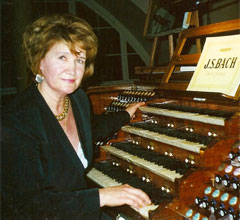
Yevgenia Lissitsina

Organist and composer Yevgenia Lissitsina performs July 25 during the International Organ Music Festival “Rīgas Doms” in Rīga. (Publicity photo)

Reigani

Reigani, rock group Prāta Vētra’s alter-ego, performs as part of the Baltic Beach Party, scheduled July 22-24 in Liepāja. (Publicity photo)

Andris Straumanis is a special correspondent for and a co-founder of Latvians Online. From 2000–2012 he was editor of the website.