German students produce film about Latvians in Münster

History students at the Hittorf-Wilhelm-Gymnasium Münster in Germany have produced a short documentary film about the history of the once-thriving Latvian exile community in their city. Titled Ghetto ohne Zaun (The Ghetto With No Fence), the film includes interviews with members of the community, as well as historical images, according to a press release from the Regional Association of Westphalia-Lippe (Landschaftsverband Westfalen-Lippe), which supported the documentary.

The film, available on DVD in German with Latvian subtitles, tells the story of the Latvians who moved to Münster after World War II. The community is best remembered as the site of the Latvian high school, Minsteres latviešu ģimnāzija, where exile youth from around the world studied language, culture and other subjects. The school closed in 1998, but the facilities remain and are known as Latviešu Centrs Minsterē.

The documentary, according to the press release, notes how the exiles in Münster remained isolated for many years, resulting in prejudices and fears between the Latvians and local Germans. Over time, “the exiles began to cross the imaginary fences” and became integrated into Münster society.

The film saw its premiere Sept. 30 in Münster.

The Latvian community in Germany supported making of the film, Nīls Ebdens wrote Oct. 3 on the online mailing list of the ELJA50 organization. Among those interviewed by the history students, according to Ebdens, were Aija Ebdene, Ieviņa Picka, Andris Kadeģis, Pēteris Purmalis and Juris Trauciņš.

For more on the DVD, in German, visit www.lwl.org.
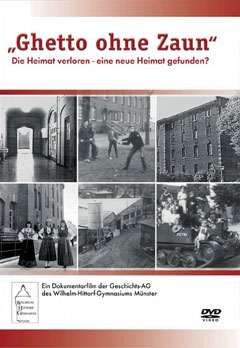
Ghetto ohne Zaun

High school history students in Germany have produced Ghetto ohne Zaun, a documentary about Latvians in Münster. (Image courtesy of Landschaftsverband Westfalen-Lippe)
Andris Straumanis is a special correspondent for and a co-founder of Latvians Online. From 2000–2012 he was editor of the website.

New recording of Kalniņš’ 4th symphony out on CD, vinyl

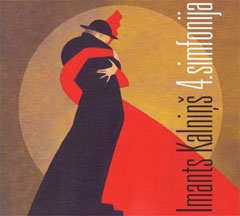
Rīga-based Upe tuviem un tāliem has released a new recording, on compact disc and—in a rare occurrence for Latvian music—on vinyl, of what is perhaps composer Imants Kalniņš’s most popular symphonic work, “Symphony No. 4.”

The work, composed in 1973, features a hybrid of symphonic music and rock music. The version on this CD was recorded earlier this year in Liepāja by the Liepāja Symphony Orchestra, conducted by Imants Resnis. It features mezzosoprano Ieva Parša performing the vocal solo (lyrics from Kelly Cherry’s Lovers and Agnostics: Poems as well as quotes from poetry by Robert Browning). Also heard, in the first and fourth movements, is Vilnis Krieviņš, a well-known Latvian drummer who has performed with the rock group Līvi.

When the symphony was first composed, Soviet authorities forbade the performance of the fourth movement, but this recording restores it.

This is not the first release of ““Symphony No. 4” on CD. In 1998, Rīga-based MICREC released the symphony as a live performance conducted by Resnis. The following year, the Swedish label BIS released a recording by the Singapore Symphony Orchestra conducted by Lan Shui. What is different about the Upe tuviem un tāliem recording is that it is the first release of a studio recording of the symphony.

For more information about Kalniņš, visit the Web site of the Latvian Music Information Centre, www.lmic.lv.

Symphony No. 4

The latest recording of Imants Kalninš’ “Symphony No. 4” has been released by Upe tuviem un tāliem.

Where to buy

Purchase Symphony No. 4 from BalticShop.

Note: Latvians Online receives a commission on purchases.

Egils Kaljo is an American-born Latvian from the New York area . Kaljo began listening to Latvian music as soon as he was able to put a record on a record player, and still has old Bellacord 78 rpm records lying around somewhere.

Historians commission releases 25th volume

The 25th book in a series of titles released by the Commission of the Historians of Latvia (Latvijas Vēsturnieku komisija) is due out Sept. 30, President Valdis Zatlers’ press office has announced.

Titled Okupācijas režīmi Baltijas valstīs 1940-1991, the book will contain 41 articles with new information about the recent history of the Baltics under Nazi and Soviet occupation.

Authors from 10 different countries are represented in the new volume, according to the press office. Among Latvian historians are Inesis Feldmanis, Ainārs Bambals, Argita Daudze, Ritvars Jansons and Antonijs Zunda. Also included is an article by Russian scholar Boris Sokolov, who examines Soviet rule in the Baltics and how Russian scholars view the period today.

The historians commission, which includes scholars from Latvia and abroad, was formed in 1998 under former President Guntis Ulmanis. Its main mission is to study crimes against humanity during the six decades of occupation, which began with the Soviet takeover of Latvia in June 1940. Four different task groups operate under the commission, according to the president’s Web site: one studies crimes against humanity from 1940-1941; a second examines the Holocaust in Latvia from 1941-1944; a third looks at crimes against humanity during the Nazi occupation from 1941-1944; and a fourth researches crimes against humanity under Stalin-era Soviet occupation from 1944-1956.

Okupācijas režīmi Baltijas valstīs 1940-1991 will be for sale in physical format in Latvian bookstores, but in the near future also will be offered for download from the president’s Web site, where volumes 11 (Latvija nacistiskās Vācijas okupācijas varā 1941–1945) through 24 (Baltijas reģiona vēsture 20. gadsimta 40.– 80. fados) already are available for download as Acrobat PDF files. It would be nice if the president’s office would make the first 10 volumes available, too.

Andris Straumanis is a special correspondent for and a co-founder of Latvians Online. From 2000–2012 he was editor of the website.