Translated diary offers teenage boy’s view of life after war

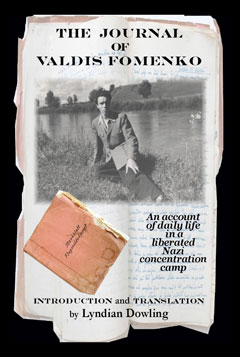
The book has been out for a few months, but now there’s a Web site to support The Journal of Valdis Fomenko, the English translation of a teenage Latvian boy’s diary of life in a liberated Nazi concentration camp at the end of World War II.

The diary was rediscovered by Fomenko, who had immigrated to Canada, about 10 years ago. His written memories were translated into English by his niece, Lyndian Dowling of California.

Fomenko began writing the diary on Sept. 29, 1945, and entries continued until May 1, 1946, according to Astra Moora, editor of Dienvidkalifornijas Latviešu Informācijas Biļetens, who wrote about the book in the newsletter’s November issue.

The Fomenko family lived on Zaķusala in Rīga. They were taken to Germany during the war, spending some time in the Dachau concentration camp and a labor camp near Schongau. As the war came to an end, the family was transferred to a Displaced Persons camp.

The diary includes memories of Latvia, stories about both the dark and bright sides of life in the camps, and musings about the future. The book includes photographs of the family.

For further information, visit thejournalofvaldisfomenko.blogspot.com, where an English translation of Moora’s article is found. The original Latvian version is found in the newsletter’s PDF archive, biletens.com.
The Journal of Valdis Fomenko

The Journal of Valdis Fomenko is a teenage Latvian boy’s view of life in Germany at the end of World War II.
Andris Straumanis is a special correspondent for and a co-founder of Latvians Online. From 2000–2012 he was editor of the website.

‘Glābējsilīte’ is word of the year

In what clearly is a sign of the times, the Latvian word of the year is glābējsilīte, a place where unwanted babies can be abandoned, the Rīga Latvian Society (Rīgas Latviešu biedrība) has announced.

The word glābejsilīte is the Latvianized version of the term “baby box,” a service offered by hospitals and clinics where infants can be abandoned without questions being asked. The Rīga Latvian Society’s language development interest group announced the word’s selection during a Jan. 18 press conference.

The “non-word” or nevārds selected from among multiple nominations is saīsināt, the news service LETA reported. Usually meaning “to shorten,” the term has been used during the country’s economic crisis to refer to the reduction of staff.

And the choice for the “winged words” (spārnotais teiciens) of the year is “Un ko jūs saprotat ar politisko atbildību?” (And what do you understand political responsibility to mean?), a phrase uttered by Latvian Health Minister Baiba Rozentāle during a press conference.

The society has been announcing words of the year since 2003.

Andris Straumanis is a special correspondent for and a co-founder of Latvians Online. From 2000–2012 he was editor of the website.

Maskačkas spēlmaņi releases double album of dance tunes

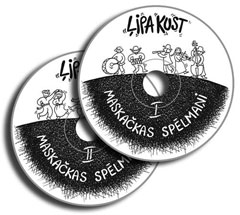
The Rīga folk ensemble Maskačkas spēlmaņi in December released a new album consisting of two compact discs and a detailed, illustrated booklet of folk dances from around Latvia.

Ļipa kust includes 33 tracks, some with vocals, some without. The album is the ensemble’s fourth. The band’s previous album, Pāri jumtam, was released in 2003.

In addition to good explanations of how to perform the various dances represented on the discs, the album is remarkable for its translation. Rather than offering English or Russian as the alternative to Latvian, Ļipa kust provides an Esperanto version.

The dance notations are by Sniedze Grīnberga and the illustrations by Marita Grase.

Maskačkas spēlmaņi has been around since 1995. Members include leader Ansis Ataols Bērziņš, Jānis Barons, Ieva Bērziņa, Zane Kriumane, Oskars Patjanko, Paulis Paulins and Jurģis Ukrins. The band’s focus is lively Latvian country dance music from the late 19th and early 20th centuries.

The ensemble takes its name from the Maskavas forštate district of Rīga, an area east of the Central Market along the Daugava River.

For more on the ensemble, visit maskacka.folklora.lv.

Ļipa kust

The album Ļipa kust is the fourth by folk ensemble Maskačkas spēlmaņi.

Andris Straumanis is a special correspondent for and a co-founder of Latvians Online. From 2000–2012 he was editor of the website.