Reference work rescues long-lost Latvian terms

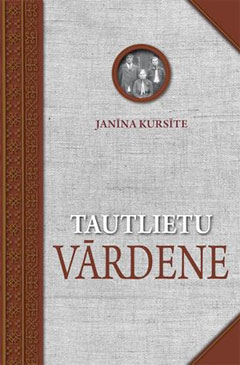
At 32 lats, the recently released Tautlietu vārdene compiled by Janīna Kursīte should be considered an investment. Drawing on mythology, folklore, history and ethnography, the 560-page reference book provides explanations of terms that today are often lost from everyday speech.

Published by the Latvian State Agency of Intangible Cultural Heritage (Nemateriālā kultūras mantojuma valsts aģentūra), the book was unveiled during a Feb. 19 presentation in Rīga.

Among other gems, the book lets readers learn about terms such as klibā diena, suveksis, piektais ritenis, laidavas and atkodējs, agency spokeswoman Baiba Bože said in a press release. The work also introduces crafts and other Latvian traditions.

Kursīte is a professor at the University of Latvia.

The book follows Kursīte’s 2007 dictionary, Neakadēmiskā latviešu valodas vārdnīca jeb Novadu vārdene and 2009’s Baltu un slāvu kultūrkontakti.
Tautlietu vārdene

Janīna Kursīte’s Tautlietu vārdene allows readers to learn about long-lost Latvian words.
Andris Straumanis is a special correspondent for and a co-founder of Latvians Online. From 2000–2012 he was editor of the website.

Latvian run-up to Eurovision to stream on Internet

Latvians abroad interested in seeing who will represent the homeland in this year’s Eurovision Song Contest will be able to watch the national final live over the Internet on Feb. 27, Latvian State Television has announced.

The broadcast will begin at 19:30 hours on LTV1 in Latvia. At 20:15 CET (19:15 GMT), the Internet stream will become available on the official Eurovision Web site, www.eurovision.tv.

Ten songs are in the running to become Latvia’s entry in the annual contest, this year scheduled May 25-29 in Oslo, Norway:

  • “Like a Mouse” performed by group PeR.
  • “Lullaby for My Dreammate (Diamond Lullaby)” performed by Triānas parks.
  • “What For?” performed by Aisha.
  • “Your Morning Lullaby” performed by Lauris Reiniks.
  • “My Religion is Freedom” performed by Dons.
  • “Digi digi dong” performed by the Konike Project. The song, said to be in the Konike language, is one of only two non-English entries in the Latvian contest.
  • “When I Close My Eyes” performed by H2O.
  • “Rišti rašti” performed by Kristīne Kārkle-Puriņa. The Livonian song is the other non-English entry.
  • “Because I Love You” performed by Ivo Grīsniņš-Grīslis.
  • “Snow in July” performed by Kristīna Zaharova.

Latvia’s entry last year in the Eurovision Song Contest, Intars Busulis performing the Russian-language “Probka,” failed to make it into the final. The contest was held in Moscow and was won by the Belarus-born Alexander Rybak, who represented Norway with the song “Fairytale.”

The Latvian national contest, called Eirodziesma, will take place in Ventspils.

To view the Internet stream, the Octoshape plug-in must be installed on the user’s computer.

Kristīne Kārkle-Puriņa

Kristīne Kārkle-Puriņa, an ethnomusicology student and singer with the Latgallian folk ensemble Ceiruleits, will perform a song in Livonian in the Eirodziesma competition. (Photo courtesy of Latvian State Television)

Andris Straumanis is a special correspondent for and a co-founder of Latvians Online. From 2000–2012 he was editor of the website.

Dzelzs vilks, Forshpil collaborate on Latvian, Yiddish album

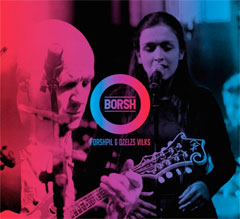
A concert scheduled the evening of Feb. 25 in Rīga reminded me of a recently released album, Borsh, which is a collaboration between the folk-rock band Dzelzs vilks and the “modern traditional” Jewish group Forshpil.

Dzelzs vilks dates from the year of Latvia’s renewed independence, 1991. It started as a metal band, but then migrated to alternative and finally folk rock. Fronted by Juris Kaukulis, Dzelzs vilks has kept busy with concerts and recording albums. The band’s 10th album, Dzelzs Vilka Teātris was released last year.

Forshpil has been around just since 2003 and performs either as a duo or as a four-piece band. The group presents, in Yiddish, the music of the Ashkenazi Jews, but with a modern twist, combining such elements as klezmer and jazz.

Released in November on the Pasaules mūzika label, Borsh includes nine tracks that make for an interesting mix of sounds, including the vocals of Forshpil singer Aleksandra Lurje.

Besides Kaukulis, who performs vocals, the mandolin and the guitar, Dzelzs vilks on Borsh includes Kaspars Tobis on keyboards, Mārcis Judzis on percussion,  and Valērijs Cīrulis on vocals and bass. And besides Lurje, Forshpil has Iļja Šneiveiss on accordeon and reed pipe, Inna Raihmane on violin and Artjoms Vesna on percussion.

For a taste of the bands’ collaboration, watch the YouTube video of them performing “Dieviņš brauca.”

Borsh

Borsh is a collaboration between the bands Dzelzs vilks and Forshpil.

Andris Straumanis is a special correspondent for and a co-founder of Latvians Online. From 2000–2012 he was editor of the website.