Book by German historian examines early years of Rīga Latvian Society

The Rīga Latvian Society and its landmark building at Merķeļa iela 13 have played an important role in fostering Latvian national identity. A recently released book, Rīgas Latviešu biedrība un latviešu nacionālā kustība no 1868. līdz 1905. gadam, examines the society’s early history.

Written by historian Kristine Wohlfart, the book is based on the author’s doctoral dissertation. The work was originally published in Germany as Der Rigaer Letten Verein und die lettische Nationalbewegung von 1868 bis 1905 by the Herder-Institut in Marburg.

Wohlfart, who studied philology at the University of Latvia, used the archives of the Rīga Latvian Society in her research. Her analysis, according to press releases announcing the book’s publication, shows that the formation of Latvian identity was not spontaneous, but the result of a concerted effort by activists who wanted to see the development of a modern, politically autonomous nation.

The society was formed in 1868. Its first building was erected in 1869, according to the society’s website, but was destroyed by fire in 1908. The current building was completed in 1909. The society’s activities were suspended in 1940 after the Soviet occupation, but the organization was re-established during the National Awakening period of the late 1980s.

The translation of Wohlfart’s book into Latvian was prepared with support from the Goethe Institute and the German Foreign Ministry.

Rīgas Latviešu biedrība un latviešu nacionālā kustība no 1868. līdz 1905. gadam was published by the University of Latvia.
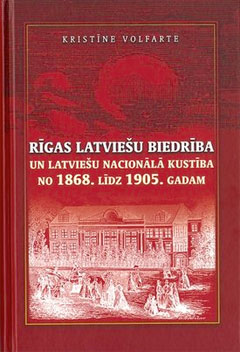
Rīgas Latviešu biedrība

In a recently released book, German historian Kristine Wohlfart examines the early years of the Rīga Latvian Society.

Andris Straumanis is a special correspondent for and a co-founder of Latvians Online. From 2000–2012 he was editor of the website.

In Eastern Latvia, they love ‘Old Spice Guy’ so much they made him king

The Old Spice Guy has become the king of Eastern Latvia, according to a recent video posted online as part of the rebranding of the Procter & Gamble men’s product line.

The company’s viral marketing campaign has featured Isaiah Mustafa, an actor and former National Football League player, addressing women in an effort to convince them that Old Spice products would make their man smell good. The campaign has aimed for a younger demographic than Old Spice’s traditional customers.

In a July 12 video posted on the Old Spice Guy’s YouTube channel, Mustafa replied to a Twitter message from American comedian and talk show host Ellen DeGeneres.

“Things have been going great for me,” says Mustafa, who is dressed in a bath towel and crown, and holds a sceptre. “In Eastern Latvia, they love Old Spice Body Wash so much they made me king. Which is great, because I love grapes.”

Ojārs Kalniņš, head of the Latvian Institute, referenced the video in an online commentary noting Latvia’s economic turnaround and the country’s growing popularity. The video had been viewed more than 690,000 times as of July 24.

The entire Old Spice viral campaign has drawn plenty of media attention, including from The New York Times, Great Britain’s Guardian and CNN. However, the campaign of YouTube “responses” has come to an end, according to Social Times and other media.

Old Spice Guy

In a video posted on YouTube, actor Isaiah Mustafa as “Old Spice Guy” says he has been made king of Eastern Latvia. (Screen capture from YouTube)

Andris Straumanis is a special correspondent for and a co-founder of Latvians Online. From 2000–2012 he was editor of the website.

Youth choir Mūza takes on Renaissance, contemporary works

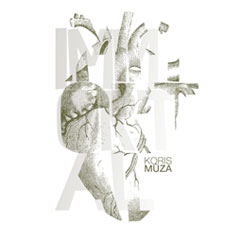
The Rīga-based youth choir Mūza, the history of which goes back to 1947, has released it latest album. Titled Immortal, the album was recorded in March and April in the Rīga Reformation Church (Rīgas Reformātu baznīca).

The album, according to a press release from the choir, includes two Renaissance works, Gregorio Allegri’s “Miserere Mei” and Giovanni Pierluigi da Palestrina’s “Sicut Cervus.” Also on the album is contemporary American composer Eric Whitacre’s “Lux Aurumque,” works by Latvian composers Raimonds Tiguls and Andris Dzenītis, and “Immortal Bach,” a piece by Knut Nystedt.

Soloists on the album are Laura Baumane, Sniedze Prauliņa, Jurģis Cābulis, Uģis Menģelis and Līga Priede, while the choir conductors are Rihards Rudzītis and Guntis Cimiņš.

According to its website, www.korismuza.lv, the choir began with the long name “LPSR Arodbiedrību Centrālās Padomes strādnieku centrālā kluba jauktais koris,” essentially a workers’ club mixed choir. Its director for many years was Leonīds Vīgners (1906-2001). The choir was reformed in 1999 as a youth choir. Today the choir has more than 30 members.

Besides it official website, Mūza also has pages on MySpace, draugiem.lv and ReverbNation.

Immortal

Youth choir Mūza’s new album, Immortal, features both contemporary and Renaissance works.

Andris Straumanis is a special correspondent for and a co-founder of Latvians Online. From 2000–2012 he was editor of the website.