Data show migration to Ireland slipping; census continues in Latvia

While the census underway in Latvia aims to figure how many people are left in the country, it appears fewer are leaving for Ireland these days.

Data on Personal Public Service Numbers (PPSNs), which people use when seeking government services in Ireland, show that just 503 citizens of Latvia sought the identifiers during the first three months of this year. That’s a 41 percent drop from the 856 who received PPSNs during the same period last year.

In all, 3,134 persons from Latvia got PPSNs in 2010, a decline from the 3,916 recorded in 2009, according to statistics gathered by Ireland’s Department of Social Protection.

Since 2000, more than 46,000 persons from Latvia have received PPSNs, the greatest number—9,328—coming in 2005, or the year after Latvia joined the European Union.

While not an accurate gauge of the Latvian population in Ireland, the number of PPSNs is used as a measure of migration to Ireland. The island nation, once a hotbed of economic activity that drew tens of thousands of laborers, has seen a decrease in immigration as its financial fortunes have slipped.

Meanwhile, in Latvia the census continues. After giving residents of the country a couple of weeks to count themselves online, census workers now have fanned out across Latvia. They are scheduled to continue their work until May 31.

As of April 12, more than 780,000 Latvian residents have been counted, according to Aldis Brokāns, press secretary of the Central Statistical Bureau in Rīga.

Bureau officials have especially commended census workers in the Latgale region of eastern Latvia, where despite especially poor road conditions that in some cases have prevented use of automobiles, the head counters have continued their efforts, Brokāns said in a press release.

Andris Straumanis is a special correspondent for and a co-founder of Latvians Online. From 2000–2012 he was editor of the website.

Latvia’s honorary consulate in Peru joins list of those with websites

Latvians who find themselves in Peru and need help from their country’s honorary consulate now have a website they can visit for basic information, according to the Ministry of Foreign Affairs.

The consulate, which began operation in Lima in 2005, is run by Honorary Consul Raul Santiago Lozano Merino. The consul, according to an April 13 press release from the Ministry of Foreign Affairs, has been active in promoting Latvia in Peru, as well as defending the interests of Latvian residents in the country.

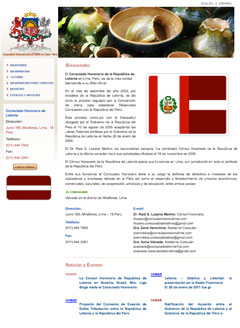
The website, available in Spanish and English, is at www.consuladoletonialima.com. The site includes information about the consulate, about relations between Peru and Latvia, and about things travelers from Latvia should know about the South American country.

Thanks to the efforts of the honorary consulate, a park named for Latvia was dedicated in 2008 during President Valdis Zatlers’s trip to Peru, according to the foreign ministry. The park is in Miraflores, a suburb of Lima.

The honorary consul also has kept busy helping Latvian citizens who have gotten into trouble with the law. The number of Latvian citizens who have been jailed in Peru for trying to transport narcotics has increased, according to the foreign ministry.

Besides the one in Peru, other Latvian consulates and honorary consulates with their own websites include representatives in Greece, Indonesia, Lebanon, Luxembourg and, in the United States, Florida and New York.

Website for Peru honorary consulate

The new website for Latvia’s honorary consulate in Lima, Peru, provides information in Spanish and English.

Andris Straumanis is a special correspondent for and a co-founder of Latvians Online. From 2000–2012 he was editor of the website.

Indie music artists from Latvia offer free digital albums for download

Music lovers abroad looking for new tunes from Latvia can sometimes find complete albums available free online, especially from little-known or independent artists. And downloading the music does not mean having to violate copyright laws, although the artists sometimes request small donations if the album is appreciated.

Among artists whose music we have explored in recent weeks are the group Gaujarts, the singer-songwriter Kārlis Kazāks, the boisterous ensemble Oranžās Brīvdienas, and the four-member Mongowery.

Musical artists make free downloads available to promote their work and to cultivate new listeners.

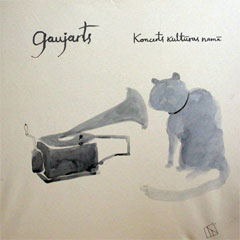
Gaujarts, a band with an ecletic sound, in 2008 released its debut album, Koncerts kultūras namā. If some elements of its sound are familiar, consider that the band’s members include Edgars Šubrovskis of now-defunct group Hospitālu iela. Other members of Gaujarts are Mārcis Gurtiņš, Edgars Mākens, Ģirts Šolis and Maija Ušča. To get the 11-track album, visitors to the band’s website, www.gaujarts.lv, are asked to sign up for the Gaujarts newsletter.

Kazāks has a long history with music, as his unusual biography reveals. His résumé includes performing with the bands Dull Doll and Oceanfall (anyone remember either one?). Now Kazāks is on his own and making some wonderful music. His most recent album, 16 stundas, was released April 4. Our favorite song title, if not our favorite song, from the 10-track album is “Ļauj man izgarot” (Let Me Evaporate). The album is available on his website, www.kazaks.lv. His 2008 album, Uz manām plaukstām also can be downloaded.

Oranžās Brīvdienas is an ensemble, led by Speiss (Ints Ķergalvis), that was formed in 2000 in Kuldīga. The group calls its musical style “turbofolk,” but there’s more turbo than folk in it: Ska, reggae, metal, rock and disco are among elements noted in the band’s description. A 10-year, 14-track retrospective album, Evribadī tancevaķ, was let loose in March and can be found on the website, www.oranzas.lv.

Mongowery is a group formed in 2004. Its members include Matthew Mongowery, Deniss Mironovs, Roman Beļov and Sveta Navrozašvili. The band’s biography states that its style is not restricted by genre, although the band’s 2009 album Seed Please clearly has rock influences. While the band is better known in the Russian music scene in Rīga, the six-track album is all in English save for one song. The album is available by finding the link on Mongowery’s Facebook page, or by visiting the direct link on the file-hosting service www.4shared.com.

Many other artists’ recordings can be found by visiting genre-specific websites, such as punk.lv, or by following music-oriented blogs. The underground music recording project Tornis, which is on hiatus, provides a retrospective album, TORNIS: 20 gadi, 20 dziesmas, for free on its website, www.tornis.lv.

Mongowery

The band Mongowery, part of Latvia’s Russian music scene, offers its debut six-track album as a free download. (Publicity photo)

Gaujarts album

Gaujarts released Koncerts kultūras namā in 2009 both as a free digital download and as a compact disc. The band asks visitors to its website to register for a newsletter in order to get the download.

Andris Straumanis is a special correspondent for and a co-founder of Latvians Online. From 2000–2012 he was editor of the website.