Novel from Australia examines fate of Latvian soldiers detained in Sweden

Oskars Lapa’s latest book, the novel Castle of Light, focuses on a group of Latvian soldiers who escape the Red Army’s siege of Danzig during World War II and flee across the Baltic Sea to Sweden, only to be put in detention to await their fate.

Lapa, who lives in Australia, notes that the novel is inspired by actual events.

“Within weeks of their arrival,” according to a description of the book posted by First Edition Book Sales, “the Swedish Cabinet concludes a secret deal with Soviet Russia. In exchange for Polish coal vital to Sweden’s steel industry, the Swedish government will deport to the Red Army all the military refugees who have fought on the Eastern Front.

Castle of Light,” the description continues, “starkly dramatises the collision between humanity and politics that generates hunger strikes, suicide and murder. Coiled within the drama is Sweden’s unique past that underlies the motivation to undertake such an abhorrent act.

Castle of Light starkly dramatises the collision between humanity and politics that generates hunger strikes, suicide and murder. Coiled within the drama is Sweden’s unique past that underlies the motivation to undertake such an abhorrent act.”

This is Lapa’s third book. He previously wrote Adelina’s Garden (2010) and The Path of the Moon (1995).

Castle of Light is available for AUD 25 (plus postage and handling) from the Sydney Latvian Centre, P.O. Box 457, Strathfield, NSW 2135, Australia, as well as direct from the author, Oskars Lapa, P.O. Box 210, Kurmond, NSW 2757, Australia.
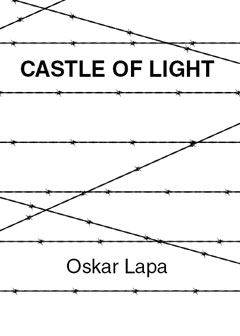
Castle of Light

Castle of Light is Oskar Lapa’s third book.

Andris Straumanis is a special correspondent for and a co-founder of Latvians Online. From 2000–2012 he was editor of the website.

PMLP: Last year, 14,450 residents of Latvia permanently moved abroad

A total of 14,450 residents of Latvia moved abroad permanently last year, according to data compiled by the Office of Citizenship and Migration Affairs (Pilsonības un migrācijas lietu pārvalde, or PMLP).

More than half of those, the office reported in a March 8 press release, moved to Great Britain and Ireland.

In all, a total of 72,292 former residents of Latvia now list their permanent residence abroad, according to the PMLP. However, the total number of residents who have moved abroad is much greater. According to the 2011 census, some 190,000 people have left Latvia since 2000.

The PMLP press release noted that some Latvian residents have chosen to move to “exotic” locations, such as Macedonia, Ghana, Jordan and Iraq.

Andris Straumanis is a special correspondent for and a co-founder of Latvians Online. From 2000–2012 he was editor of the website.

Conference in Rīga addresses citizenship

A conference about citizenship—part of the Saeima’s ongoing discussion about changes to the Citizenship Law—is scheduled March 2 at the University of Latvia in Rīga.

The title of the conference is “Latvijas pilsonība 21.gadsimtā” (Latvian Citizenship in the 21st Century). A number of experts are expected to participate, including members of the Latvian parliament, legal scholars from the University of Latvia, and representatives of various diaspora organizations, including the World Federation of Free Latvians (Pasaules brīvo latviešu apvienība).

“The Citizenship Law was passed in 1994 and saw its last changes in 1998,” Ingmārs Čaklais, chair of the parliamentary subcommittee charged with reviewing proposed amendments to the law, said in a Saeima press release. “During this time Latvia and the world have changed, and the law no longer mirrors what is happening in society and its values, ignoring changes brought about by joining the European Union and the processes of migration.”

The subcommittee headed by Čaklais is reviewing a bill that would amend the citizenship law. Among changes proposed in the bill are once again giving World War II-era exiles and their descendants the right to become dual citizens of Latvia and their home country. Under current law, Latvia does not allow dual citizenship.

The bill, No. 52/Lp11, is the same as legislation proposed during the 10th Saeima. It was reintroduced by the Legal Affairs Committee on Nov. 3 and passed its first reading on Nov. 10.

Among issues lawmakers have to contend with is whether the amendments should also allow children born of non-citizens of Latvia to automatically become citizens. Under current law, non-citizen parents have to apply for citizenship for their children.

The conference was originally scheduled for January, then moved to Feb. 24, but rescheduled again to March 2.

Andris Straumanis is a special correspondent for and a co-founder of Latvians Online. From 2000–2012 he was editor of the website.