Prāta Vētra closed off their Latvian concert tour with a huge show at Skonto Stadium in Rīga on 17th August. A crowd in excess of 25,000 gathered to see their two and a half hour performance. The show was recorded for an upcoming DVD to be released in November. Earlier that evening the crowd was warmed up by D.J. Toms Grēviņš, followed by a fresh uplifting set by pop-rock group The Sound Poets.
Prāta Vētra took the stage at precisely 21:30 according to schedule and embarked on a 24 song set that featured material from their two latest albums. The show opened with the energetic song “Mēles”, one of few fast songs on the new album Vēl vienā klusā daba. The third song in the set “Bronza” featured Latvian BMX Olympians Rihards Veide, Edžus Treimanis and gold medal winner Māris Štrombergs riding onto the stage catwalk with their BMX bikes in full uniform.
“Nakamā nodaļa”, a beautiful, slow song showcased a duet between lead singer Renārs Kaupers and Evija Smagare, a young and talented singer from Daugavpils. “Ko tu vēl domā” which is also from the latest album Vēl viena klusā daba is probably one of the groups shortest songs coming in at 2 minutes and 12 seconds and because of this it was a sure reprise candidate, during which the all-girl background singing trio “Limonāde” (Kristīne Tkačuka, Ieva Katkovska & Iluta Valtere) got to shine in their short yellow dresses. The first half of the show was ended by a couple of songs sung in Russian which surprisingly made a lot of the crowd sing along. Some jeers and whistles were heard by fans in the crowd which found it rather tasteless for a Latvian group to perform songs in Russian in Latvia.
After a small pause the show continued with the group emerging in white NASA overalls playing their new single “Lantern”. Riding two small movable platforms from either side of the stage, singer Renārs Kaupers, drummer Kaspars Roga and bassist Ingars Viļums met keyboardist Māris Mihelsons and guitarist Jānis Jubalts at the center point of the catwalk that extended out in the public. This five song mid-portion of the concert was very disco-beat-influenced and had a pre-recorded rhythm track underneath the “live music”.
The crowd became ecstatic when rapper Gustavo jumped up on the catwalk stage on “Tur kaut kam ir jābūt”. Kaupers and Gustavo exchanged vocal parts and were joined by the background singers, probably the high point of the entire show. A medley of older hits in this disco version followed and a large group of extras gathered on the stage with lanterns and at one point the white suits had fluorescent strips when the stage lights were turned off – a nice effect well received by the crowd.
The last part of the show had older, classic hits. The group now performing “live” in regular stage clothes played megahits such as “Lec” “Rudens” and “Spogulīts” (Jubalts solo song).
“Četri krasti” and “Īssavienojums” which had an extra never-released verse ended the show, before the group emerged to play two new songs for the encore. Many people had already left or were in the process of leaving the stadium when the group re-emerged one last time to play one of their largest hits “Lidmašīnas” from the Veronika album. People danced and cheered as this song was performed. Concert sound was crystal clear thanks to soundman Tālis Timrots.
The following night an additional privately-sponsored concert was played by the group at the same venue where the repertoire featured older, more classical material. In total some 89.000 people saw the concert tour including the last private show on Saturday, according to band manager Guna Zučika.
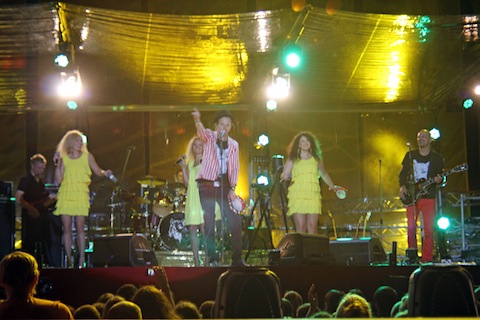
Renārs Kaupers and the rest of Prāta vētra performing with singing trio “Limonāde”. Photo: Raitis Freimanis.
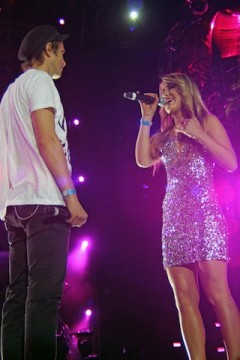
Renārs Kaupers performing with Evija Smagare. Photo: Raitis Freimanis.