Recording of five cantatas by modern Latvian composers reaffirms range of Latvian choral works

It is well known that choir music is an essential aspect of Latvian culture, deeply ingrained into the national consciousness and psyche. Most every Latvian composer has written works for choir, since, besides the extensive choir tradition, there are also many talented choirs that would be ready to perform the work.

The Soviet occupation of Latvia also had its impact on choir music, mainly on the kinds of works that could be permitted – what would be allowed by the authorities. Sacred choir works were frowned upon, and any work that even hinted at Latvian patriotism was unlikely to be performed. Also, unsurprisingly, works composed by exiled Latvian composers were summarily ignored within Soviet occupied Latvia.

Upon renewal of Latvian independence in the early 1990s, musicians both in and beyond Latvia looked to reestablish the links of Latvian music and culture worldwide. One of these initiatives was by renowned Latvian American conductor Andrejs Jansons, who, along with several talented choirs and musicians, recorded multiple Latvian cantatas both by composers who lived in Latvia during the occupation, as well as exiled composers. Though recorded in 1993, the recordings were only recently released by Albany Records in the collection entitled 5 Latvian Cantatas.

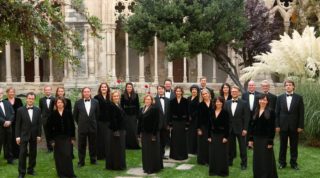
Jansons gathered multiple choirs – the chamber choir Versija, the Latvian Radio Choir, the chamber choir Consum, as well as soloists from and the orchestra of the Latvian National Opera.

The first cantata is by exiled Latvian composer Imants Mežaraups and is the single movement ‘Sērdienītes dziesma’. The work, which weaves together Latvian folk songs about orphans, has both lighthearted moments as well as more tragic sections. The work also makes extensive use of traditional instruments, such as the stabule (recorder) in the somber introduction, as well as the Latvian kokle. Though there are many mournful moments throughout the work, it ends on a celebratory note – the orphan girl finds a rich husband. The choirs, along with soloists, present Mežaraups’ engrossing journey with a vivid, layered performance.

Pēteris Aldiņš’ ‘Pavasara Cikls’ is a collection of works with vernal and pastoral themes, also taken from Latvian folk songs. The playful ‘Rūtoj’saule’ leads in to the atmospheric ‘Ganīdama saganīju’ and then ‘Rotājies, tu, saulīte’ which is at times dance-like, but later majestic. The cycle concludes with the brief, but celebratory ‘Man patika miežu druva’. The work is vibrant and active, and conductor Jansons inspires the needed energy and vitality throughout the cycle.

The weighty and solemn ‘Bēru dziesmas’ by Longīns Apkalns uses Latvian folk songs about death and burials to create a melancholy mood. Occasionally discordant, but at times almost restless, like in the rhythmic ‘Gausi brauca vedējiņi’, the immersive work shows Apkalns’ skill with instrumentation, and the instrumentalists provide for a particularly affecting performance.

Composer Imants Kalniņš is one of the most beloved Latvian composers, both for his work in popular music, as well as his academic and choir music, and his contribution to this collection is ‘Brāli, mans brāli’ a cantata with texts by Latvian poet Rainis. The work begins with Kalniņš’ trademark syncopated and unusual rhythms, and Kalniņš turns Rainis’ expressive poetry, full of themes of standing up to oppression and dreams of freedom, into equally expressive music, particularly in the performance by bass soloist Aivars Krancmanis.

The fifth and final cantata in this collection is Haralds Berino’s ‘Dvēseļu kalnā’. The majestic work of seven individual movements is, in contrast to the other works on the CD, a sacred cantata. The soaring singing of soprano soloist Līga Drozda, is a particular highlight of this recording. Berino, who, during exile, lived in Canada, wrote extensively for choir, particularly sacred works, and his skill in this genre is evident in this cantata, at times meditative, other times exulting, and the performance of the choir elevates this work.

Though it has taken nearly thirty years for these recordings to be released, it was well worth the wait to once again reveal these works to audiences, since it is likely many listeners will be hearing these for the first time. Albany Records has been very supportive of Latvian music and has released many recordings from the archives which would have otherwise been likely forgotten. 5 Latvian Cantatas reaffirms not just the broad and diverse range of Latvian choir works, but also the skill of Latvian performers, particularly conductor Andrejs Jansons who not only made this recording possible, but also inspired vivid and stirring performances.

For further information, please visit the Albany Records website.

5 Latvian Cantatas

Albany Records, TROY 1804

Track listing

  1. Sērdienītes dziesma – Imants Mežaraups

Pēteris Aldiņš – Pavasara cikls

  • Rūtoj’ saule
  • Ganīdama saganīju
  • Rotājies, tu, saulīte
  • Man patika miežu druva

Longīns Apkalns – Bēru dziesmas

  • Jūdzat bērus, jūdzat raudus
  • Gausi brauca vedējiņi
  • Es visu viesiņu gaidītāja
  • Ko mēs labi pārnesām

Imants Kalniņš – Brāli, mans brāli

  1. Zēniņa dziesma
  2. Nabaga brālis
  3. Karaļmeita

Haralds Berino – Dvēseļu kalnā

  1. Dvēseļu kalnā
  2. Dievs ir gaisma
  3. Klusuma koks
  4. Debesu lāses
  5. Lūgšana dievnamā
  6. Laipnais vārds
  7. Spožums tam sāp

Egils Kaljo is an American-born Latvian from the New York area . Kaljo began listening to Latvian music as soon as he was able to put a record on a record player, and still has old Bellacord 78 rpm records lying around somewhere.

Book, CD a tribute to exile musical trio Trīs no Pārdaugavas

One of the most serendipitous events in exile Latvian history is the coming together of the musical trio Trīs no Pārdaugavas. Initially planned as a one-off performance, the group performed together for more than twenty years, entertaining both Latvians in exile and later performing in Latvia as well. The uniquely talented members – Fēlikss Ērmanis and his resonant vocals, Vilnis Baumanis and his impeccable songwriting and arrangement abilities, and multi-instrumentalist Mārtiņš Ērmanis – came together to form a singular musical group. Not content to just sing Latvian standards, their original songs ranged from the humorous to the deeply serious, often reflecting exiled Latvian life – being Latvian in the United States. Baumanis’ thoughtful, nuanced lyrics, along with their intricate three-part harmonies (all three were talented singers) resulted in Trīs no Pārdaugavas becoming one of the most beloved exile ensembles, whose songs still are fondly remembered today.

Though it has been decades since the group last performed, and, sadly, only one member – Baumanis – is still alive, interest in their music and their accomplishment remains. Baumanis, along with distinguished Latvian author Nora Ikstena, collaborated to write down the definitive story of Trīs no Pārdaugavas. Published in 2020 by the Micrec recording company, the book, simply entitled Trīs no Pārdaugavas, provides a history of the group and their accomplishments both in the United States and in Latvia.

Always a popular draw at Latvian events, the group’s sly humor helped Latvians forget the difficulties of life in their adopted home. As part of their concerts, they often poked fun at recent events at a particular Latvian center, often including verses about events having taken place that same day.

The book is also a biography of Vilnis Baumanis. Baumanis’ life story also offers some fascinating anecdotes, including a chapter about his work at Voice of America. Baumanis worked there for many years, and one can follow along the growth, and then decline, of the radio service. The book also details his childhood years in Latvia, then memories from Displaced Persons camps in Germany and then on to exile in the United States. The book’s introduction, by Ilze Jurkāne, also provides a glimpse of the bohemian atmosphere of the Baumanis’ house in New Jersey, where multiple Latvian families lived and Latvians regularly congregated.

The group collectively decided to disband in the early 1990s, with the explanation given that, along with the restoration of Latvian independence, the group had achieved all that they had set out to do, and there was less of a need for them now that Latvia was again free. Certainly, their concert at the Mežaparks Stage, which gathered tens of thousands of listeners, was the culmination of their efforts to keep alive the Latvian spirit in their songs.

At just over one hundred pages, it is a slim book. Some readers may be left wanting more, since the group was such a vital thread in Latvian life for decades. One does wish there was more about the songs themselves – there are just a few pages detailing the inspiration for some of the songs, but not much else. The group’s albums often had notes and commentaries on the songs, which were often fascinating and entertaining, and one wishes there was more of that in the book. As the songs were written in the 1970s and 80s, some references may be lost on readers, particularly those outside the United States. If one had little knowledge of the group or of exile Latvian life in general, this book only provides a brief glimpse, and one may finish the book not fully understanding how truly essential Trīs no Pārdaugavas was to the American Latvian community.

The book comes along with a CD of the group’s original songs recorded by the group Ducele. Ducele, who call themselves a Latvian ‘ecological’ ensemble, perform the songs with aplomb, giving them a fresh sound and perspective. Humorous and lighthearted songs like ‘Monika’ and ‘Strīķēšana’ are as lively and good natured as the originals, but, perhaps surprisingly, it is the more serious songs like ‘Tauta tālumā’ and ‘Dziesma tālāk iet’ that are most effective and moving. Ducele also offer their own interpretive approaches to some of the songs, such as the slight Celtic atmosphere given to ‘Dzintarjūra’.

Music and songs were an integral part of Latvian exile life, an audible link to the Latvia many had fled after World War II. Trīs no Pārdaugavas strengthened and amplified that link, leaving a particularly impressive collection of recordings that remain beloved and relevant decades later. Though their songs spoke to an exile Latvian audience, the songs still speak to all Latvians worldwide, even today. The new recordings by Ducele also confirm Baumanis’ songwriting talents, as the songs are as fresh and topical today as they were forty or more years ago. Nora Ikstena’s and Vilnis Baumanis’ book Trīs no Pārdaugavas is a valuable, enlightening document of the role of the group in exiled Latvian life and is a reminder of not just how talented, but vital and essential the group was.

For further information visit the Micrec website as well as the Ducele Facebook page.

Trīs no Pārdaugavas

Nora Ikstena and Vilnis Baumanis

Micrec 2020

CD track listing:

  1. Monika
  2. Latvieši kopš seniem laikiem
  3. Dziesma tālāk iet
  4. Lienīte
  5. Oliņ, boliņ
  6. Tauta tālumā
  7. Simtiņš
  8. LLA
  9. Dzintarjūra
  10. Strīķēšana
  11. Kaimiņš
  12. Ratiņš

Egils Kaljo is an American-born Latvian from the New York area . Kaljo began listening to Latvian music as soon as he was able to put a record on a record player, and still has old Bellacord 78 rpm records lying around somewhere.

Dagamba meld classical Tchaikovsky with modern musical styles

Instrumental ensemble Dagamba have made a name for themselves both in Latvia and internationally not just for their technical skill and proficiency, but also their musical arrangements, which seamlessly combine both modern and classic elements. They have combined popular music with classical music on multiple albums, including Recycled, Ludwig Van Rammstein, and Seasons (a modern interpretation of Antonio Vivaldi’s ‘Four Seasons’). In 2019, they returned with Feat. Tchaikovsky which features arrangements of works by famous 19th century Russian composer Pyotr Ilyich Tchaikovsky that include contemporary elements.

Dagamba, featuring cellist Valters Pūce, pianist Dainis Tenis, percussionist and occasional vocalist Hamidreza Rahbaralam, bass cellist Antons Trocjuks, and drummer Artūrs Jermaks, were formed in 2011 and this is now their fifth album. The group has performed throughout Europe, including an appearance at the Glastonbury Festival in the UK.

The opening track, ‘Football’, begins with a traditional string introduction, based on Tchaikovsky’s ‘1812 Overture’, which then evolves into a thunderous, distorted take on the French anthem ‘La Marseillaise’. One assumes the title is meant to evoke the arena spectacle of a football game, with moments of quiet intensity followed by euphoric bursts of energy.

Tchaikovsky’s delicate ‘Dance of the Sugar Plum Fairy’ forms the foundation for Dagamba’s ‘Nutcracker Rock’, where the composer’s dreamy melody becomes almost sinister and grotesque. A similar effect is achieved in ‘Cosmos’, which also features a work from Tchaikovsky’s ‘The Nutcracker’ – ‘Waltz of the Flowers’. This track also begins with Dagamba’s interpretation of Richard Strauss’ famous introduction to ‘Also Sprach Zarathustra’, though this does sound somewhat out of place with the music that follows.

Rahbaralam provides vocals and rap on the track ‘Proto-Slavic Rap’, which incorporates Tchaikovsky’s ‘Marche Slave’. Rahbaralam’s vocals provide an additional musical layer to this performance. With no lyrics or translation provided, the listener is left to guess what Rahbaralam is singing, but perhaps this adds to the mysterious nature of the performance.

Dagamba also develop their own original compositions, such as the somber and melancholy ‘West Goes East’, composed by Pūce, as well as the driving, fateful ‘The Five’, composed by Tenis.

Dagamba have again successfully shown that music from hundreds of years ago can still sound modern and contemporary today. Their melding of classical melodies with more recent sounds and musical styles creates for enjoyable and unique pastiches, and reaffirms Tchaikovsky as one of the greatest composers in history – the composer’s melodies and works are still powerful and moving today.

For further information, please visit the Dagamba website.

Feat. Tchaikovsky

Dagamba

2019

Track listing

  1. Football
  2. Nutcracker Rock
  3. West Goes East
  4. Cosmos
  5. Proto-Slavic Rap
  6. The Five
  7. Black Swan
  8. Little Black Swan Dance
  9. Romeo and Juliet
  10. Variation No. 6

Egils Kaljo is an American-born Latvian from the New York area . Kaljo began listening to Latvian music as soon as he was able to put a record on a record player, and still has old Bellacord 78 rpm records lying around somewhere.