Album explores treasures of Latvian classical music

The world of Latvian classical music contains many treasures that are unfortunately known only to Latvians. Hoping to rectify this situation, in 2000 UPE Recording Co. released the album Latvian Millennium Classics. This was a collection of some of the best-known works in Latvian classical music, designed as an introduction to those—like me—less schooled in the genre. Realizing that just one collection could not possibly be enough, UPE released another, Latviešu klasikas dārgumi, in 2001.

This release again collects a number of well-known works by Latvian composers onto one compact disc. The major difference this time is that all the works on the record are performed by the Liepāja Symphony Orchestra, conducted by Imants Resnis. Latvian Millennium Classics had many different performance types (orchestral, solo instruments, choir), while all the tracks on this CD are orchestral.

Though there is quite a good deal of overlap between the two discs, having all the pieces performed by the same orchestra adds a flow and continuity to Latviešu klasikas dārgumi that was not present on the earlier record. The LSO is held in high regard in not just Latvia, but the rest of the world as well. This CD is a testament to that fact. The orchestra is able to bring out the best in just about any piece it plays, and is especially capable of doing tremendous justice to the works of Latvian composers.

The album starts off with two pieces by Andrejs Jurjāns, “Ačikops” and “Barkarola.” “Ačikops” is from the “Latvian Dances Suite” and is a tribute to Latvian folk dances in style and melody. One can almost imagine the folk dancers dancing around in circles and clapping along when listening to this piece. Just as on Latvian Millenium Classics, “Barkarola” features the beautiful french horn of Arvīds Klišāns.

No symphonic anthology would be complete without one of the most famous pieces of Latvian classical music, “Melanholiskais valsis” by Emīls Dārziņš. The melody is at once simple, beautiful and memorable.

Jānis Mediņš also gets two pieces on the album, “Ārija” and “Ziedu valsis” from the ballet “Mīlas uzvara,” an excellent sample from this prolific composer’s output. Mediņš had one of the richest portfolios of compositions, and these two pieces show why the Latvian people held him in such high regard.

The somber piece “Rudens” by Alfrēds Kalniņš is another highlight. The composition was completed in 1941, and, intentional or not, its dark melody foreshadowed the difficult times ahead for the Latvian people.

With Latvian Millenium Classics, I lamented the fact that two of my favorite Latvian composers, Jānis Ivanovs and Imants Kalniņš, were not included. I was very pleased to find that both composers were represented on this release. Their absence on the earlier release is more than made up for here, as the beauty of Ivanovs’ compositions are displayed in two pieces: in the second movement of his “Cello Concerto” and in fragments of the music from the film Salna pavasarī. The “Cello Concerto” features Agnese Rugēvica on cello. She is able to bring out the sublime beauty of the piece. Ivanovs’ “Cello Concerto” is one of my favorite pieces of Latvian classical music, and this performance of it only reinforces my belief.

Imants Kalniņš is represented by the second movement of his “4th Symphony,” one of the most popular symphonies written by a Latvian composer. Its unique blend of all kinds of styles has ensured this symphony a permanent place in the annals of Latvian music. Even though this symphony was written 30 years ago, it still sounds fresh, thanks to the skill of the Liepāja orchestra. It alternates between the playful and the aggressive, and the merging of these two styles is what makes this piece so dear to so many listeners.

Jānis Mediņš’ brother Jēkabs also gets a track here with his work “Leģenda.” This is another dark and sad piece, and it sounds almost mystical to me, as if it was trying to recall many an ancient Latvian folk legend with its music.

World-reknowned Latvian composer Pēteris Vasks’ talent is displayed by the inclusion of the “Cantabile for String Orchestra.” As the liner notes indicate, Vasks’ focus is more on human emotion, rather than on events or the current time. The liner notes also say that the “Cantabile” has to do with the expression of joy, but it sounds rather bleak to me! That is no matter, as Vasks is at his best when he is documenting deep sadness and pain, which few other composers can do as well.

Finishing off the album is one section of the longer suite “Kāzu dziesma” by Romualds Kalsons. Kalsons, along with Vasks and Imants Kalniņš, make up what are called the “new voices” of Latvian classical music, each with their own unique style and interpretation. Kalsons’ piece is one of celebration, and it is a fitting end to this celebration of Latvian classical music.

I particularly wanted to commend UPE for the liner notes (in Latvian and English) that accompany this album. They provide much more in-depth documentation about each of the composers and their works, as well as the Liepāja Symphony Orchestra. This is far better than the rather anemic notes provided with the Latvian Millennium Classics release.

Through almost 70 minutes of music, the Liepāja Symphony Orchestra traces the growth and evolution of Latvian classical music, through some of the best-known composers and their best-known works. This is a task of rather epic proportions, because there have been so many styles through the last 100-plus years of music in Latvia, and it is a difficult job for one orchestra to do it all justice. However, the LSO is well up to the task and the results are admirable. Latviešu klasikas dārgumi pays homage to all the great music that has already come, and leaves the listener in eager anticipation of what the next century of Latvian music might bring.

Details

Latviešu klasikas dārgumi

Liepājas simfoniskais orķestris

UPE Recording Co.,  2001

UC003

Egils Kaljo is an American-born Latvian from the New York area . Kaljo began listening to Latvian music as soon as he was able to put a record on a record player, and still has old Bellacord 78 rpm records lying around somewhere.

Compilation captures the nineties

The nineties saw a tremendous musical output in Latvia. Free of the oppressive Soviet system and rules, artists and groups were free to play whatever they wanted to and sing whatever lyrics they wanted to. To celebrate this memorable decade, Mikrofona ieraksti has released a compilation of the most popular songs of these years, Desmitgades top dziesmas.

The compact disc as an impressive list of artists, including Līvi, Pērkons, Jauns mēness and even Raimonds Pauls, not to mention a number of others.

Now, if you are like me, you most likely already had most of these songs anyway, but there are a few I had not heard before. Also, it is very convenient to have all these great songs on one CD, providing a great introduction for those who are not as familiar with Latvian music.

Jauns mēness has two songs on the album, the early hits “Piekūns skrien debesīs” and “Kad mēness jūrā krīt” (which is probably my favorite Jauns mēness song of all time). It also shows how Jauns mēness could easily move between a melodic song like “Piekīns” and a hard-driving song like “Mēness.”

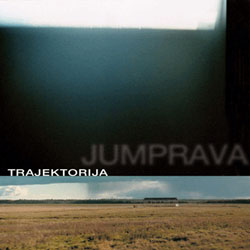
Jumprava is represented by its quirky hit “Peldētājs.” Upon first listen of this song many years ago, I could not believe that this could have been a hit, but hearing it now reminds me of its individuality.

One thing that left me a bit confused is that the band Pērkons is represented by the song “Gandrīz tautas dziesma.” Not that I doubt the greatness of this song, but in the liner notes, it is listed as being from 1992 when it originally was released in 1987. I surely will not argue with its inclusion here; it is truly one of the great Latvian rock songs.

Another Latvian folk-rock institution is Bet Bet. The band also get two songs on this collection: “Vakara vējā” and “Kapēc man nav sarkans mersedes.” The former is also one of my favorites, due to the beautiful lyrics and guitar melody that opens the song.

Though most of the songs on the CD are in rock style, pop and dance also put in appearances. The sentimental ballad “Kad man vairs nebūs 16,” performed by Olga and Bāze-7, is a song I had not heard before. I guess it is likeable in its own way, but perhaps a bit heavy on the syrup. Latvian dance duo 100. debija is represented with its version of the Jumprava classic “Vēlreiz.” I think that this is a very excellent reworking of the song. Also included is the slick 2000 hit “Baltā dziesma” by Raimonds Pauls, performed by Gunārs Kalniņš and Kristena. This song is very well produced, but is surely not for me—I skip it every time I listen to the album!

Hard rock fans will also rejoice, since hard rock stalwarts Linga and Līvi are included as well. Linga’s song “Spēle” (which took a few listens before I began to appreciate it) is a great heavy song, with a very catchy chorus. Līvi is represented by the big hit “Piedod man” (again with a simple but memorable chorus) and the appropriately titled “2001.”

Satirists and irreverent commentators Labvēligais tips also get two songs. These are “Alumūnijas cūka” (the original version, not the one from the band’s “best of” collection), and the tale of an out-of-control bus, “Omnibuss” (which has the last minute hacked off, probably due to time constraints).

No Latvian compilation would be complete without the music of Imants Kalniņš. The group Menuets performs “Alvas zaldātiņi” and Jauns mēness performs the hauntingly beautiful “Es redzēju sapnī,” highlighted by the textured keyboard part.

Veteran Latvian singer Igo also gets a song on this collection, “Bet dzīvē viss ir savadāk,” once again showing why he is remains one of the most popular singers.

And, of course, who could forget the biggest Latvian rock band at this time, Prāta Vētra? The band’s megahits “Tavas majas manā azotē” (probably my favorite Prāta Vētra song) and “Brīvdienas nav manas laimīgās dienas” add to the already bright star power of this record.

The liner notes on this record stink, however. You would figure that besides having the music of the 1990s, maybe MICREC could have had some commentary from some of the bands, giving their opinion of the decade. But what we get is two pages of advertisements for gasoline and hardware, among other things. I suppose I can’t complain too much, since it was these companies that made this record possible.

Summarizing all of the 1990s on one CD is an impossible task. However, this collection does an admirable job. Listeners could argue for hours on end about what should have been here, what should not have been here and so on, but if you are looking for a great introduction to Latvian music, look no further.

Details

Desmitgades top dziesmas

Various artists

MICREC,  2001

Egils Kaljo is an American-born Latvian from the New York area . Kaljo began listening to Latvian music as soon as he was able to put a record on a record player, and still has old Bellacord 78 rpm records lying around somewhere.

The poetry of Elsbergs gets the Dimiters treatment

Cik smalkā diegā viss karājās

Before Latvia regained independence, and before the rise of the Internet, information about things going on in Latvia was tough to get. This was especially so for those interested in Latvian music. In fact, unless you had relatives or friends living in Latvia, you wouldn’t know anything about Latvian music, except for the rare occasion when a Latvian musician or group was allowed to venture outside of Latvia.

Luckily for me, my family had friends who were still living in Latvia and who were as devout music listeners as I was, even though I was still in my early teen years then. They would send us records and cassette recordings of all the latest music, and this was my only source of information about the Latvian music world. I would listen to each tape and record numerous times until they wore out.

One of the tapes our friends sent us contained songs by Kaspars Dimiters. This cassette recording bore the brunt of my abuse, as I would listen to this one more than any other. The first time my family and I went to Latvia, I promptly went to the record store and found the album Mans kumoss pilsētas baložiem, which contained many of the songs I had loved on the cassette. This has become one of my favorite recordings by any artist and is an album I listen to frequently to this day.

As it turned out, Dimiters had written many other songs that I had liked, but I never had known who performed them. They included favorites such as “Princesīte” (from the 1981 Mikrofons record) and “Mana neveiksminiece” (from a 1982 Mikrofons “bonus” 7-inch record).

Dimiters was an important songwriter during the Soviet occupation, a time when the government often threatened him and prevented his songs from being played on the radio or television. However, as times changed so did Dimiters’ songwriting style. Many of his more recent work has slanted toward political themes and societal commentary. All in all, Dimiters has released about 10 albums.

Last year saw the release of the album Cik smalkā diegā viss karājās. Dimiters is a man of many talents. Not only does he sing, but he also plays the guitar and all the other instruments on the record, and even did all the recording and production work.

Normally, Dimiters writes both the lyrics and music to his songs, but this time he chose to add music to the poetry of Klāvs Elsbergs. All the lyrics on this record were taken from the Elsbergs collection Bēdas uz nebēdu. Elsbergs, son of famous Latvian writer Vizma Belševica, died under mysterious circumstances in 1987.

Elsbergs’ poetry contains a wide range of emotions and feelings that fit perfectly with Dimiters’ sincere and earnest delivery. Because the words are Elsbergs’, this album comes across differently than the rest of Dimiters’ recordings. Dimiters’ lyrics can be very biting and critical; in fact, some of his songs make certain listeners downright uncomfortable.

The album is on the mellow side. Many of the 19 tracks feature just guitar and vocals. However, that does not mean the record is dull, as the songs have varied tempos.

The opening track, and one of my favorites on the album, is the subdued “Viens.”

Another favorite on the record is the very sad song “Asaru krelles.” The lyrics describe a girl who makes a necklace of tears. Dimiters’ voice is ideally suited to tell the tale of this lonely girl who wonders whether someone will ever hold her.

“Es neesmu vientuļā” is a song about the dilemma of a songwriter: if you don’t feel lonely, how do you write songs for the lonely? Dimiters allows the words of Elsbergs to speak for themselves in this song, while providing a simple but effective guitar background.

Fans of the 1980s rock group Pērkons will recognize two of the songs here: “Neatvadīsimies” and “Pasniegtās rokas.” Pērkons’ interpretation of these two songs appeared on their 1987 album Labu vakar (“Pasniegtās rokas” was called “Lampas un zvaigznes” on that record). Although the lyrics are the same, it is quite a treat to hear the more stripped-down treatment of Dimiters, compared to the full band approach of Pērkons.

Many of the songs are on the slower side, but “Āmurzivs” is a more up-tempo offering from the album. The lyrics tell the tale of a boy who was thrown overboard from a ship and is struggling against the tide, trying to stay alive while watching the boat he was on get farther and farther away.

Cik smalkā diegā viss karājās is one of my favorite records of last year, from one of my favorite artists. Though most of the songs are laid back and mellow, it still strikes a chord in a listener, and Elsbergs’ lyrics are compelling listening. (Thankfully the lyrics are included, which helps the listener develop a better appreciation for his words). Dimiters’ songs, whether the lyrics were written by himself or by others, are about the importance of the words and text of the song—about getting certain thoughts across to the listener.

Hopefully this release will be a success, which will lead to Dimiters’ earlier works being re-released. Thankfully these days it is much easier to obtain music from Latvia, so perhaps this album will help introduce the rest of the world to one of Latvia’s most singular songwriters.

Details

Cik smalkā diegā viss karājās

Kaspars Dimiters

Gailītis-G,  2001

Egils Kaljo is an American-born Latvian from the New York area . Kaljo began listening to Latvian music as soon as he was able to put a record on a record player, and still has old Bellacord 78 rpm records lying around somewhere.