Compilation offers taste of music in 2001

For Latvian popular music, 2001 was another memorable year. Old faces returned (such as Prāta Vētra, Credo and Labvēligais Tips), new faces emerged (for example, The Mundane and Māsas). Autobuss debesīs released their first record, rap music continued to develop in Latvia, and dance music became more diverse. Where should the uneducated listener start? Now that broadcasters such Radio SWH and Latvijas Radio 2 are available on the Internet, a listener anywhere in the world can hear the newest sounds in Latvian music. That, or they could purchase the latest summary of Latvian music, the second installment of the SuperIzlase series, SuperIzlase 2.

As they did in 2000, the record companies of Latvia came together with a common goal: to sell more records. How better to do this than with a compilation of all the hits of 2001 on one compact disc? Participants in the 19-track SuperIzlase 2 include MICREC, UPE Recording Co., Baltic Records Group, Platforma Records and Rīga Records.

As always with these kinds of compilations, you get a widely divergent group of songs. It is doubtful that there will be one listener who likes all the tracks, but ideally all listeners should like at least one. Though there are many performers who are alumni of the first SuperIzlase release, about 10 see their first appearance in the series.

Rock fans should have their appetite sated with this collection, as there is plenty on here that could appeal to them. Even if you are like me and had already heard (and bought) most of the rock releases that are represented on here, there is still a good chance that there will be something new on here for you.

Prāta Vētra (BrainStorm) contributes two tracks from their 2001 release, Kaķēns, kurš atteicās no jūras skolas. There is the English-language “Maybe” (oftentimes the English language tracks make me cringe, but this I like). There is also the “acoustic version” of their song “Visskumjākā parāde uz mūsu ielas,” which is different than the version on the album. What’s nice about this version is that it is played on guitar, an instrument not heard often on Kaķēns.

Other rock releases include two songs with music by Imants Kalniņš: a duet betwen Ainars Mielavs and Rēzija Kalniņa, “Apturi mani,” and the Autobuss debesīs song “Ir tikai tveice.” From Tumsa’s latest release, we get the song “Lai būtu tā” (probably the most “listener-friendly” song from their latest album). Labvēlīgais tips’ lyrics continue to become even stranger. The group is represented by the song “Koka klucis Konstantīns”—guaranteed to cause puzzled faces on listeners everywhere. Credo also provide their most “accessible” track, “Tur aiz mākoņiem ir saule,” from their latest album.

Because these kinds of compilations are usually geared towards younger listeners, there is plenty of pop and dance and other such things. Latvian Eurovision representative Marija Naumova appears on two tracks. The first is “Hey Boy, Follow Me,” a catchy, somewhat Latin-sounding song. The secong is a duet with Normunds Rutulis, “Kūko, kūko dzeguzīte,” which strikes me as being a song for the particularly young listener. “Kūko” also features the music of Raimonds Pauls.

Latvia’s own Mariah Carey, Linda Leen, appears on two duets with Arnis “Spaceman” Mednis. The first is “Noktirne,” the music for which I was very surprised to find out was not written by Raimonds Pauls, although it sounds very much like him. Famous Latvian soprano Sonora Vaice also adds some vocal melodies to “Noktirne.” Leen and Mednis ditch Vaice for their next song, the super-slick ballad, “Not to Fall Again.”

Heartthrob Gunārs Kalniņš’ entry for this album is the song, “Pērles un dimanti,” another super-slick pop song that should keep his legions of pre-teen female fans happy.

Dance group A-Eiropa perform the song “Meitenes Rīgā,” while Igo also submits a super-poppy song, “Ir labi kopā būt,” that sounds more like it belongs in the 1970s than the 21st century. Another favorite of the younger crowd is Latvian rapper Ozols, who performs “Bokss.” Also in the rap vein is the song “Rītdiena” by the group Device. BTH, formerly known as Braithouse, also provides a dance song, “Last Christmas.”

One reason anyone buys these kinds of collections is to find out if there is anything new that they had not heard before. In my case, though I had already heard most of the music that I would have liked, there were a couple of things that got my interest. I had not heard of the rock group The Mundane, but I really liked their song “Nav viegli būt tev.” I also like the more poppy group Māsas and their song “Dāvā laimi.” I will have to investigate these groups more on my next sojourn to Latvia.

The liner notes are pretty sparse. Last year they at least had pictures of the groups, but not this year. Also I think it would help in marketing to name the album from which the track was taken and to include any Web sites for the bands or the record labels.

How times have changed since the days of Soviet-style elections even in the music world, when you had the choice of Raimonds Pauls, or… well… Single party systems are a bit of a drag, aren’t they? It is still amazing how varied the Latvian music world has become and what selection a listener has, be they old, young or just very fussy. For a quick overview of where Latvian music stands today check out SuperIzlase 2. It may lead you to discover much of the great music and the great bands in Latvia today.

Details

SuperIzlase 2

Various artists

MICREC,  2001

Egils Kaljo is an American-born Latvian from the New York area . Kaljo began listening to Latvian music as soon as he was able to put a record on a record player, and still has old Bellacord 78 rpm records lying around somewhere.

Album explores treasures of Latvian classical music

The world of Latvian classical music contains many treasures that are unfortunately known only to Latvians. Hoping to rectify this situation, in 2000 UPE Recording Co. released the album Latvian Millennium Classics. This was a collection of some of the best-known works in Latvian classical music, designed as an introduction to those—like me—less schooled in the genre. Realizing that just one collection could not possibly be enough, UPE released another, Latviešu klasikas dārgumi, in 2001.

This release again collects a number of well-known works by Latvian composers onto one compact disc. The major difference this time is that all the works on the record are performed by the Liepāja Symphony Orchestra, conducted by Imants Resnis. Latvian Millennium Classics had many different performance types (orchestral, solo instruments, choir), while all the tracks on this CD are orchestral.

Though there is quite a good deal of overlap between the two discs, having all the pieces performed by the same orchestra adds a flow and continuity to Latviešu klasikas dārgumi that was not present on the earlier record. The LSO is held in high regard in not just Latvia, but the rest of the world as well. This CD is a testament to that fact. The orchestra is able to bring out the best in just about any piece it plays, and is especially capable of doing tremendous justice to the works of Latvian composers.

The album starts off with two pieces by Andrejs Jurjāns, “Ačikops” and “Barkarola.” “Ačikops” is from the “Latvian Dances Suite” and is a tribute to Latvian folk dances in style and melody. One can almost imagine the folk dancers dancing around in circles and clapping along when listening to this piece. Just as on Latvian Millenium Classics, “Barkarola” features the beautiful french horn of Arvīds Klišāns.

No symphonic anthology would be complete without one of the most famous pieces of Latvian classical music, “Melanholiskais valsis” by Emīls Dārziņš. The melody is at once simple, beautiful and memorable.

Jānis Mediņš also gets two pieces on the album, “Ārija” and “Ziedu valsis” from the ballet “Mīlas uzvara,” an excellent sample from this prolific composer’s output. Mediņš had one of the richest portfolios of compositions, and these two pieces show why the Latvian people held him in such high regard.

The somber piece “Rudens” by Alfrēds Kalniņš is another highlight. The composition was completed in 1941, and, intentional or not, its dark melody foreshadowed the difficult times ahead for the Latvian people.

With Latvian Millenium Classics, I lamented the fact that two of my favorite Latvian composers, Jānis Ivanovs and Imants Kalniņš, were not included. I was very pleased to find that both composers were represented on this release. Their absence on the earlier release is more than made up for here, as the beauty of Ivanovs’ compositions are displayed in two pieces: in the second movement of his “Cello Concerto” and in fragments of the music from the film Salna pavasarī. The “Cello Concerto” features Agnese Rugēvica on cello. She is able to bring out the sublime beauty of the piece. Ivanovs’ “Cello Concerto” is one of my favorite pieces of Latvian classical music, and this performance of it only reinforces my belief.

Imants Kalniņš is represented by the second movement of his “4th Symphony,” one of the most popular symphonies written by a Latvian composer. Its unique blend of all kinds of styles has ensured this symphony a permanent place in the annals of Latvian music. Even though this symphony was written 30 years ago, it still sounds fresh, thanks to the skill of the Liepāja orchestra. It alternates between the playful and the aggressive, and the merging of these two styles is what makes this piece so dear to so many listeners.

Jānis Mediņš’ brother Jēkabs also gets a track here with his work “Leģenda.” This is another dark and sad piece, and it sounds almost mystical to me, as if it was trying to recall many an ancient Latvian folk legend with its music.

World-reknowned Latvian composer Pēteris Vasks’ talent is displayed by the inclusion of the “Cantabile for String Orchestra.” As the liner notes indicate, Vasks’ focus is more on human emotion, rather than on events or the current time. The liner notes also say that the “Cantabile” has to do with the expression of joy, but it sounds rather bleak to me! That is no matter, as Vasks is at his best when he is documenting deep sadness and pain, which few other composers can do as well.

Finishing off the album is one section of the longer suite “Kāzu dziesma” by Romualds Kalsons. Kalsons, along with Vasks and Imants Kalniņš, make up what are called the “new voices” of Latvian classical music, each with their own unique style and interpretation. Kalsons’ piece is one of celebration, and it is a fitting end to this celebration of Latvian classical music.

I particularly wanted to commend UPE for the liner notes (in Latvian and English) that accompany this album. They provide much more in-depth documentation about each of the composers and their works, as well as the Liepāja Symphony Orchestra. This is far better than the rather anemic notes provided with the Latvian Millennium Classics release.

Through almost 70 minutes of music, the Liepāja Symphony Orchestra traces the growth and evolution of Latvian classical music, through some of the best-known composers and their best-known works. This is a task of rather epic proportions, because there have been so many styles through the last 100-plus years of music in Latvia, and it is a difficult job for one orchestra to do it all justice. However, the LSO is well up to the task and the results are admirable. Latviešu klasikas dārgumi pays homage to all the great music that has already come, and leaves the listener in eager anticipation of what the next century of Latvian music might bring.

Details

Latviešu klasikas dārgumi

Liepājas simfoniskais orķestris

UPE Recording Co.,  2001

UC003

Egils Kaljo is an American-born Latvian from the New York area . Kaljo began listening to Latvian music as soon as he was able to put a record on a record player, and still has old Bellacord 78 rpm records lying around somewhere.

Compilation captures the nineties

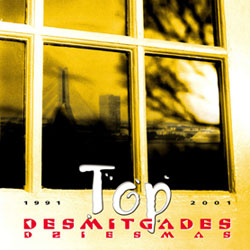
The nineties saw a tremendous musical output in Latvia. Free of the oppressive Soviet system and rules, artists and groups were free to play whatever they wanted to and sing whatever lyrics they wanted to. To celebrate this memorable decade, Mikrofona ieraksti has released a compilation of the most popular songs of these years, Desmitgades top dziesmas.

The compact disc as an impressive list of artists, including Līvi, Pērkons, Jauns mēness and even Raimonds Pauls, not to mention a number of others.

Now, if you are like me, you most likely already had most of these songs anyway, but there are a few I had not heard before. Also, it is very convenient to have all these great songs on one CD, providing a great introduction for those who are not as familiar with Latvian music.

Jauns mēness has two songs on the album, the early hits “Piekūns skrien debesīs” and “Kad mēness jūrā krīt” (which is probably my favorite Jauns mēness song of all time). It also shows how Jauns mēness could easily move between a melodic song like “Piekīns” and a hard-driving song like “Mēness.”

Jumprava is represented by its quirky hit “Peldētājs.” Upon first listen of this song many years ago, I could not believe that this could have been a hit, but hearing it now reminds me of its individuality.

One thing that left me a bit confused is that the band Pērkons is represented by the song “Gandrīz tautas dziesma.” Not that I doubt the greatness of this song, but in the liner notes, it is listed as being from 1992 when it originally was released in 1987. I surely will not argue with its inclusion here; it is truly one of the great Latvian rock songs.

Another Latvian folk-rock institution is Bet Bet. The band also get two songs on this collection: “Vakara vējā” and “Kapēc man nav sarkans mersedes.” The former is also one of my favorites, due to the beautiful lyrics and guitar melody that opens the song.

Though most of the songs on the CD are in rock style, pop and dance also put in appearances. The sentimental ballad “Kad man vairs nebūs 16,” performed by Olga and Bāze-7, is a song I had not heard before. I guess it is likeable in its own way, but perhaps a bit heavy on the syrup. Latvian dance duo 100. debija is represented with its version of the Jumprava classic “Vēlreiz.” I think that this is a very excellent reworking of the song. Also included is the slick 2000 hit “Baltā dziesma” by Raimonds Pauls, performed by Gunārs Kalniņš and Kristena. This song is very well produced, but is surely not for me—I skip it every time I listen to the album!

Hard rock fans will also rejoice, since hard rock stalwarts Linga and Līvi are included as well. Linga’s song “Spēle” (which took a few listens before I began to appreciate it) is a great heavy song, with a very catchy chorus. Līvi is represented by the big hit “Piedod man” (again with a simple but memorable chorus) and the appropriately titled “2001.”

Satirists and irreverent commentators Labvēligais tips also get two songs. These are “Alumūnijas cūka” (the original version, not the one from the band’s “best of” collection), and the tale of an out-of-control bus, “Omnibuss” (which has the last minute hacked off, probably due to time constraints).

No Latvian compilation would be complete without the music of Imants Kalniņš. The group Menuets performs “Alvas zaldātiņi” and Jauns mēness performs the hauntingly beautiful “Es redzēju sapnī,” highlighted by the textured keyboard part.

Veteran Latvian singer Igo also gets a song on this collection, “Bet dzīvē viss ir savadāk,” once again showing why he is remains one of the most popular singers.

And, of course, who could forget the biggest Latvian rock band at this time, Prāta Vētra? The band’s megahits “Tavas majas manā azotē” (probably my favorite Prāta Vētra song) and “Brīvdienas nav manas laimīgās dienas” add to the already bright star power of this record.

The liner notes on this record stink, however. You would figure that besides having the music of the 1990s, maybe MICREC could have had some commentary from some of the bands, giving their opinion of the decade. But what we get is two pages of advertisements for gasoline and hardware, among other things. I suppose I can’t complain too much, since it was these companies that made this record possible.

Summarizing all of the 1990s on one CD is an impossible task. However, this collection does an admirable job. Listeners could argue for hours on end about what should have been here, what should not have been here and so on, but if you are looking for a great introduction to Latvian music, look no further.

Details

Desmitgades top dziesmas

Various artists

MICREC,  2001

Egils Kaljo is an American-born Latvian from the New York area . Kaljo began listening to Latvian music as soon as he was able to put a record on a record player, and still has old Bellacord 78 rpm records lying around somewhere.