Pērkons re-release features rehabilitative work

Pērkons

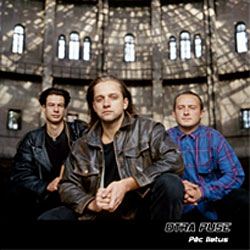
After a rowdy concert in 1983, the popular Latvian rock group Pērkons was banned by Soviet authorities, meaning the band could not perform or release recordings. A potential road to “rehabilitation” became visible in 1984, when noted Latvian composer Imants Kalniņš met with the group. Pērkons keyboardist and lead composer Juris Kulakovs had worked with Kalniņš before in the group Menuets, so the two had years of history together. Pērkons asked the composer if perhaps there was any music of his that they could record and perform, and Kalniņš went as far as to suggest working together to compose something completely new.

Kalniņš had in mind composing a rock oratorio based upon the Māris Čaklais text, “Kā jūra, kā zeme, kā debess.” The various parts of the text were divided up among composers Kalniņš, Kulakovs, and Pērkons bass guitarist Juris Sējāns. Even though Kalniņš was a bit of an antiestablishment guy himself, he still was a member of the Latvian Composers’ Union, and helped get the composition approved, as well as approval for the group to perform the work.

At the Liepājas dzintars festival in 1984, the group—Kulakovs, Sējāns, Raimonds Bartaševičs (vocals), Leons Sējāns (guitar), Dainis Strazdiņš (drums), Ieva Akurātere (vocals) and Nauris Puntulis (vocals)—took the stage again to perform the work. Having worked with respected composer Kalniņš allowed the group to perform publicly again. However, a short time after, the group was banned for a second time, but that is another story.

Kā jūra, kā zeme, kā debess was released on cassette in 1994, but for a long time now had been out of print. Earlier this year it was released for the first time on compact disc, after being re-mastered over the last two years by Kulakovs himself, along with three instrumental bonus tracks recorded by Kulakovs and Justīne Kulakova.

To be honest, I prefer Kulakovs’ later compositional work like “Sarkanais vilciens” and “Vēstule no bruģa” to this work. Perhaps it is because Kā jūra… has three different composers, and, to my ears, sounds a bit disjointed. There are certainly memorable moments, such as opener “Līgo” (music by Juris Sējāns) and “Vīru dziesma” (music by Juris Kulakovs), and the performances by the band are, as always, excellent. But there isn’t that much that holds my attention here. I’ve always been a big fan of Pērkons but this CD probably won’t find its way to my player as often as the band’s other recordings do. The three instrumental bonus tracks “Romance,” “Triumfa arka” and “Svētku uvertīra” are pleasing enough works, but don’t really fit in with the rock oratorio itself. In any case, I still hope this CD is successful so that Kulakov’ other compositional works also find their way to CD some day. And, of course, the historical significance of this work is undeniable—this work returned Pērkons to the stage and helped “rehabilitate” the band’s image.

The booklet has all the lyrics, as well as a short excerpt from the recently published book about Pērkons, No zemes un debesīm Pērkons by Māris Ruks. The CD was released by the same publishing company, Antava, that released the booka.

Though perhaps the almost 25 years since this work was first composed and performed may have diminished its major impact, it is still very historically significant and one of the most important compositions in the Latvian rock genre of the 1980s. Though not my favorite of Pērkons’ work, if you are a fan of the “art rock” genre (for example, Emerson, Lake and Palmer) you may very well enjoy this.

Details

Kā jūra, kā zeme, kā debess

Pērkons

Antava,  2007

Egils Kaljo is an American-born Latvian from the New York area . Kaljo began listening to Latvian music as soon as he was able to put a record on a record player, and still has old Bellacord 78 rpm records lying around somewhere.

H2O’s first album is simple, harmless

Uzmini nu

A new group is taking Latvia by storm. The group’s name is H20 and with its smash hit single “Uzmini nu” achieving frequent airplay during 2006, it seems poised to be one of the dominant groups of the Latvian music scene in the near future. In fact, “Uzmini nu” was awarded the Latvian Music Award for Best Pop Song in 2006, not to mention being No. 1 in the Radio SWH 2006 Top 40, and No. 2 in the Radio SWH 2006 Latvian music Top 15. Quite the impressive feat for these young musicians!

Of course, those awards were for one song . As we’ve seen in the past, a group can write a hit single, but when time comes to write a complete album, it turns out the group was only briefly able to capture lightning in a bottle. H20 released its debut album, also called Uzmini nu, in May and did manage to extend its winning streak beyond one song.

The primary members of the group are Jānis Strapcāns on vocals and Staņislavs Judins on bass and keyboards. The other instruments on the album, such as drums and guitars, are performed by a number of different musicians. The group’s profile on the Web site draugiem.lv notes that the group came into being on March 3, 2003, with its first public performance of the song “Kā klusums kliedz.” H2O has performed a number of times at the Bildes music festival, as well as many other venues this year. Also, currently rounding out the group are Edgars Ansons-Tomsons (drums) and Juris Kalnišs (guitar). The band’s style is melodic rock and reminds me quite a bit of Tumsa, another Latvian group.

While there are a number of songs I like on this album, overall my impression of this album is that it is very… safe, I suppose. No major surprises, just inoffensive pop songs, generally easy listening, but nothing that makes you pause to take a closer look. Notable songs include the aforementioned “Uzmini nu” (for which, deservedly, the band won many laurels), as well as songs like “Cik daudz” and “Kā klusums kliedz,” all very pretty, not to mention catchy. The rest of the songs on the album do sort of blend into each other after a while, making them hard to recall individually.

The album of course has the obligatory song in English, “Gorgeous” with lyrics like “She was shiny and me too,” whatever that might mean.

While certainly a well-crafted recording with a few standout songs, overall it is a very lightweight album, containing very few surprises. Perhaps that is for the best, as nothing here is too jarring or out of place, just simply crafted and harmless pop songs. The production might be a bit too slick for my tastes. Some of the songs could use a bit of an edge to them, but the album does sound good and all the performances are solid. Certainly this is a solid base upon which to build. As these guys mature perhaps they will try to stretch their boundaries and try something a bit more ambitious to differentiate themselves from the similar crop of groups (not just in Latvia but worldwide). I await H2O’s next album, where hopefully the band will flex its muscles a bit more.

Details

Uzmini nu

H2O

MICREC,  2007

MRPMCD 06

Egils Kaljo is an American-born Latvian from the New York area . Kaljo began listening to Latvian music as soon as he was able to put a record on a record player, and still has old Bellacord 78 rpm records lying around somewhere.

Six years later, bet bet has another winner

Palmas zaļo vienmēr

One has to admire the palm tree. Even in the most oppressively hot and dry desert weather, it is able to stay green. In Latvian, this concept is expressed as “palmas zaļo vienmēr” (palms are always green), a phrase that is an expression of hope in the face of adversity. This phrase was most likely coined by playwright Venta Vīgante, who wrote a play with the same title. Late last yar, veteran Latvian group bet bet borrowed the title for its latest compact disc.

bet bet, which celebrated its 15th anniversary in 2006, formed in 1991. Violinist and singer Zigfrīds Muktupāvels came over from the defunct Zodiaks. Well-known Latvian lyricist, drummer, music industry executive and occasional vocalist Guntars Račs came from a short stint in Jauns mēness. Rounding out the group at its founding were Uģis Tirzītis on guitar and Aivis Kalvāns on bass, both also formerly of Jauns mēness. Former Zodiaks guitarist Aivars Gudrais also joined the band briefly in the early days. Bassist Kalvāns departed the group in 2006 and was replaced by Andris Alviķis. The group’s lineup as of the recording of Palmas zaļo vienmēr was Muktupāvels, Račs, Tirzītis and Alviķis.

Six years passed since the release of the band’s previous album, 2000’s criminally underrated Ceļš, kuru iet. Though the group was sporadically working on songs, and a few singles did appear over that time, Palmas zaļo vienmēr finally appeared in October 2006. And it was worth the wait—bet bet has once again released a great collection of songs in the group’s own unique style.

One might think that with the musical pedigree that these guys have, they would create epic and complex works, but their work is of a quite different style. From their earliest work—popular songs like “Man vienalga viss” and “Diena”—their songs were simple, catchy and with a touch of humor that is often lacking in Latvian music. One might compare them to the American group the Traveling Wilburys, also made up of respected musicians and performers who recorded music that was deceptively simple with a touch of humor.

One of the songs on Palmas zaļo vienmēr is the tongue-in-cheek “Nekādu problēmu” (No Problems), with music and words by Račs. The song first appeared on the 100% svaigs Nr. 7 collection, released in 2004. A slow and leisurely song about not having any problems and “es nēesmu nevienam sunim parādā” (I am in debt to no dog), it became very popular. Interestingly, the version on Palmas zaļo vienmēr has been completely redone from a musical perspective. It now is much more up-tempo and Muktupāvels adopts a much rougher sounding voice when singing. To be honest, I prefer the original, slower version.

Another plant that grows in extreme conditions is the cactus, and this plant also gets an ode of its own: “Kaktuss,” with music by Tirzītis and words by Račs. No matter what is going on, the cactus behind the window is colorfully blooming.

It is not always Muktupāvels who handles the lead vocals. Račs handles vocal duties on “Uz jauno krastu” and guitarist Tirzītis sings on one of my favorite tracks, “Mēmais kino.” And not all the songs are cheerful. The somber “Kas mani pie tevis tur” asks the questionm “Kas mani pie tevis tur un neļauj prom iet” (What binds me to you and prevents me from leaving?).

A nod to their influences and a fitting conclusion to the album comes in the Latvian version of the Hank Williams song “Jambalaya.” In Latvian it is known as “Džambulaja” (with Latvian text by Alfrēds Krūklis).

The packaging includes all lyrics, and the cover features an odd picture of the band dressed as mechanics in a sea of tires—perhaps an ode to the fact that these “simpler” songs are more intended for the “common man” rather than some erudite musical scholar. Or perhaps it is just meant to be an amusing picture.

Six years is a long time to wait for any album, but it was worth the wait this time, as bet bet has delivered yet another infectiously listenable recording, full of songs that quickly grow on the listener. The band’s sense of humor and also a sense of joie de vivre are evident. The album confirms bet bet as one of the best and most consistent Latvian acts performing today.

Details

Palmas zaļo vienmēr

bet bet

MICREC,  2006

MRCD 346

Where to buy

Purchase Palmas zaļo vienmēr from BalticShop.

Note: Latvians Online receives a commission on purchases.
Egils Kaljo is an American-born Latvian from the New York area . Kaljo began listening to Latvian music as soon as he was able to put a record on a record player, and still has old Bellacord 78 rpm records lying around somewhere.