Journalists quit Diena, citing uncertainty, differences with owner

The editor-in-chief of the Rīga daily newspaper Diena and about a dozen other journalists resigned Oct. 9 after the publisher revealed that the company’s new owner is a wealthy family of real estate investors and investment managers in Great Britain.

The decision to exit Diena came after Aleksandrs Tralmaks, who bought the newspaper this summer, revealed that the new investor behind the business is the Rowland family, led by David Rowland and his son Jonathan.

Among those who left the paper—some reportedly after having their belongings searched by security guards—were Anita Brauna, editor-in-chief; Nellija Ločmele, editor of Dienas mediji; and the American-born Pauls Raudseps, the paper’s editorial page editor and one of its founders. Other journalists who left include senior reporters Sanita Jemberga, Rita Ruduša, Baiba Rulle and Inga Spriņģe; Dace Smildziņa, editor of the newspaper’s Saturday supplement Sestdiena; political correspondent Ināra Egle; and lifestyle correspondent Anda Burve Rozīte, according to Cita Diena, a blog set up by the ex-staffers.

“These journalists are leaving Diena for two reasons,” according to the blog. “First of all, for 14 weeks Mr. Tralmaks was unable to publicly name the individuals or companies that financed the purchase of AS Diena, and his announcement this Friday about the involvement of the Rowland family from Great Britain has raised more questions than it answers. This lengthy uncertainty has done significant damage to Diena’s credibility.”

The blog also noted “serious differences regarding the future of the newspaper” between the journalists and the new owners. Ločmele, Brauna and Raudseps reportedly had put together a plan to buy the newspaper from AS Diena, but their offer was refused.

The newspaper’s editors, according to the blog, “believe that the owners’ planned business model, which includes a proposal to cut editorial expenses by over 50 percent, threatens the very existence of Diena as a quality newspaper.”

Tralmaks, in an interview with diena.lv, confirmed the differences between management and the journalists who left.

“In my opinion it is a very complex situation, in my opinion it is not a good situation, but that’s today’s result,” Tralmaks said.

Tralmaks added that he is hopeful that a number of journalists can be convinced to stay on with Diena and that the newspaper will continue operation.

However, a number of media observers expressed skepticism about the newspaper’s future independence. Sarmīte Ēlerte, the longtime editor of Diena who left the paper in 2008, told the LETA news agency that she foresees the publication will be different.

Established in 1990 with funding from the Latvian Supreme Council, Diena was meant as an alternative to the press controlled by the Communist Party. After Latvia regained independence, the newspaper was privatized and became the foundation for the joint stock company AS Diena, which eventually was acquired by Sweden’s Bonnier Business Press. Bonnier, which also owned the daily newspaper Dienas Bizness, announced July 3 that it had sold both entities to Luxembourg-based Nedela S.A., led by Tralmaks, former CEO of Diena.

Initial reports said Tralmaks was backed by Estonian investors, but he did not immediately reveal who ultimately was behind the deal. Although promising no major changes in the short term, Tralmaks said in a Bonnier press release that over time the new owners “will focus on accelerated development of the online capabilities of the two titles.”

The Oct. 9 announcement clarified that the Rowland family, through its control of Nedela S.A., has taken over full interest in both AS Diena and Dienas Bizness. AS Diena publishes Diena, the Web portal diena.lv and a number of regional newspapers.

Diena

The Friday morning, Oct. 9, edition of Diena was the last for Editor Anita Brauna and a dozen other journalists.
Andris Straumanis is a special correspondent for and a co-founder of Latvians Online. From 2000–2012 he was editor of the website.

German students produce film about Latvians in Münster

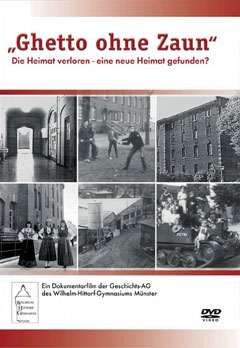
History students at the Hittorf-Wilhelm-Gymnasium Münster in Germany have produced a short documentary film about the history of the once-thriving Latvian exile community in their city. Titled Ghetto ohne Zaun (The Ghetto With No Fence), the film includes interviews with members of the community, as well as historical images, according to a press release from the Regional Association of Westphalia-Lippe (Landschaftsverband Westfalen-Lippe), which supported the documentary.

The film, available on DVD in German with Latvian subtitles, tells the story of the Latvians who moved to Münster after World War II. The community is best remembered as the site of the Latvian high school, Minsteres latviešu ģimnāzija, where exile youth from around the world studied language, culture and other subjects. The school closed in 1998, but the facilities remain and are known as Latviešu Centrs Minsterē.

The documentary, according to the press release, notes how the exiles in Münster remained isolated for many years, resulting in prejudices and fears between the Latvians and local Germans. Over time, “the exiles began to cross the imaginary fences” and became integrated into Münster society.

The film saw its premiere Sept. 30 in Münster.

The Latvian community in Germany supported making of the film, Nīls Ebdens wrote Oct. 3 on the online mailing list of the ELJA50 organization. Among those interviewed by the history students, according to Ebdens, were Aija Ebdene, Ieviņa Picka, Andris Kadeģis, Pēteris Purmalis and Juris Trauciņš.

For more on the DVD, in German, visit www.lwl.org.

Ghetto ohne Zaun

High school history students in Germany have produced Ghetto ohne Zaun, a documentary about Latvians in Münster. (Image courtesy of Landschaftsverband Westfalen-Lippe)

Andris Straumanis is a special correspondent for and a co-founder of Latvians Online. From 2000–2012 he was editor of the website.

War of words in Britain becomes diplomatic issue for Latvia

A squabble between British politicians has grown into a minor diplomatic issue between Latvia and the United Kingdom, but the foreign ministers of both countries say relations remain outstanding.

British Foreign Secretary David Miliband told Latvian Foreign Minister Māris Riekstiņš in an Oct. 3 telephone conversation that comments he made during his Labour Party’s annual conference were not aimed at Latvia or its government.

Miliband, during an Oct. 1 speech to the Labour Conference, attacked the rival Conservative Party for its ties to Latvia’s For Fatherland and Freedom (Tēvzemei un Brīvībai, or TB/LNNK), which he said supports the annual march in Rīga by World War II veterans who served in Nazi Germany’s Waffen SS.

“It makes me sick,” Miliband said, according to a transcript of the speech.

Miliband was referring to a Sept. 22 discussion with Conservative Party Chairman Eric Pickles and Liberal Democrats spokesman Chris Huhne on the BBC’s Radio 4.

During the discussion, Huhne blasted the Conservatives for its alliances with conservative parties in Europe.

“The Latvian party actually celebrates Adolf Hitler’s Waffen SS,” Huhne said, referring to TB/LNNK and its backing of the annual March 16 commemoration by Latvian Legion veterans. During the war, Germany organized two divisions of Latvian soldiers to fight against Soviet forces. The majority of the Latvian soldiers were conscripts.

“I’m a bit surprised you’re using that old Molotov smear against the Latvians,” Pickles replied to Huhne, referring to former Soviet Foreign Minister Vyacheslav Molotov.

A week later, Nazi hunter Efraim Zuroff of the Simon Wiesenthal Center, in a commentary published in the London-based daily newspaper The Guardian, took Pickles to task for his defense of the Latvian party.

“The obsession of ‘For Fatherland and Freedom’ to pay public homage to the Latvian-SS Legion in contradiction to all historical logic and sensitivity to Nazi crimes is not a product of ostensibly harmless nostalgia as Pickles would have us believe,” Zuroff wrote, “but part of a rather insidious plan to gain recognition for a perversely distorted version of European history which will officially equate Communism with Nazism.”

Zuroff has been campaigning against an effort by Eastern European political leaders to have Aug. 23 declared a European Day of Remembrance for Victims of Stalinism and Nazism. It was on Aug. 23, 1939, that the Soviet Union and Nazi Germany signed the Molotov-Ribbentrop nonagression pact. A secret protocol in the pact brought the Baltic states into the Soviet sphere of influence and led to the occupation of those countries.

TB/LNNK spokesman Rolands Pētersons, calling Zuroff’s comments baseless and defamatory, said in a Sept. 29 press release that the party has never defended Nazi crimes nor glorified the military units of the Hitler regime, but has only showed respect to Latvian soldiers who fought during World War II.

Following Miliband’s speech to the Labour Conference, Roberts Zīle, a member of the European Parliament and leader of TB/LNNK, countered Zuroff in an Oct. 2 commentary in The Guardian.

“It is simply absurd,” Zīle wrote, “to declare that Latvians who wish to honour their compatriots who fought and died in the Second World War have any sympathy for the abhorrent ideologies that were responsible for the death of so many of my people and that plunged my nation into decades of occupation by Nazi and Soviet oppressors.”

That same day, Andris Teikmanis, a state secretary in the Latvian Foreign Ministry, met with Antony Stokes, charge d’affaires in the British Embassy in Rīga, to express concern about the comments by British politicians. Meanwhile in London, Latvian Ambassador Eduards Stiprais met with Foreign Office officials to deliver a similar message.

During their Oct. 3 telephone conversation, according to a Latvian Foreign Ministry spokesperson, Miliband and Riekstiņš agreed that relations between the United Kingdom and Latvia are outstanding and that the two countries must continue to work together to resolve questions important to Europe, including economic recovery.

Andris Straumanis is a special correspondent for and a co-founder of Latvians Online. From 2000–2012 he was editor of the website.