The late Valdis Muižnieks and his wife, Lalita, have been honored by the World Federation of Free Latvians (Pasaules brīvo latviešu apvienība, or PBLA) with its top award. The annual PBLA Award traditionally is announced during Nov. 18 celebrations in diaspora communities.
The PBLA’s Culture Fund also announced 25 awards to various individuals and organizations, including Latvians Online, which earned a certificate of recognition for its “notable contribution” to distributing information to Latvians abroad.
Valdis Muižnieks, who died in July, and Lalita Muižniece have a long record of involvement in Latvian community affairs and organizations. The PBLA particularly noted the couple’s persistent and successful work in creating the Latvian studies program and the Latvian Studies Center at Western Michigan University in Kalamazoo.
Valdis initiated an accredited Latvian language summer course at the university in 1966 and, in 1981, the American Latvian Association put its support behind a full-time program in Latvian studies. The Latvian Studies Center provided housing for students in the program and included a library and space for events. Lalita, who earned her doctorate from the University of Michigan, became an instructor in the Latvian studies program.
“Valdis and Lalita Muižnieks’ coordinated tenacity was expressed in their unique way of working together,” according to the PBLA announcement of the award. Valdis was the one with the vision for the Latvian Studies Center, and he diligently worked to sell the idea and garner support, the PBLA announcement said. Lalita helped coordinate plans, prepare materials in both English and Latvian, and worked as an instructor.
During the three decades Latvian studies was offered at Western Michigan University, a total of 1,234 students took courses in the program, according to the PBLA. Of those, 82 completed majors or minors in Latvian studies. The Latvian Studies Center was closed in 1996.
Valdis also helped establish the Latvian Foundation and served as its first chairman. He was involved with the American Latvian Association, the Daugavas Vanagi veterans group, the Valdemārija student organization and the Latvian Evangelical Lutheran United Church of Kalamazoo. He received an honorary doctorate in 1985 from Western Michigan University and, in 1996, was honored with the Order of Three Stars, which is Latvia’s highest civilian award.
Lalita, besides teaching at Western Michigan, also has been a guest lecturer at the University of Latvia and the Latvian Academy of Culture. She also served as an editor of the Latvian children’s magazine Mazputniņš.
The PBLA Award was created by the association in 1963. Its first recipient was the painter Jānis Kuga. Last year’s recipient was Jānis Kukainis, former chairman of the American Latvian Association and of the PBLA. The award carries a USD 5,000 prize.
PBLA Culture Fund awards
Eight individuals were selected by the PBLA Culture Fund to receive its top awards:
- USD 2,000 awards of honor (Goda balva) to Talivaldis Bērziņš of the U.S. for exceptional work in exile Latvian education and culture, and to Rolfs Ekmanis of the U.S. for his lifetime achievement in Latvian literature research and publication.
- Certificates of honor to Dagnija Greste-Zariņa of Australia for the suggesting, coordinating and editing the book Austrālijas latviešu mākslinieki; Juris Ķeniņs of Canada for artistic direction of the 12th and 13th Song Festivals in Canada and for popularizing Latvian music; Lizbeth Upītis of the U.S. for popularizing and teaching how to make Latvian mittens through her book, Latvian Mittens.
- The USD 1,000 Krišjānis Barons prize to Ilgvars Ozols of Argentina for his longtime encouragement of Latvian spiritual and secular community life, and to composers Lolita Ritmane and Brigita Ritmane-Jameson of the U.S. for the vocal and instrumental music in the musical “Vēstule no Losas,” which had its premier last year during the West Coast Latvian Song Festival in California.
Certificates of recognition
In addition, the Culture Fund announced that the following individuals and organizations will receive certificates of recognition:
- Guna Asone of the U.S. for her notable contribution to Latvian youth education.
- Iveta Asone of the U.S. for her notable contribution to Latvian education and youth development.
- Izabella Cielēna of Sweden for her work in familiaring non-Latvians with Latvian painting.
- Dainis Draviņš of Sweden for his contribution to technology and natural sciences in organizing international cooperation with Ventspils University College.
- Māris Ernstsons of Canada for his work with Latvian jewelry and its popularization among non-Latvians.
- Elisa Freimane of the U.S. for her notable contribution in Latvian youth education, including 10 years leading the Gaŗezers Summer High School near Three Rivers, Mich.
- Valda Grīnberga of the U.S. for her notable contribution to Latvian youth education and development.
- Diāna Krūmiņa-Engstedt of Sweden for popularizing Latvian culinary and holiday traditions.
- Tālivaldis Ķivlenieks of Canada for his work with Latvian jewelry and its popularization among non-Latvians.
- Latvians Online for its notable contribution in distributing information among Latvians abroad.
- Brigita Liepiņa of Australia for editing the weekly newspaper Austrālijas Latvietis.
- Zane Rītere of Australia for her longtime work in popularizing Latvian music.
- Iveta Rone of Australia for her longtime work in Latvian society and in youth development.
- Andris Rūtiņš of the U.S. for teaching jewelry making in 3×3 culture camps and other Latvian events.
- The Sydney Latvian Theater for its exceptional performance of “Kabarē de Rīga,” created and directed by Jānis Čečiņš.
- Sarmīte Svilis un Daiga Hensone of the U.S. for their achievements in designing modern costumes using Latvian elements.
- Ivonne Vaar of Canada for exceptional achievement in art photography and for her work, “Toronto I.”
- Māra Vārpa of the U.S. for playing Latvian choral music and for directing the Chicago Latvian men’s choir.
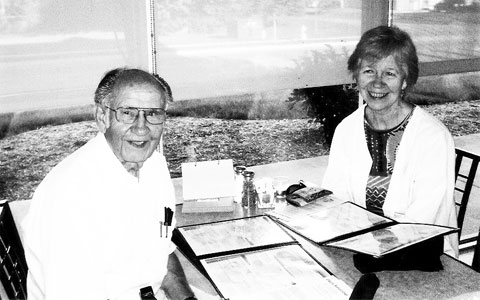
Valdis Muižnieks, who died last year, and his wife, Lalita, have been award the World Federation of Free Latvians’ top honor. (Photo courtesy of the World Federation of Free Latvians)
Andris Straumanis is a special correspondent for and a co-founder of Latvians Online. From 2000–2012 he was editor of the website.