In U.S., mobile passport effort sees more than 700 applications

A total of 709 individuals applied for new Latvian passports during July’s seven-city tour of the United States by officials carrying a mobile processing station, the Ministry of Foreign Affairs has announced.

The project, which concluded its U.S. tour on July 30, is an effort by the Latvian government to provide new passports for Latvian citizens abroad in advance of the Oct. 2 parliamentary election. The project is coordinated by the Ministry of Foreign Affairs and by the Ministry of the Interior’s Office of Citizenship and Migration Affairs (Pilsonsības un migrācijas lietu pārvalde, or PMLP).

A similar tour is underway in Australia and another is set to begin in Canada.

The effort is funded by an allocation of LVL 49,416 approved in June by the Cabinet of Ministers. In their request for funding, the interior and foreign affairs ministries estimated about 1,800 Latvian citizens would be served in the three countries. Of those, 1,100 would be in the United States, so the U.S. tour has come up short of expectations.

Latvian organizations in the U.S., Canada and Australia also have supported the project.

Of the total served in the U.S., the largest number was in New York, where 175 Latvian citizens applied for new passports. Chicago was second with 173, followed by Los Angeles, 96; Minneapolis, 83; Boston, 64; Cleveland, 62; and Seattle, 56. In all, 448 citizens had registered for appointments, while another 261 showed up when the passport station came to their community.

The Ministry of Foreign Affairs noted that the U.S. tour took in about LVL 30,000 in passport application fees.

The mobile passport stations allow the government representatives to take digital passport photographs and to record biometric data through fingerprint scans. One representative each from the Ministry of Foreign Affairs and from the PMLP make up the three teams sent to the U.S., Australia and Canada.

In Australia, a team already has visited Brisbane and Sydney, processing a total of 117 passport applications, according to the Ministry of Foreign Affairs. The team is wrapping up its visit to Melbourne and heads next to Adelaide and Perth.

Another team will begin its tour of Canada during the first week of August, stopping in Toronto, Edmonton and Vancouver. The team is scheduled Aug. 5-7 in the Latvian Canadian Cultural Centre in Toronto, followed by Aug. 10-11 in Edmonton and Aug. 13-14 in Vancouver. Further information about the team’s visit to Canada is available from the Latvian Embassy in Ottawa.

The passport project has not been without criticism. The center-left political party Harmony Centre (Saskaņas centrs), in a July 12 letter to Interior Minister Linda Mūrniece, questioned why the project is taking place just before the October election and shortly after Ģirts Valdis Kristovskis, head of the Vienotība political coalition, visited Latvian communities abroad. Kristovskis traveled to Canada and the U.S. in March and to Australia in June.

Mūrniece has not publicly responded to Harmony Centre’s letter.
Andris Straumanis is a special correspondent for and a co-founder of Latvians Online. From 2000–2012 he was editor of the website.

Armenian wins New Wave contest, while co-founder Pauls causes stir

Armenian pop singer Sona Shahgeldyan has won this year’s New Wave (Jaunais vilnis) competition, which began July 27 in Dzintari Concert Hall in Jūrmala, Latvia.

The contest, which is oriented toward Russian and other Eastern European music, was started in 2002 by popular Latvian composer Raimonds Pauls and Russian composer Igor Krutoy.

Two Latvian acts, girl group Lady’s Sweet and beatbox boy group PeR, placed eighth and ninth, respectively, out of the 17 finalists.

During the first day of the contest, according to the New Wave website, singers have to perform a world hit. On the second day, they perform a hit song from their own country. And on the third and final day, they perform an original song.

Ukraine’s Tatiana Shirko was the leader after the first day of competition, while Estonia’s Uku Suviste scored highest on the second day. Shahgeldyan had the best result on the third day and, when points for all three days were tallied, she came out on top—just one point ahead of Shirko.

First prize in the New Wave competition includes a monetary award of EUR 50,000.

This year contest co-founder Pauls caused a bit of a stir when in March he told Neatkarīgā Rīta Avīze he would no longer participate in the competition. But earlier this month he reversed his decision, telling television station LNT that if he and jazz singer Laima Vaikule would not be on the jury, then Latvian performers would have a hard time in the contest.

And just days before the competition, Pauls in an interview with Latvian State Television expounded on his thoughts about the New Wave contest, relations with Russia and Latvia’s future.

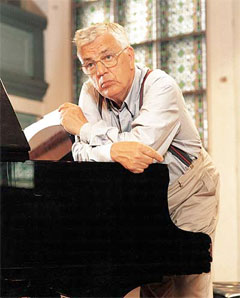
Raimonds Pauls

Popular Latvian composer Raimonds Pauls is co-founder of the New Wave competition. (Publicity photo)

Andris Straumanis is a special correspondent for and a co-founder of Latvians Online. From 2000–2012 he was editor of the website.

Book by German historian examines early years of Rīga Latvian Society

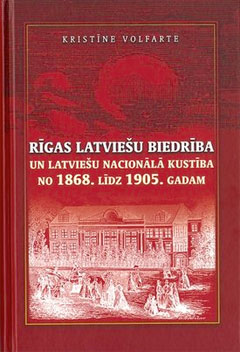
The Rīga Latvian Society and its landmark building at Merķeļa iela 13 have played an important role in fostering Latvian national identity. A recently released book, Rīgas Latviešu biedrība un latviešu nacionālā kustība no 1868. līdz 1905. gadam, examines the society’s early history.

Written by historian Kristine Wohlfart, the book is based on the author’s doctoral dissertation. The work was originally published in Germany as Der Rigaer Letten Verein und die lettische Nationalbewegung von 1868 bis 1905 by the Herder-Institut in Marburg.

Wohlfart, who studied philology at the University of Latvia, used the archives of the Rīga Latvian Society in her research. Her analysis, according to press releases announcing the book’s publication, shows that the formation of Latvian identity was not spontaneous, but the result of a concerted effort by activists who wanted to see the development of a modern, politically autonomous nation.

The society was formed in 1868. Its first building was erected in 1869, according to the society’s website, but was destroyed by fire in 1908. The current building was completed in 1909. The society’s activities were suspended in 1940 after the Soviet occupation, but the organization was re-established during the National Awakening period of the late 1980s.

The translation of Wohlfart’s book into Latvian was prepared with support from the Goethe Institute and the German Foreign Ministry.

Rīgas Latviešu biedrība un latviešu nacionālā kustība no 1868. līdz 1905. gadam was published by the University of Latvia.

Rīgas Latviešu biedrība

In a recently released book, German historian Kristine Wohlfart examines the early years of the Rīga Latvian Society.

Andris Straumanis is a special correspondent for and a co-founder of Latvians Online. From 2000–2012 he was editor of the website.