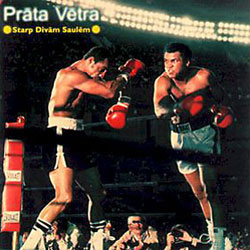
Which sun shines for Prāta Vētra?

Starp divām saulēm

One of the enduring scenes in Latvian fables is of the young man who sets off in search of adventure, returning home wealthier and wiser. Will this be the fate of the foursome from Jelgava known as Prāta Vētra? Already established as one of the most popular musical groups in Latvia, Prāta Vētra this spring released both Latvian and English versions of the same album. Recorded and mixed in Latvia, Denmark, Germany and Sweden, the album also represents one of Riga-based MICREC’s biggest marketing pushes to date. Will it succeed? Will Prāta Vētra do for Latvian pop music what groups such as U2 did for Ireland?

Under its English name BrainStorm, the group this August is scheduled to perform in the Pepsi Island Festival in Bulgaria and then head to Sweden and Turkey, according to a press release from MICREC. In addition, a video of one of the group’s latest hit songs, "Weekends Are Not My Happy Days," is due for release July 19. Whether we’ll get to see it on MTV or VH1 in the United States or on MUCH in Canada is questionable. Additional attempts to crack the music markets in Britain, Germany and South America are underway.

Is the effort worth it? Should it be precisely Prāta Vētra that carries the Latvian banner in the attempt to break into the international pop music scene? And is Among the Suns the vehicle?

Purists might well answer no. After all, there’s really nothing that differentiates this album from the multitudes of other up-and-coming pop groups the world over. Sure, the group is from Latvia, but there’s nothing Latvian about this album. Even the names of the performers have been changed in the liner notes to make them more palatable for English-speaking tongues (lead singer Renars Kaupers’ name has become Reynard Cowper, guitarist Janis Jubalts is Jonny U. White, and so on).

Unfortunately, one of the realities of the pop market is that English is the lingua franca. And keep in mind that Latvian opera star Inese Galante doesn’t sing in Latvian, either. And Latvian-born violinist Gidon Kremer… well, he doesn’t sing.

The Latvian album, Starp divām saulēm, is a nice production. But the material on the group’s first compact disc released in 1997, Visi ir tieši tā, kā tu vēlies, had more heart. All lyrics for the 11 tracks on Starp divām saulēm are by Kaupers. A number of songs have already become radio hits in Latvia, including "Brīvdienas nav manas laimīgas dienas," "Puse no sirds" and "Galvā tikai sievietes." We also like the title song, "Starp divām saulēm" and "Lēc." It’s Kaupers voice, especially his wonderful trilled "r," that carries the album.

The English album, Among the Suns, is largely a translation of the Latvian version. MICREC threw in a 12th track, "Under My Wing (Is Your Sweet Home)," the translation of a hit song off the 1997 album that saw some success in the Baltics. Again, all lyrics are by Kaupers, but the work of translating was largely given to poet Rolands Ūdris (Ūdrītis).

Comparison of the two albums reveals inconsistencies in translation, sometimes to the point where the songs yield slightly different meanings. Ūdris did use poetic license with some lyrics, MICREC Marketing Director Guntars Račs tells SVEIKS.com. For example, in "Brīvdienas nav manas laimīgās dienas" Prāta Vētra presents a song about the end of a romantic relationship ("Es meklēju vārdus kalna malā, lai teiktu tev mīļā, kad mēs būsim galā"). But the English version comes off a bit milder, with mana mīļā (my dear) changed to "my friend." Likewise, on "Galvā tikai sievietes" Kaupers sounds like a love-starved joker. But on "These Women Drive Me Crazy All the Time," the character in the song sounds more like a jerk (and perhaps that’s the same). But the English version does have one of the funniest lyrics on either album: "Got a cheesy poem in my head / Tom Jones is my favourite singer / Dreamy thoughts are calling me / Again I am in love and she’s not here."

Of course, for consumers who hear only the English version, translation problems won’t matter. What will matter is whether the album is worth purchasing. Among the Suns is a nice production with a few catchy tunes. With the right marketing effort and a good dose of luck, Prāta Vētra might just get some Western radio and video play and maybe sell a few records. We don’t expect to see them in the Top 40 any time soon, at least not on this side of the Atlantic. But the group is sure to return home to Latvia with more knowledge about the pop music market and perhaps with some profits to show for their efforts.

(Editor’s note: This review originally appeared on the SVEIKS.com site.)

Details

Starp divām saulēm

Prāta Vētra

MICREC,  1999
Andris Straumanis is a special correspondent for and a co-founder of Latvians Online. From 2000–2012 he was editor of the website.

Aurora stumbles, but still valuable

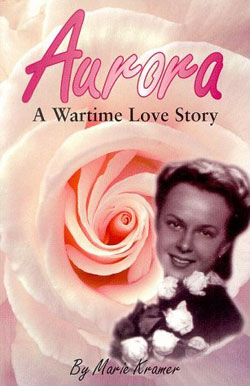
Aurora

Marie Kramer’s Aurora: A Wartime Love Story stumbles in the early pages and never quite recovers. However, the based-on-a-true-story tale is still a valuable addition to the small but growing English-language literature on the plight of Latvian Displaced Persons.

Aurora tells the story of young Aurora and her love for a military man, Alfreds, whose lives are brought together and split apart during and after the Second World War.

At least two serious historical errors—mistakes that could have been checked with a number of published sources—cloud the credibility of the story. This is not a minor point, for Kramer is otherwise careful to cite specific dates when events occur in the life of Aurora. In addition, the book at times rushes forward without smooth transitions, leaving the reader with the sense of watching a badly edited movie. Finally, we don’t get much of a "love story" here.

Where we find value in Aurora is in its vivid description of refugee life, particularly given that the story is told through the eyes of a young married mother whose husband is somewhere back in Latvia battling the Soviet army. Latvians of the postwar generations already know variations on this story, for they have heard snippets of it from their parents and grandparents. But to read it, in English no less, is a new experience. Aurora joins historical studies such as Mark Wyman’s DPs: Europe’s Displaced Persons, 1945-1951 and memoirs such as Agate Nesaule’s A Woman In Amber in bringing to life what happened to thousands of Latvians a half century ago.

We are introduced to Aurora as a 17-year-old young woman celebrating Jāni, or Midsummer, on June 24, 1940. Her giddiness is interrupted by the appearance of a column of Soviet military vehicles, the full weight of which is made clear to her the following day by her uncle, who tells her that the USSR has taken over Latvia.

The problem here is that the Soviet Union had already invaded Latvia a week earlier. For Aurora not to have known a week later that her country was no longer free is hard to believe. In both published reports and from anecdotal evidence, we know that by June 24 it was clear that the Soviets were in control and that the Jāni celebrations in 1940 were dampened by this knowledge.

Then, on page 32, Kramer tells us about the deportations of June 14, 1941. She writes that "half a million Latvians were arrested, herded into boxcars and shipped to Siberia." Not so! For example, in The Baltic States: Years of Dependence, 1940-1980 by Romuald J. Misiuanas and Rein Taagepera, the authors note:

The general estimates of population losses from all causes—deportations, mobilizations, massacres, and unexplained disappearances during the first year of Soviet rule—hover around…35,000 for Latvia…

Even if we add the post-war deportations, including the devastating ones of 1949, we still don’t reach half a million Latvians.

These errors aside, we find two other problems with Aurora. First, there’s the matter of transitions. Granted, Kramer covers a span of 50 years in 185 pages, so some fast forwarding is necessary. But at times the transitions are too abrupt and beg for the caring hand of a good editor.

Second, the overall premise that this is a love story needs questioning. In the first third of the book, we see the development of Aurora’s and Alfreds’ love for each other. But in the remainder of the story, Alfreds fades into the background. Either Aurora is not a love story but instead a story about survival, or the author needed to devote more effort in helping the reader appreciate the depth of these two Latvians’ love for each other.

Where Aurora is the most compelling is in its description of a young refugee mother’s struggle to care for her baby and her own mother in Germany, England and, finally, America. The hardships Aurora and her family endure—all the while not knowing the whereabouts of Alfreds—offer some of the most touching moments in the book. Wyman, in his DPs, remarks how the Displaced Persons camps are often remembered fondly by those refugees who lived there as children. They didn’t realize the sacrifices parents made for their children. Aurora confirms this.

Aurora is the first book by Kramer for Kansas-based Ogden Publications. Kramer, a retired teacher, has published other titles similar to Aurora, tales based on people’s true stories.

(Editor’s note: This article originally appeared on the SVEIKS.com site.)

Details

Aurora: A Wartime Love Story

Marie Kramer

Topeka, Kansas:  Ogden Publications Inc.,  1998

ISBN 094167861X

Where to buy

Purchase Aurora: A Wartime Love Story from Amazon.com.

Note: Latvians Online receives a commission on purchases.

Andris Straumanis is a special correspondent for and a co-founder of Latvians Online. From 2000–2012 he was editor of the website.

How to play zolīte

Zole—or, in its diminutive form, zolīte—is by some accounts the national game of Latvia. That’s probably true… unless of course you’re a diehard novuss player. Zolīte certainly is a favorite pastime among young and old. For some North American Latvians, however, the card game has become only a memory.

We’ve searched in vain for information about the history of zolīte in Latvia. The closest we’ve come is to learn more about the German game called “sheepshead,” which has similarities to zole and may be related. Sheepshead, however, employs 32 cards rather than the 26 Latvian zole players use.

When about two months ago SVEIKS.com posted a request for zolīte rules, we didn’t get much response from people in the know. Rather, several readers sent e-mail saying they’d like to know the rules, too. Finally, however, Rūta Vitande of Chicago came through. Below, we present her understanding of the rules for zolite.

How to play zolīte

From a regular deck of cards, use only face cards, aces, 10’s, 9’s, 8 of diamonds, 7 of diamonds—a total of 26 cards. Three players are needed, but generally four are preferred. When four play, the dealer sits out.

Decide on the dealer by drawing cards. The deck is cut by the dealer’s right Deal four cards to the left, next four to his or her left, next four, then two to the pot. Repeat four at a time.

The player to the dealer’s left has first say as to whether he or she wants to “buy” the middle cards, meaning the player will add those to his or her hand and discard two (which do count for points) and take on the other two players.

The object for the “solo” player is to get 61 points or more, thus the duo wins if the solo player only gets 60 (or less).

If the first to the left of the dealer turns down the chance to “buy,” he or she defers to the next left, etc.

If all three players pass, each adds a chip to the ante, to be taken by the next winner (however, an ante is not distributed during a “zole” play). Only one set is doled out at a time to the next winner, should the ante accumulate. If a pool has been started and a player loses, he owes the ante a single round (three or four chips, depending on number of players).

The player to the left ofthe dealer leads the first card, regardless of the who the ‘soloist’ is. Each player must follow suit, if possible; if not, any card goes.

Whoever takes the trick leads the next card.

If a trump is led, trump must be played.

Zole has 12 trump, in descending order of power: Queen of clubs, queen of spades, queen of hearts, queen of diamonds, jacks in same suit order as queens, ace of diamonds, 10 of diamonds, 9, 8, 7 of diamonds.

The point system, however, seems to have nothing to do with trump power:

Ace—11 points
10—10 points
King—4 points
Queen—3 points
Jack—2 points
Other—0 points
Total possible—120 points

And remember these notes:

  • A solo player may decide to “zole,” in which case the player forfeits the cards in the middle and they are revealed only after the game and added to the duo’s score.
  • For winning with points 61 to 90, the solo player wins a chip from each player, thus two chips in a threesome or three in a foursome. A win of 91 to 119 gets the player two chips from each; 120 (or all the tricks), three from each. If the player has declared “zole,” add four chips from each player to the regular scoring schedule, thus five for a score of 61 to 90, six for leaving the opponents in “johns,” seven for an all-tricker.
  • For losing to the two opponents, add one to the above scoring pattern and, of course, these points count against the soloist.
  • The language that accompanies this game is very much a part of the game and can only be learned with time and exposure.
  • The game has many “rules” or nuances ranging from where one sits after drawing cards to determine the dealer, to not allowing the dealer to look at the two cards in the middle. Usually they differ according to the region of Latvia in which the game originated. Defining the nuances before starting is recommended, especially with serious players.

As Vitande notes, zolite has many nuances. If you know of different rules or variations, add your comments at the end of this article. In the meantime, our thanks to Rūta Vitande for supplying the rules for this game.

(Editor’s note: This article originally appeared on SVEIKS.com.)

Andris Straumanis is a special correspondent for and a co-founder of Latvians Online. From 2000–2012 he was editor of the website.