Statistics say Latvia’s population decline slowing

The latest demographic update from the Central Statistical Bureau of Latvia holds out hope that the country’s population decline is slowing, while births may increase in the future.

The nation’s population stood at 2.288 million on July 1, the statistical bureau reported Aug. 28. That was 0.3 percent less than at the beginning of the year, but represented a smaller population decrease than last year.

Meanwhile, the bureau noted that the decrease in the number of women of child-bearing age (15-49) also has slowed, suggesting that the birth rate could stablize and even increase. A total of 10,680 births were recorded in Latvia during the first half of this year, a small decrease from the 10,719 births recorded for the same period last year. Last year’s total births of 21,500 was the highest number recorded in 10 years, the statistical bureau said.

The infant mortality rate—referring to deaths within the first year after birth—also continues to decline. During the first half of this year 69 deaths were recorded, down from the 81 during the first half of 2005. Last year also saw the lowest infant mortality rate—7.8 per 1,000 residents—in 60 years, the bureau said.

Deaths in the first half of this year totaled 17,380, an increase from the 16,895 recorded last year.

The number of marriages also continues to increase. During the first half of last year, 4,146 marriages were recorded in Latvia. In the first half of this year, Latvia recorded 4,765 marriages.
Andris Straumanis is a special correspondent for and a co-founder of Latvians Online. From 2000–2012 he was editor of the website.

Jaunais laiks support group creates Web site

A new Web site based in Chicago, velesanas.com, has been established by supporters of the Jaunais laiks (New Era) party to raise awareness of the Oct. 7 parliamentary election in Latvia.

“Many Latvian citizens who live outside of Latvia have expressed that they lack enough information to make an informed choice regarding the 19 slates of candidates,” Editor Artis Inka said in an Aug. 27 press release.

The Latvian-language site offers information about the election process outside of Latvia, including how to vote by mail. The site also offers background on Jaunais laiks. The party is fielding a total of 86 candidates, according to the Central Election Commission in Rīga.

The site is run by Artis Inka and his brother, Aivars, but other members of the Chicago support group of Jaunais laiks offer material and advice, the editor said.

Jaunais laiks has support groups in three countries outside of Latvia—three in the United States and one each in Canada and Ireland.

Andris Straumanis is a special correspondent for and a co-founder of Latvians Online. From 2000–2012 he was editor of the website.

Former Insula residents gather in Toronto

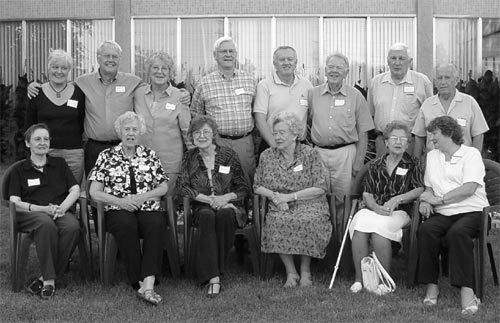
Every other Wednesday evening the Latvian Canadian Cultural Centre in Toronto has a barbeque dinner. People gather there to sample Ingo Kārkliņš’ charcoal-broiled dishes. Among the guests attending the Aug. 9 dinner were 27 former World War II refugees and residents of the Displaced Persons camp Insula at Berchtesgaden, Germany.

Velga Zaļais-Jansons and Igors Svistunenko organized the evening of Insula residents and their relatives. The former Insula residents came not only from Toronto and vicinity, but also from the United States—from as far as Alaska. Among them was Andris Spura of Montréal, who along with his mother had spent the last few months of the war at Berchtesgaden. Both had survived the aerial bombardment by the Allies of Adolf Hitler’s Berghof on April 25, 1945.

Former Insula residents had their first reunion in Berchtesgaden in 2003. In May 2005 their memoirs were compiled and edited by two brothers and former camp residents, Ventis and John Plūme. The first printing of Insula Displaced Persons Assembly Center: A Latvian Memoir sold out in January, but copies of the second printing of the 346-page work are available from John Plūme, who may be contacted by e-mail at plume62@aol.com. The book includes a nearly complete listing of the 650-700 residents of the camp.

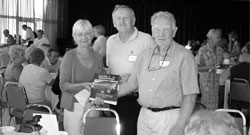
During the Aug. 9 dinner, the Plūme brothers presented the library of the Latvian Canadian Cultural Centre with a copy of the book. Last year, they presented the book to several libraries in Latvia.

Several people from younger generations were among those who shared memories. Stories and discussions continued to a late hour, when tables had been already cleared and other guests had long gone home. 

(Editor’s note: Information for this story is based on Latvian text contributed by Harijs Jansons and translated by Ventis Plume.)

Former Insula residents

Former residents of the Displaced Persons camp Insula gather for a photo outside the Latvian Canadian Cultural Centre in Toronto. (Photo by Tokuro Narazaki)

Presentation of book

Daina Upeslāce-Csapo, assistant librarian of the Latvian Canadian Cultural Centre, accepts a copy of the Insula book from brothers John and Ventis Plūme. (Photo by Tokuro Narazaki)

Andris Straumanis is a special correspondent for and a co-founder of Latvians Online. From 2000–2012 he was editor of the website.