Don’t dare say anything bad about the lat

During the next two weeks, a traveling exhibition on the 90-year history of Latvia’s security police will be on display in the port city of Ventspils. It’s too bad the security police is now using tactics that are best left for the history books.

The security police on Nov. 21 detained and held for two days Dmitrijs Smirnovs, an economics lecturer from Ventspils Augstskola (Ventspils University College). His apparent crime: Saying things that could destabilize the country’s financial system, supposedly a violation of Section 194 of the criminal code.

Instead, the arrest of Smirnovs is a clear violation of Latvia’s constitution, which guarantees freedom of speech.

In an early October roundtable discussion published by the daily newspaper Ventas Balss, Smirnovs answered a journalist’s question about Latvia’s financial situation by saying, “The only thing I can suggest is, first, don’t save money in banks, second, don’t save money in lats, because right now that is very dangerous” (“Vienīgais, ko varu ieteikt: pirmkārt, neglabāt naudu bankās, otrkārt, neglabāt naudu latos, jo tagad tas ir ļoti bīstami”).

According to the criminal code, it is against the law to disseminate “untrue data or information orally, written or in other ways regarding the condition of the finance system of the Republic of Latvia.” A person convicted under Section 194 could face up to two years in prison or a fine of up to 80 times the minimal monthly wage.

I don’t necessarily agree with Smirnovs, but are Latvian security officials really so silly to think that a little-known college lecturer’s statement in a regional newspaper could bring Latvia’s banks to their knees?

Actually, they are even sillier. Officials also have interviewed pop singer Valters Frīdenbergs of the ensemble Putnu balle. During a Nov. 9 concert in Jelgava, according to the newspaper Diena, Frīdenbergs joked during a pause in the performance that audience members would rush to automatic teller machines (in Latvian, bankomāti) to withdraw money, but he urged them to wait until after the concert. The newspaper cited a security police spokeswoman who said an investigation was started after a bank complained about Frīdenbergs’ statement.

That security officials are taking such extraordinary measures seems to suggest only that the financial system in Latvia really is in trouble. What’s next? Posting officers at bankomāti to make note of who is withdrawing cash?

Latvian-American journalist Juris Kaža, who works for the LETA news service in Rīga, has started a blog to address the situation, freespeechlatvia.blogspot.com. Kaža has some strong words for the security police—and Latvian officials in general.

Aleks Tapinsh, who blogs from Rīga on All About Latvia, suggested tongue-in-cheek in a Nov. 23 post that there are a few more folks who should be talked to by the security police, including well-known journalist Edward Lucas, a Danske Bank researcher and People’s Party (Tautas partija) leader Gundars Bērziņš. For kicks, throw in the guy who designed the commemmorative 1-lat coin honoring the 90th anniversary of Latvia’s declaration of independence—I just don’t like it.

In recent international assessments of freedom of expression, Latvia has fared relatively well. It is ironic that as the nation this month was celebrating its freedom, it also took a step backward.
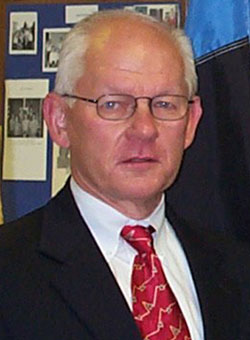
Andris Straumanis is a special correspondent for and a co-founder of Latvians Online. From 2000–2012 he was editor of the website.

President accredits three new ambassadors

New Latvian ambassadors to China, Slovenia and Turkey have received letters of accreditation from President Valdis Zatlers, his press office announced Nov. 21.

The new ambassador to China is Ingrīda Levrence, who has been serving as an assistant state secretary in the Ministry of Foreign Affairs in Rīga. She replaces Jānis Lovniks, who served as Latvia’s ambassador in Beijing from 2004.

In a meeting with the president, the two discussed the future of Chinese-Latvian relations following this summer’s visits to Beijing by Zatlers and Prime Minister Ivars Godmanis.

“China is one of Latvia’s strategic economic partners,” Zatlers said, according to a press release. “Although at present direct trade between Latvia and China is not great, the potential for growth is real.”

The new ambassodor to Slovenia is Juris Poikāns, who has been serving as the interim chargé d’affaires in Latvia’s embassy in Ljubljana. He replaces Aivars Groza, who has been the nonresident ambassador to Slovenia as well as serving as Latvia’s envoy to Austria.

Aivars Vovers takes over as ambassador to Turkey. Vovers has previously been ambassador to Armenia and Poland, Latvia’s permanent representative to the United Nations in Vienna, and an ambassador-at-large. In Ankara, Vovers will replace Ambassador Ivars Pundurs.

Also on Nov. 21, Ambassador Imants Lieģis presented his letter of accreditation to King Juan Carlos of Spain, according to a Ministry of Foreign Affairs press release. The king, according to the press release, wanted to know about Latvia’s relations with Russia. Lieģis told him it is important for Latvia to maintain a dialogue with Russia, but noted that after Russia’s conflict with Georgia those relations cannot be characterized as “business as usual.”

Lieģis was born in the United Kingdom to parents who had fled Latvia during World War II. He moved to Latvia in 1992 and began to work for the Ministry of Foreign Affairs. He has been ambassador to Belgium, Luxembourg and the Netherlands, to the NATO defense alliance, and to the Political and Security Committee of the European Union. The previous Latvian ambassador in Madrid was Mārtiņš Perts, who now is the ambassador to Israel.

Andris Straumanis is a special correspondent for and a co-founder of Latvians Online. From 2000–2012 he was editor of the website.

PBLA honors Jānis Kukainis with its top award

Jānis Kukainis, a longtime Latvian-American community activist, has been honored with its top award by the World Federation of Free Latvians (Pasaules brīvo latviešu apvienība, or PBLA).

In naming Kukainis, the PBLA noted his many years of service leading Latvian organizations and his efforts to convince U.S. politicians to support Latvia’s membership in the NATO defense alliance.

As is traditional, the recipient of the PBLA Award was announced during Nov. 18 commemorations around the world.

Born in 1943 in Rīga, Kukainis arrived in the United States in 1951 and settled in Detroit, Mich. He earned a degree in engineering from the University of Cincinnati and holds master’s degrees from Tennesee State University and Michigan State University. Kukainis worked for many years for the Ford Motor Co. in Detroit. He retired in 2000.

His work with Latvian organizations began in 1973 when he became a board member of the Latvian Association of Detroit, according to a PBLA press release. Over the years, he also served on the board of the Latvian Foundation and the Latvian Center Gaŗezers, as well as worked with the Michigan Baltic Committee and the Detroit Latvian School.

Kukainis was elected chairman of the American Latvian Association in 1996, which also brought him onto the board of the PBLA. It was during this time, the PBLA said, that Kukainis was involved in an intensive and successful campaign to gain NATO membership for Latvia, Estonia and Lithuania.

“Convincing members of the U.S. Congress to support this idea was to be an achievement not without investment of resources and relentless work,” according to the press release. “Jānis Kukainis understood this and with his far-sighted and resolute daring began to take stock of resources and inform the Latvian community to a degree not seen before.”

Kukainis, together with Latvian embassy staff and other Baltic activists, traveled to Latvian centers throughout the United States to activate community support for NATO expansion.

From 2002-2007, Kukainis headed the PBLA. Under his leadership, the organization worked to improve cooperation with Latvian government agencies and to bolster Latvian community activity in Russia and South America.

The PBLA Award was created in 1963 to honor the work of Latvian community activists or organizations. The recipient receives a certificate and a USD 5,000 prize. Last year’s recipient was Jānis Frišvalds of the United Kingdom.

Jānis Kukainis

Jānis Kukainis of Detroit, Mich., has been named this year’s recipient of the PBLA Award. (Photo courtesy of the World Federation of Free Latvians)

Andris Straumanis is a special correspondent for and a co-founder of Latvians Online. From 2000–2012 he was editor of the website.