Student seeks help researching images of exile

A graduate student from Canada is asking members of the Latvian diaspora to help her research into how Soviet propaganda molded the image of the exile community.

Kristīna Paukšēns, who is pursuing a master’s degree—her second—at the University of Latvia, has been distributing a questionnaire to Latvians outside of the homeland as part of her study.

“My primary goal,” Paukšēns told Latvians Online in an e-mail, “is to examine what sort of negative ‘propaganda’ image the Soviet regime created about the exile community of Latvians; what image the exile community held of Soviet Latvia; and, finally, what image Latvians in Latvia had of their relatives in exile. I am determining if any of these images matched reality, as understood by my questionnaire respondents.”

Paukšēns, who was born in Toronto, has a bachelor’s degree in international relations and a master’s degree in history, both from the University of Toronto. It was there that she was exposed to Latvian history.

“I was especially interested in the dainas, folklore, the 1905 Revolution, and in exile memoirs—both exile in Siberia, and in the West,” Paukšēns said.

Her first trip to Latvia was in 2005, when she traveled there with her grandmother, father and aunt.

“We traveled all across Latvia, met many wonderful relatives, and saw all the places related to the history of my family on this very emotional trip,” Paukšēns said. “I became very interested in Latvia’s history, and I decided that I would like to study it more formally.”

That led her to pursue a master’s degree from the interdisciplinary Baltic Sea Region Studies program at the University of Latvia. Paukšēns lived in Rīga for 1.5 years while studying at the university and working at The Baltic Times newspaper. Because she was not taught Latvian while growing up, Paukšēns said, she also used the time to hone her language skills. She also got involved with a folk dance group and a choir, and sang in last summer’s Latvian Song and Dance Celebration in Rīga.

Now back in Toronto, she has become involved with the folk dance troupe Diždancis and is looking forward to participating in the Latvian Song Festival in Canada, set July 1-5 in Hamilton.

She also is continuing her research, which she said was in part inspired by the 1999 novel The Embrace, by Lithuanian-Canadian writer Irene Guilford. The book is about two Lithuanian brothers separated by World War II, one in the West and one in the homeland.

“And also, I was greatly inspired by my elderly aunt in Limbaži, who is a Siberia survivor, and who I got to know very closely during my time in Latvia,” Paukšēns added. “Her relationship with my grandmother—mostly through letter writing—across the Iron Curtain, was nevertheless very powerful and important to both of them, and it drew me to the idea of studying relationships between the two communities.”

Besides the questionnaire distributed to Latvians in the diaspora, Paukšēns’ research also is relying on surveying Latvians in the homeland; examining several newspapers published in Displaced Persons camps in Germany, in occupied Latvia, and in the West; and reading memoirs, a novel and Soviet-era history books. 

Paukšēns asks that responses to her Latvian-language questionnaire be returned by May 10.
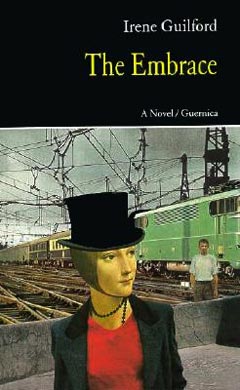
The Embrace

Lithuanian-Canadian writer Irene Guilford’s 1999 novel The Embrace served as inspiration for Kristīna Paukšēns research.

Andris Straumanis is a special correspondent for and a co-founder of Latvians Online. From 2000–2012 he was editor of the website.

Students from Latvia clean up Belarus cemetery

A group of about 60 students from Latvia has traveled to Belarus to clean up an old Latvian cemetery and learn something about history, the Ministry of Foreign Affairs reports.

The students, public relations majors at the School of Business Administration Turība and members of the Talavija fraternity, spent April 18-19 in the old Latvian settlement of Vaclavov tending to the cemetery.

The settlement, in the northwest part of Belarus, was founded in the late 19th century and at one time was home to about 90 Latvian families. The settlement got its name from its first inhabitant. Before World War II, the area had a Latvian kolkhoz under the name “Celtne” that included a high school, according to Vilberts Krasnais’ 1938 book Latviešu kolōnijas.

The project to clean up the cemetery was called “400 km vēstures virzienā” (400 Kilometers in the Direction of History) and was organized with help from the Latvian Embassy in Belarus, the Latvian Academy of Sciences and the University of Latvia’s Insitute of History.

Although local authorities had already done some cleanup at the cemetery, the students kept busy during the two days tending to graves and their markers, as well as installing a memorial tablet.

The bus trip from Rīga to Belarus included a 2.5-hour delay at the border. Video of the trip is available on the Internet portal atlasface.lv and includes clips of the bus trip and work at the cemetery.

Andris Straumanis is a special correspondent for and a co-founder of Latvians Online. From 2000–2012 he was editor of the website.

Exhibit includes lesser known Latvian Holocaust sites

A new online exhibit detailing little known sites in the former Soviet Union where Jews were murdered during World War II—including three locations in Latvia—has been opened by a Holocaust research institute based in Israel.

The Yad Vashem International Institute for Holocaust Research unveiled the site, “The Untold Stories: The Murder Sites of the Jews in the Former USSR,” on April 20 to mark Holocaust Remembrance Day.

From Latvia, sites in Daugavpils, Liepāja and Ludza are included in the online exhibit, which includes a historical narrative, maps, photographs and video interviews with survivors. In the case of Liepāja, video of the shooting of Jews is shown along with an interview with the former German soldier who made the film. Also available are downloadable lists of victims.

A total of 101 sites in Ukraine, Belarus, Lithuania, Latvia and Russia were chosen for the online exhibit. More than a million Jews were murdered in small towns and lesser-known sites across Europe, Yad Vashem Chairman Avner Shalev said in a press release. Better known killing sites, such as the Rumbula Forest near Rīga, are not included in the exhibit.

From the Daugavpils area, the Web site lists three specific sites: the Railroad Public Garden, Pogulyanka, and Zolotaya Gorka or Zeltkalna. From Liepāja included are Rainis Park, the lighthouse south of Liepāja, and Šķēde. From Ludza included are the brick factory, Rezekne Street, Pogulyanka (also listed under Daugavpils), and the Garbarovsky Forest.

In Latvia, many of the deaths are attributed to the notorious Latvian Auxiliary Security Police, or Arājs Commando, led by Viktors Arājs. The killings occurred in 1941 and 1942.

The online exhibit is found at yadvashem.org.

Andris Straumanis is a special correspondent for and a co-founder of Latvians Online. From 2000–2012 he was editor of the website.