New Vilki album has songs about war with a 21st century twist

The men’s vocal group Vilki have long been known not just for their vocal talent, but also for their repertoire, which mainly consists of songs with themes of war and battle. Throughout their long history (the origins of the group can be traced to 1980), the group are not content to simply perform the songs, but also study and research traditions with the goal of presenting the material in the most authentic way possible.

Though most of all of their recordings up until now have presented songs in a traditional manner, for their most recent album – 2015’s Cīņai sveiks! – the group took a different approach – this time the songs are performed with modern arrangements with the purpose of presenting an album of songs about war in a contemporary manner. Vilki, made up of members Edgars Lipors, Andris Balcers, Gundars Kalniņš, Jānis-Atis Krūmiņš, Raimonds Kundziņš, Ēriks Ēriksons, and Uģis Treide, are joined by varied Latvian musicians and performers.

Cīņai sveiks! (partially funded by crowdfunded means) presents both Latvian folk songs as well as newly written songs in varied styles and with diverse elements – the subtitle of the album is “Latviešu karavīru dziesmas jaunās skaņās” (Latvian soldiers’ songs in new sounds). Vilki perform vocals on all of the songs, but even though they are often in the role of backing vocalists, their presence and spirit are felt in all the performances.

The military elements in the music become clear with the first notes of the first song “Ko domāji tu, kundziņi” (arranged by Aigars Grāvers, of veteran Latvian synthpop group Jumprava, and performed by Vilki and Jānis Kušķis). Grāvers’ version of this Latvian folk song, full of bravado and boasting, retains the spirit of the ancient words and melodies, but balances it with modern instruments and sounds in this thunderous performance.

Artūrs Uškāns, leader of the folk ensemble Laimas muzykanti, provides one of the modern songs on the album – “Hammers” – dedicated to the Hummer military vehicle. The song, one of the many heavier entries on the album, is dedicated to the heroics of Latvian military personnel who drive their Hummers through dangerous minefields. The song also features the Jāzeps Mediņš’ music school boys’ choir, conducted by Romāns Vanags.

Songs of war, often with violent and aggressive imagery, would seem to naturally lend themselves to the heavy metal musical style – and to prove this point conclusively, one of the guests on the album is Skyforger, perhaps Latvia’s best known heavy metal export. Skyforger, who also are deeply influenced by Latvian history and legends, perform the song “Ar nāvi esam uz tu” (We are familiar with death), a thunderous ode about laughing in the face of death. The album’s liner notes even includes a story about a Latvian brigade that showed great such bravery and courage in battle in Afghanistan, so much so that their American counterparts dubbed them “Heavy metal”.

Post-folk group Iļģi are featured on the track “Brīvības kareivji” (a song with lyrics by Kārlis Rusovs, a Latvian national partisan, written in 1947). The tragic song, with themes about the fight being almost lost – “Gan retas mums kļuvušas rindas, un cerību spožums jau dziest” (our lines become thinner, and the brightness of hope is fading), remains defiant until the end – “Tak nenorims ieroču šķindas, vienalga, vai mirt būs, vai ciest” (still, our weapons will resound, it doesn’t matter if we die or suffer). The song closes with a sorrowful bagpipe lamenting the fallen heroes.

The album notes include many biographical notes (only in Latvian) on notable soldiers throughout Latvian history – starting with King Namejs’ battles with crusaders and the Livonian wars centuries ago up until modern times.

Cīņai sveiks! with its mix of Latvian folk songs and new songs, spearheaded by Vilki and all presented with topical arrangements, is a potent collection of battle songs. Joined by a variety of Latvian artists, both traditional and modern, Vilki present a fresh and lively portrait of Latvian soldiers and the bravery displayed by them throughout the centuries, always against larger and more powerful foes. Considering Latvia’s location in the world, and comparatively small stature (when compared with larger and more populous nations nearby), it is no surprise that themes of fighting and war often appear in Latvian songs. Cīņai sveiks! provides an exceptional collection of songs in a 21st century interpretation.

For further information, please visit the Vilki website.

Vilki - Cīņai sveiks 001

Cīņai sveiks!

Vilki
Lauska, 2015

Track listing:

  1. Ko domāji tu kundziņi
  2. Divīzijas dziesma
  3. Hammers
  4. Nu ar Dievu
  5. Zviegtin’ zviedza kara zirgi
  6. Dzeloņdrātis
  7. Brīvības kareivji
  8. Ar nāvi mēs esam uz tu
  9. Bunkurs 13
  10. Uz priekšu
  11. Uz akmeņa malku cirtu


Egils Kaljo is an American-born Latvian from the New York area . Kaljo began listening to Latvian music as soon as he was able to put a record on a record player, and still has old Bellacord 78 rpm records lying around somewhere.

State Choir Latvija records all of Emīls Dārziņš’ musical pearls

Perhaps no other Latvian composer is as unconditionally beloved as the late National-Romantic Emīls Dārziņš. In his brief life, cut short at the age of 35, Dārziņš composed music that would resonate with every successive generation for more than a century – his music remains as vital today as it has ever been. His most famous composition – the singular symphonic work ‘Melanholiskais valsis’ (Melancholy Waltz) remains not only popular, but the defining work of Latvian symphonic music. His works for solo voice, such as ‘Teici to stundu, to brīdi’ and ‘Vēl tu rozes plūc’, remain recognizable and revered.

However, it is Dārziņš’ choir music that has become an immutable and irrefutable part of the Latvian cultural psyche. Tallying at a mere seventeen works (for mixed, men’s and women’s choir), each one is a treasure, and continue to inspire and leave a deep emotional impact.

2015 is the 140th anniversary of Dārziņš’ birth (and, sadly, the 105th anniversary of his death), and, in celebration of Dārziņš’ life and work, the State Choir Latvija, conducted by Māris Sirmais, undertook the daunting task of recording all 17 choir songs and has released them in the collection entitled simply Emīls Dārziņš, which is the first time all 17 have been collected on one album. As these songs are so very beloved and ingrained in Latvian music, expectations can be not only high, but perhaps even unrealistic that one choir can do all these songs justice. Fortunately, Latvija and Sirmais are more than up to the challenge, and succeed beyond all expectations.

Dārziņš was a fragile soul, and this fragility is woven through almost all of his songs, perhaps most notably in the women’s choir song “Nāru dziesma”, with lyrics by Jānis Jaunsudrabiņš. The performance, tenderly and delicately presented by the women of the choir, captures the essence of Dārziņš’ spirit – with just a few words and brief, quiet music which barely rises above a piano, it entrances the listener with its siren song of “Nāc, ak, nāc” (Come, oh come).

Perhaps the most tragic of Dārziņš’ works is the men’s choir song “Mūžam zili”, a Kārlis Skalbe poem set to music. The somber, subdued opening, with its lament of “Mūžam nav miera zem Latvijas bērziem, Mūžam raud kokle pār Latvijas kalniem” (There is never peace beneath Latvia’s birches, The kokle always cries over Latvia’s hills), displays the uncertainty of the Latvian nation, long suffering under centuries of foreign rule. As the song builds to its crescendo with the cry “Mūžam nerimst varoņu gars” (The spirit of the heroes never dies), it concludes with the near hopeless despair of the introduction – a moving and memorable performance by the men of the choir.

Dārziņš was innately able to capture in music the spirit of the words of his contemporary poets. For example, Aspazija’s poem “Mēness starus stīgo”, with its fantastic and vivid imagery, complemented with Dārziņš’ lyrical and delicate music, results in one of the richest choir music works in the Latvian repertoire. Beginning with its immediately recognizable male choir introduction, quietly sublime, the music, with Aspazija’s words, paints a resplendent picture, filled with the subtle nuances and grace of the choir.

The collection concludes with Dārziņš’ defiantly triumphant “Lauztās priedes” with lyrics by poet Rainis. The metaphorical broken pines, which, though broken, do not concede defeat – Rainis’ fiery conclusion – “Tu vari mūs šķelt, tu vari mūs lauzt, Mēs tāles sniegsim, kur saule aust!” (You can splinter us, you can break us, We will reach the heights where the sun dawns!) reflects not only the dawning of the Latvian nation at the beginning of the 20th century, but also the indomitable spirit of the Latvian people throughout the centuries. Dārziņš captures this spirit like no other in this work, one of the pillars of Latvian choir music. The State Choir Latvija brings forth the raw power and strength of this song, resulting in a truly soul-stirring rendition of this timeless classic.

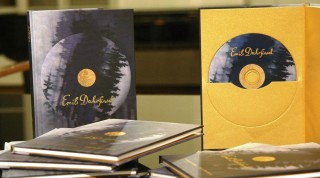
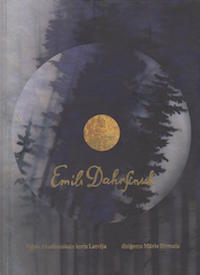
The collection itself is presented in a beautiful hard-backed book, with extensive notes in Latvian on Dārziņš and his choir works by musicologist Arnolds Klotiņš, as well as detailed biographies of the choir and conductor Sirmais, and full texts for each work. In a charming touch, each book has a drawing of a pine tree that was glued in by hand.

These 17 pearls, though amounting to barely more than 40 minutes of music, continue to reverberate in the Latvian consciousness more than one hundred years later. Emīls Dārziņš is not just historically significant and precious, but also a stunning achievement by the State Choir Latvija and their mercurial conductor Māris Sirmais. After listening to this CD, the tragedy of Dārziņš’ brief time on this planet becomes even more pronounced and heartbreaking – if, during 35 years, the composer could compose such treasures, imagine what he could have done with another 35 years? We are blessed with these few works the composer was able to share with us, and blessed further that we have such a world class choir to present them to us in such an affecting and emotionally striking performance. Emīls Dārziņš is truly a testament not only to the composer’s genius, but also the unparalleled abilities of the choir Latvija and conductor Māris Sirmais.

For further information, please visit the State Choir Latvija website.


Koris Latvija - Emils Darzins 3

Emīls Dārziņš

State Choir Latvija
VAKL, 2015

Track listing:

  1. Nāru dziesma
  2. Sapņu tālumā
  3. Mirdzi, kā zvaigzne
  4. Pie tēvu zemes dārgās
  5. Minjona
  6. Nāc man līdz!
  7. Ja uz Betlēmi es ietu
  8. Ciānas bērni
  9. Es zinu
  10. Kapsētas klusums
  11. Šūpuļa dziesma
  12. Senatne
  13. Jūs kalni un jūs lejas
  14. Lai vētra krāc
  15. Mūžam zili
  16. Mēness starus stīgo
  17. Lauztās priedes


Egils Kaljo is an American-born Latvian from the New York area . Kaljo began listening to Latvian music as soon as he was able to put a record on a record player, and still has old Bellacord 78 rpm records lying around somewhere.

New Sound Poets album focuses on escaping daily rush of city life

The Sound Poets’ 2013 album Tavs stāsts was one of the most memorable and striking Latvian music albums in recent memory. Catchy and vivid songs like “Kalniem pāri”, “Emīlīja” and “Nāc līdzās”, with their emotive and thoughtful lyrics and expressive melodies resonated with Latvian listeners and made the group one of the most popular in Latvia. “Kalniem pāri” in particular was one of the biggest hits of the past few years. Tavs stāsts also won the Zelta mikrofons award in 2013 for best pop/rock album.

With the critical and commercial success of Tavs stāsts, their second album was not just highly anticipated, but also expectations were set very high – duplicating that kind of artistic feat is a daunting task for any group.

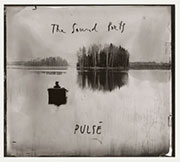
In 2015, the group, made up of lead lyricist, vocalist, guitarist and keyboardist Jānis Aišpurs, Normunds Lukša on guitars, Kārlis Josts on bass, Pēteris Lunde on drums, and Undīne Balode on cello, released their follow-up album Pulsē. The album, though containing the characteristic deep lyrics and layered, nuanced music that their previous effort had, does not quite reach the heights of Tavs stāsts, but is still a solid effort and an artistically distinctive and notable album.

The Sound Poets’ songs are often about emotions, hopes and fears, and, in a similar vein to Tavs stāsts, which began with the song “No sevis vairs nav bail” (I am no longer afraid of myself), Pulsē also begins with a song with a similar theme – “Viss var mainīties” (everything can change) with its lyric “Ja var kļūdīties, tā noteikti būs – bailes neskarot, drosmīgam nekļūt” (If you can make a mistake, it will happen – without fears you will not become courageous). Beginning with acoustic guitar and cello, then gradually building to a powerful crescendo, the song is an appropriately grand start to the album.

The album was recorded in the Latvian countryside, by the Jumurda Lake, and, according to Aišpurs, the major theme of the album is an attempt to escape the daily rush of city life – running from home to work to the store and back again. The album has many songs and lyrics that refer to nature and have pastoral themes, such as “Ezers, salas, putni” (The lake, islands, birds). This song also features the guest brass section – Gatis Gorkuša on trumpet, and Artūrs Bērziņš and Krists Liepa and trombone, giving this song an almost orchestral feel.

The piano-based “Ziemas skats”, a calm, and all too brief musing on winter, is one of the most reserved tracks on the album, but at the same time, is full of hope – “visām ziemām reiz pienāk gals” (all winters end), and is a touching reflection on rebirth after a period of cold darkness.

The deliberate, pulsating introduction to “Skaistais gadsimts” is an appropriate beginning to this song about allowing time to pass – “tamdēļ ļauj, lai gadsimts iet, tas projām iet, tam jāaiziet” (“let the century pass, it will and must pass” – perhaps referring to the impending Latvian centennial in 2018?). The song also features lush vocal harmonies – Aišpurs has also recently turned to composition for choir – one of his works – “I am the Truth” for choir and string orchestra – was premiered by the State Choir Latvija in April of 2015.

The group also expands its musical palette on the album, with songs like “Skats no augšas” that feature some funk and soul elements, however, these new elements do not always work and even sound a bit out of place on the album.

Those picking up Pulsē and expecting hits on the level of “Kalniem pāri” or “Nāc līdzās” may be disappointed after listening to the album. However, it is clear that the group went on an intentionally and consciously different path with this recording, focusing more on layered sonic textures and lyrical canvases rather than creating radio-friendly hits. The group’s attention to detail in their songwriting and musical arrangements sets them apart from other popular music groups in Latvia, and they continue to enhance and polish their distinctive sound.

For further information, please visit The Sound Poets website.

soundpoets-cover

Pulsē

The Sound Poets
TSP Music, 2015

Track listing:

  1. Viss var mainīties
  2. Tas biji tu
  3. Ezers, salas, putni
  4. Lavīnas
  5. Skats no augšas
  6. Paliec
  7. Ziemas skats
  8. Skaistais gadsimts
  9. Kāpēc vēl klusējam mēs…
  10. Ceļavārdi
  11. Vilcene
  12. Tūkstošiem

Egils Kaljo is an American-born Latvian from the New York area . Kaljo began listening to Latvian music as soon as he was able to put a record on a record player, and still has old Bellacord 78 rpm records lying around somewhere.