Untapped potential for Latvia’s institutions of higher education

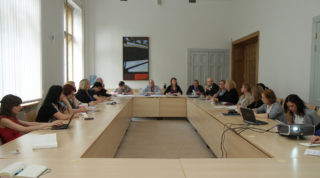
A meeting of the working group for diaspora policy issues took place in the Ministry of Foreign Affairs on 10 May. There, representatives of the diaspora, institutions and various organisations of Latvia discussed the question of attracting students from the diaspora to studies in the higher education institutions of Latvia, as well as the participation of the diaspora in the exchange programmes for elementary and secondary school students.

During the meeting, Pēteris Kārlis Elferts, Ambassador-at-Large for the Diaspora of the Ministry of Foreign Affairs, emphasised  “the large and yet untapped potential for attracting youth of the diaspora as students to study in the universities and technical schools of Latvia. This is an area of activity, he said, which needs more attention and where I would like to urge the educational institutions of Latvia to direct even more effort.” The Ambassador noted that such directions of work should be included in the remigration policy to strengthen the Latvian identity of the diaspora, its link to Latvia and to promote the return of young people to Latvia.

There are several institutions of higher education institutions working in this direction already. Representatives from the Stockholm School of Economics in Riga introduced the participants of the meeting to the Heritage Programme which offers studies in English, for a fee, in Latvia for either a semester or an entire academic year, thus enabling an increase in language fluency through performing research and getting on-the-job experience in Latvian companies parallel to regular studies.

Last year, during the West Coast Latvian Song Festival in San Jose, California, the University of Latvia had a stand with information on the study programmes at the university and significant interest was shown. Associate Professor Arvils Šalme, a representative of the University of Latvia Foundation (LU fonds), confirmed at the meeting that the University of Latvia is indeed increasingly trying to expand the possibilities for the diaspora. He noted that one should think about attracting young people from the diaspora not only to academic education, but also to extracurricular activities and studies as well as distance learning.

Ambassador Pēteris Kārlis Elferts reminded participants that young people with Latvian origins, when studying in Latvia, have the opportunity to use the advantages of their dual citizenship by studying here as a citizen of Latvia. In comparison to the costs of studies in America for example, they would be considerably lower in Latvia. Moreover, the study by the researcher Dr. Ieva Birka about Latvians from America and Canada confirms that the majority considering the possibility of moving to Latvia are in fact young people aged 18 to 25.

On the subject of involving students from elementary and secondary schools in the exchange programmes in Latvia, Kristaps Grasis, Chairman of the Executive Board of the European Latvian Association noted that diaspora families are demonstrating an interest in such opportunities and he emphasised that young people of the diaspora are an important target group. The possibilities of studying in a Latvian school would provide the opportunity to be in a Latvian environment, strengthening Latvian fluency and ties with Latvia, thus fostering the possibility for studying or working in Latvia in the future.

The international non-governmental organisation AFS Latvija informed participants about the inter-cultural student exchange programme for teenagers from 15 to 18, which offers, for a membership fee, the possibility for Latvian children to study at a school and live in a host family in another country, and for children from the diaspora to do the same in Latvia. The organisation demonstrated an interest in attracting children from the diaspora to this programme.

The working group meeting also discussed the proposal that such school exchange programmes could be oriented toward children from the diaspora and adjusted to their particular needs, and that such programmes could receive state support. In the meantime, organisations can be encouraged to address members of the diaspora as well as the residents of Latvia in the course of implementing the existing programmes.

The diaspora working group meeting was also attended by representatives from the World Union of Free Latvians, Ministry of Culture, Ministry of economics, Ministry of Education and Science, the Society Integration Foundation, the Latvian National Cultural Centre, Latvian Association of Local and Regional Governments, the National Centre for Education, and the international youth organisation – AIESEC.

Communications Directorate
Communications Group
Tel.: (+371) 67016 272

Email: media@mfa.gov.lv
The Making of a Dziesmu Svētki, Part 1: The Beginning

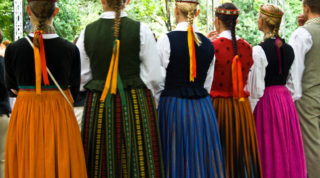
Every single day, at almost every single hour, members of the Baltimore Dziesmu Svētki (Latvian Song Festival) organizing committee are hard at work on any one of various issues, concentrating on the website or the budget, the ticket sales or the schedule, the fundraising or the marketing. Online discussions are just as round-the-clock, and address every possible detail such as logo and poster designs, appropriate English translations, ways to appeal to various demographics, and plans to shake the mistaken public perception that Baltimore is just one big episode of The Wire. Each and every decision, every puzzle piece, no matter how seemingly small, has an entire story behind it.  And we’ll attempt to address each of these stories in turn.  This is the first in a series of articles intended to bring you behind-the-scenes while we spend the next fourteen months putting together one of the largest and most iconic events in Latvian-American society.

But for now, the basics. The sobering truth is that, up until a couple of months ago, it didn’t look like there was going to even be a festival at all in 2017, with no cities volunteering to host the event. This void would create the second-ever gap in a sixty-five year chain of Latvian-American Dziesmu Svētki, which have been held every five years since the influx of Latvian refugees post WWII. Why the hesitance?

It should come as no surprise to anyone who has ever attended a Dziesmu Svētki that organizing the event is a risky and exhausting endeavor. First, the event traditionally requires a full team of talented experts, all living within a single metropolitan area. With the active Latvian-American population experiencing a natural drop-off overall, it is not surprising that finding individual cities with appropriate personnel is also becoming gradually more difficult. Dziesmu Svētki also requires an extensive list of very specific performance venues, most of which come at a high price tag. The waning numbers of active Latvian-Americans equates to a steady drop in ticket sales over the years (1962 saw 10,000 spectators, by 1988 it was 5,000, and most recently in 2013 it was under 2,000), which in turn makes venue selection even trickier. There are virtually no venues that will accommodate both the large number of performers, and the ever-shrinking audience size, while still breaking even.

A solid crew and acceptable venues are the bare minimum requirements, but most Dziesmu Svētki hosts also know that festival attendees appreciate the convenience of having all festival settings within easy walking distance, the luxury of staying in a nice hotel, and the appeal of having a vibrant city to tour while in town. Between the unique human resource and venue restrictions, the expectation for an idyllic location, and the financial risk involved, it is no wonder that nobody was champing at the bit to host.

Marisa Gudrā, a Boston native and Washington, D.C. transplant who would eventually become the chair of our organizing committee, listened with contemplative consternation as members of the American Latvian Association board discussed these obstacles at their quarterly meeting in September. Gudrā was pursuing an advanced degree in arts management with a concentration in programming and project management in the arts, with the intention to someday eventually be involved in Dziesmu Svētki planning. Was someday already here? As if by providence, she soon thereafter received a random text message from friend and D.C. native Nik Timrots, who would eventually become the vice-chair of our organizing committee, suggesting that D.C. should host Dziesmu Svētki. Timrots was coming down from a music and danced-induced high after participating in the 2015 west coast festival in San Jose. “I realized that the 2015 Svētki were the last ones until Rīga 2018 (and the last in North America until 2019!), and I also realized I couldn’t wait that long,” Timrots explained.  Realizing that there was a gap in 2017 that could be filled by any American city, he thought, “Why not us?  Someone has to do it.”  The two partnered up and began researching plausibility, unsure of whether much would come of their planning.

The linchpin arrived when they received word that Latvia’s Ministry of Culture was offering grant money for cultural events in the diaspora, and that the lengthy, involved application deadline was only a few days away. “It was sort of a sign and an immediate motivation for action,” Gudrā explained to me. If something really did come of their research, then they did not want to regret not having applied.

The grant application made the dream of a 2017 Dziesmu Svētki suddenly seem more attainable, and it was time to start building a team. In early November, Gudrā and Timrots called together a small group of friends, all fellow members or former members of D.C. Latvian folk dancing troupe “Namejs,” for an informal meeting at local pizza joint Lost Dog Cafe, to present their proposed plans for hosting. I admit that I arrived skeptical, aware of the aforementioned challenges and the fact that our city had neither the personnel nor the venues, and that even if it did, competing with the throngs of D.C. tourists over the preferred date of 4th of July Weekend would be impossible .

But Gudrā and Timrots proposed solutions to all of these initial hurdles: first, we would expand the organizing body to include specialists from the entire east coast (and beyond if necessary), starting with Boston’s choir director Krisīte Skare and Philadelphia’s folk dancing troupe leader Astrīda Liziņa to lead up the music and folk dance programs. Expanding our focus to the entire east coast meant that we considered multiple cities up and down the east coast, beginning with those with Latvian centers, but also examining others. One city stood out as the obvious choice: our beloved neighbor, Baltimore, Maryland, which shares a metropolitan area with D.C. The city has everything we need, from a top-rated and affordable airport, to a beautiful waterfront setting in the Inner Harbor, to easily-walkable and beautiful venues, all of which will be detailed in future installments.

With this foundation laid, we have continued wading into the depths of Dziesmu Svētku planning. It is an involved and nuanced process, some elements of which are less obvious than others. The Baltimore organizing committee has two main resources for sorting through these elements: one, our own experiences as previous festival participants, which will come into play more than one might think, and two, tremendous support and guidance from the organizers of various previous festivals, who provide the closest thing that we have to a guidebook. Over the next several months we invite you along on this life-engulfing journey as we learn the ins-and-outs of what it takes to run a (hopefully successful) Dziesmu Svētki.

“The Making of a Dziesmu Svētki” will be an ongoing series documenting the behind-the-scenes process of organizing a Latvian Song and Dance Festival.

The XIV Latvian-American Song and Dance Festival will take place in Baltimore, Maryland, from June 29th – July 3rd, 2017. For more information, please visit www.latviansongfest2017.com or write to info@latviansongfest2017.com.

Liepāja Symphony Orchestra performance of Imants Kalniņš’ Symphony No. 4 released

Besides being one of Latvia’s most beloved composers of popular music, Imants Kalniņš has also composed many well-known works in the field of Latvian classical music. Kalniņš has shown himself to be a master of melody, and his flowing and expressive style has resonated with listeners for decades. Among his many compositions – choir arrangements and cantatas, symphonic works, among others – perhaps his best known work is his Symphony No. 4, composed in 1973. The work combines classical elements with modern, rock elements to create a dramatic and compelling symphonic fusion.

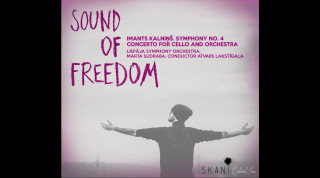
Recognizing the significance and importance of this work in the history of Latvian symphonic music, the Latvian Music Information Centre released the album Sound of Freedom (Brīvības skaņa) in 2015, featuring Kalniņš’ Symphony No. 4 (and his earlier Concerto for Cello and Orchestra, from 1963) on their Skani record label as part of the Centennial Series (celebrating the best works in Latvian classical music in preparation for Latvia’s centennial in 2018), as performed by the Liepāja Symphony Orchestra, conducted by Atvars Lakstīgala.

As the work is one of the most popular Latvian symphonic works, there are already at least three released versions, so one may ask if there was a need to release yet another version of the work. In this release, there is actually a very significant artistic choice made by the performers that distinguishes this recording and it makes Sound of Freedom a particularly interesting and worthwhile release.

Kalniņš’ Symphony No. 4’s first movement already displays elements that distinguish the work – particularly the bass guitar (performed by Aivars Meijers) and drums (performed by Vilnis Krieviņš), elements that led to this symphony being given the Rock nickname. The quiet and deliberate performance, full of tension and agitation, gradually builds to a crescendo involving the entire orchestra, as the relentless build reaches its pinnacle. However, after this climax, the tension recedes as the music fades away.

The calm at the end of the first movement then flows into the second movement, a more tranquil work, even playful. The almost childlike introduction transforms into a heavier, weightier theme, featuring the horns of the orchestra, giving it an almost military feel, which then transforms into a dreamy dance to close out the movement.

The third movement is at once celebratory and ominous, with its slowly ascending melody. Beginning with a mournful melody on the horns, the melody then transforms into a triumphant and exulting theme.

The major change in this performance is in the fourth movement, which normally includes a vocalist singing the words of American poet Kelly Cherry. However, when the work was first performed, the Soviet censors objected to the English text, and the part of the vocalist was instead performed by the horns and the strings. On Sound of Freedom, the record features the censored, instrumental version. To some that are more familiar with the vocal performance, this version may be jarring, however, without the vocals, the orchestra is more in the forefront. Additionally, Cherry’s poetry could be, at times, a bit maudlin for some listener’s tastes – pithy lyrics like ‘when you left, I cried’. At the very least, the orchestral version allows for a much different experience, and leaves the meaning of the music more up to the listener to decide.

The cello concerto, Kalniņš first symphonic opus, is a single movement work composed in the 1960s, and is more in line with the artistic demands of the Soviet authorities. One can almost feel Kalniņš constrained by the oppressive Soviet regime, as well as being a young composer searching for his voice (the work was composed while Kalniņš was still a student). The work, at times drab and even colorless, is perhaps more a historical curiosity than a work of art, and the nature of the work is a bit jarring with the Symphony. Still, it shows how Kalniņš grew and evolved dramatically as a composer in a decade’s time. Distinguished Latvian cellist Marta Sudraba brings the right touch of melancholy and emotion to the solo sections, elevating this work that otherwise might have remained overly academic and formal.

The title of the album – Sound of Freedom – might seem strange to some, especially considering that during the time the works were composed – the 1960s and 1970s, deep in the Soviet occupation of Latvia – freedom was one of the last things on the minds of Latvians – a practically unrealistic dream. Though, perhaps, that is the point – the Latvians never gave up hope, even during these dark times, and Kalniņš music gave them hope – that they could express their desires and yearning through music. The nature and tone of the work was a contrast to the standard Soviet symphonic composition, and deeply affected many Latvian listeners.

The CD also includes extensive notes on Kalniņš and his works, as well as brief biographies of the Liepāja Symphony Orchestra and Atvars Lakstīgala, by composer Imants Zemzaris in both Latvian and English

Sound of Freedom is yet another excellent and noteworthy release by the Skani label, another testament of the unique and individual nature of Latvian music, as well as the skill and talent of the Liepāja Symphony Orchestra and conductor Atvars Lakstīgala. As Latvia approaches its centennial, this CD is an apt reminder of both the fears and hopes of Latvians in the darkest times in their history.

For further information, please visit the Skani website.

SoundofFreedom

Sound of Freedom

Liepāja Symphony Orchestra
LMIC, SKANI 042, 2016

Track listing:

  1. Imants Kalniņš – Symphony No. 4 – I. Allegretto
  2. 4th Andante tranquillo
  3. Grave
  4. Moderato rubato
  5. Concerto for Cello and Orchestra


Egils Kaljo is an American-born Latvian from the New York area . Kaljo began listening to Latvian music as soon as he was able to put a record on a record player, and still has old Bellacord 78 rpm records lying around somewhere.