2 CD set features best songs by Dzelzs vilks

Latvian rock band Dzelzs vilks, with their aggressive music and bleak lyrics, has been plying their trade for more than a quarter century. Their songs have a broad range of musical styles, including elements of industrial, punk, and heavy metal music, but also folk and traditional elements. To celebrate their twenty-fifth anniversary, the group released a two CD set of their best songs – Dziesmas pilnmēness naktī – in 2016. The album collects songs from their many popular and acclaimed albums, such as 2003’s Ļauj man tevi, 2004’s Manās mājās sieviešu nav, and 2007’s Sārtā rītausma, among others.

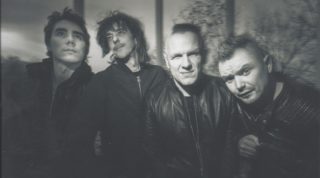
The group, led by vocalist, guitarist and principal songwriter Juris Kaukulis, have achieved enduring popularity in Latvia for their very personal and emotional songs, often about failed and unhappy romantic entanglements, which have resonated with their listeners with their direct and often very explicit lyrics. Kaukulis’ distinct vocal style has been an integral part of their success, and one often hears pain and torment vividly in his vocals. Kaukulis is joined by Kaspars Tobis on synthesizers, drummer Mārcis Judzis and bassist Kārlis Aiviķis (though through most of their history, Armands Butkevičs provided bass).

Dark and foreboding elements are woven throughout their songs, such as ‘Draudzene nakts’, an ode to the approaching night, and, as noted by Kaukulis in the liner notes, the song was inspired in part by a tomcat that passed his window one midnight, and Kaukulis noticed the cat was missing an eye and an ear, and possibly some teeth as well. This dark image adds to the feeling of dread captured in Kaukulis’ vocals and lyrics.

Failed or short-lived relationships are often documented in detail in their songs, such as ‘Tev oranži mati’, ‘Vienas nakts meitene’, and ‘Vēlreiz’, with its cry of despair in lyrics like ‘Man vairs nav tev ko teikt, bet lūdzu ļauj aizmirst tevi’ (I have nothing further to say to you, but please let me forget you). Though deeply personal, the songs do occasionally veer into the territory of self-parody, such as on the silly ‘Dibenā rautais disko’ (a song so vulgar, Judzis requested that the song not be performed at one concert, as his mother was in the audience).

A particularly striking track is ‘Sažņaudz manas rokas’ (from 2009’s Dzelzs vilka teātris), which was the title song for the theatrical production of ‘Tas trakais, trakais Harijs’ (directed by Dž. Dž. Džilindzērs), and featuring vocalist Ilze Ķuzule-Skrastiņa. The song, built on an ominous sliding guitar riff, like many of their songs, expresses sentiments of alienation in lyrics like ‘Enģeļi tevi mīlēt nepratīs’ (Angels will not know how to love you).

Though the group’s history began in 1991, the earliest recording on this collection is 1997’s ‘Ja būtu man spārni’, a song whose rawness is in sharp contrast to their more polished recent recordings. Displaying a more hardcore approach, with heavily distorted guitars and growling, almost death metal-like vocals, the song still contains many elements that are still a part of their music today.

Dzelzs vilks have also dabbled in folk music with memorable results, particularly on their album Uijā uijā nikni vilki, released in 2008, and have collaborated with other folklore ensembles like Forshpil, and even created their own folklore ensemble – the Jauno Jāņu orķestris. This collection does not include any songs from their folk music explorations, which is unfortunate, as these were some of their strongest and most memorable efforts. Perhaps the group wanted to focus on their rock oeuvre on this collection, but leaving out their works in the folk genre disregards a large section of their creative output, and denies many potential new listeners from hearing this material.

Dziesmas pilnmēness naktī is a comprehensive and thorough display of Dzelzs vilks’ quarter century of uncompromising performances. The group has recorded many memorable songs throughout the years, and has shown a remarkable consistency in quality during this time. Though some may find it challenging to listen to songs that are almost uniformly bleak and somber, their words speak to many listeners with their directness and emotional frankness. Maintaining this kind of intensity for so many years is an admirable feat, and, as this collection shows, Dzelzs vilks have built up an impressive and memorable repertoire.

For further information, please visit the Dzelzs vilks website.

Dziesmas pilnmēness naktī

Dzelzs vilks

Upe tuviem un tāliem, UPEtt CD089, 2016

Track listing:

    CD1

  1. Viņa grib tik daudz
  2. Tu vilki nakti
  3. Tev oranži mati
  4. Skaiti līdz trīs
  5. Sažņaudz manas rokas
  6. Mēness
  7. Draudzene nakts
  8. Vienas nakts meitene
  9. Balerina
  10. Ļauj man tevi
  11. Bīstami vārdi
    CD2

  1. Auksto staru gaisma
  2. Meitene no sirds
  3. Manās mājās sieviešu nav
  4. Pret sienu
  5. Cilpa zem tilta (Miesnieks)
  6. Vilks
  7. Vēlreiz
  8. Dibenā rautais disko
  9. Dievi krīt
  10. Rīts
  11. Ziema
  12. Ledus
  13. Klau klau (cik sēri zvani)
  14. Ja būtu man spārni


Egils Kaljo is an American-born Latvian from the New York area . Kaljo began listening to Latvian music as soon as he was able to put a record on a record player, and still has old Bellacord 78 rpm records lying around somewhere.

Iļģi latest album “Tur kur mīti” a meditative look at Latvian myths

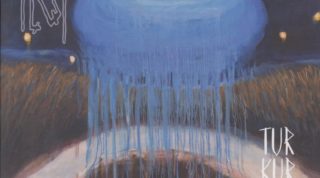
After a five year pause after their last album, 2011’s Tur saulīte pērties gāja, Latvian post folk ensemble Iļgi return with Tur kur mīti, released at the end of 2016, their latest collection of songs inspired by Latvian folk music and songs. As with most all of their albums, there is a thematic thread woven through all the songs, and this time it is myths and mystical elements.

The title of the album, Tur kur mīti, (as per the group, the lack of a comma is intentional), is actually a play on words, as ‘mīti’ can be both interpreted as ‘myths’, but the title can also be interpreted as ‘The place where you dwell’.

The group’s members remain unchanged, with Ilga Reizniece on vocals and violin, Māris Muktupāvels on vocals, kokle and accordion, Gatis Gaujenieks on vocals and bass guitar, guitarist Egons Kronbergs, and drummer Mārtiņš Linde.

In keeping with the mystical themes, the songs on the album have more of an ethereal, mysterious atmosphere about them. The reserved and reflective nature of the songs might be a surprise to those listeners that enjoy more their lively, energetic songs, like the ones on Sēju vēju or Kaza kāpa debesīs, but fans who enjoyed calmer albums like Totāri or Kur saulīte pērties gāja will find much to enjoy here. Muktupāvels has mentioned that he expects their next album to be livelier.

The ambling nature of many of the songs on the album becomes clear with the first track, ‘Laima’, about the nature of this Latvian goddess of good fortune and luck, which also appropriately features guest kokle performer Laima Jansone, and the sounds of the kokle add a dreamlike quality to the song.

The tempo does pick up slightly on the song ‘Vilki’, a song about giving a wolf gifts of bread and socks to discourage him from taking the young goat. The narrator even warns the little goat about the kind of clothes the wolf wears – a short jumper and well-heeled boots. The song is inspired by a winter solstice children’s game (December is considered ‘The Month of the Wolf’ in Latvian folklore), where the goats run away from the wolf.

A driving Gaujenieks bass line forms the foundation for the song ‘Istabā’, which is then built on with Kronbergs’ guitar and Muktupāvels’ accordion, and then features Reizniece’s violin, and is a song with Roma-like elements, particularly in the chorus. Muktupāvels’ characteristically deep bass voice gives the lyrics a chant-like nature.

The album concludes with what is certainly one of the most beautiful songs the group has ever recorded, ‘Kumeliņi’ (though in the CD booklet the song is called ‘Jūriņa’). This tender, almost lullaby-like song about two yellow horses that emerge from the sea, forms a fitting end to this album of mystical tales and creatures and this journey through the many facets and legends of Latvian folklore.

The album booklet includes all the lyrics with English translations, but one wishes they had taken the opportunity to provide a bit more detail about the legends and myths that they are singing about, so those less familiar with Latvian folklore would appreciate the songs even more.

Though, when one does reach the end of the album, one does get the sense that perhaps they could have included one or two more upbeat numbers on the record, especially when considering their previous album was similarly low-key. Granted, the intention of the album was to be a meditation on myths, but Iļgi are often at their best when they perform more energetic songs. Still, Tur kur mīti remains yet another example of why Iļģi, over their more than 35 year career, with their modern interpretations of Latvian folk songs and texts, have achieved worldwide fame and recognition – the ancient, mystical words and melodies remain just as vital and relevant in a contemporary setting and interpretation.

For further information, please visit the Iļģi website at www.ilgi.lv

Tur kur mīti

Iļģi
2016

Track listing:

      1. Laima
      2. Istaba
      3. Oši
      4. Māra
      5. Jumis
      6. Koki
      7. Pele
      8. Vilks
      9. Kumeliņi

Egils Kaljo is an American-born Latvian from the New York area . Kaljo began listening to Latvian music as soon as he was able to put a record on a record player, and still has old Bellacord 78 rpm records lying around somewhere.

Dagamba creates unique fusion of Eastern and western sounds

Dagamba is a Latvian instrumental ensemble that merges classical and modern melodies, eastern and western sounds, as well as other disparate elements to create a unique fusion of music. Their sound, which includes cellos, piano, Persian instruments and drums can be at once steeped in classical traditions and then bursting with modern, popular sounds.

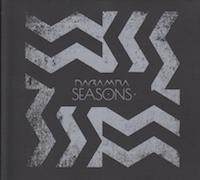
After their first efforts at combining popular songs with classical melodies on 2015’s Recycled (their second album after their debut – 2012’s New Life), the group has returned with their own interpretation of Baroque composer Vivaldi and perhaps his most famous composition – the series of concertos known as ‘The Four Seasons’. The resulting album – 2016’s Seasons – which also includes a few additional compositions – provides a new and fresh perspective on one of classical music’s greatest treasures.

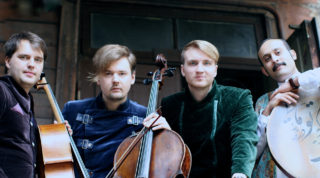
Dagamba, founded in 2011, bring together cellists Valters Pūce and Antons Trocjuks, pianist Dainis Tenis, percussionist Hamidreza Rahbaralam (performing traditional instruments such as the daf, setar, and tambur), as well as a more recent addition – drummer Arturs Jermaks.

Though it is more a reimagining of Vivaldi’s work (created by Pūce and Tenis), rather than simply a new arrangement, it is still at once recognisable, containing Vivaldi’s familiar melodies in a new presentation. The foundation remains the cello and piano, however, the drums and traditional instruments give both an energetic flair and an exotic flavour to the music, particularly in “Summer Storm”, where an energetic, almost tense performance then leads to “Autumn”, displaying the full melancholic richness of the cello.

Credit goes to Dagamba for making this nearly 300 year old work as vital and lively as it was when it was first composed, and, were it not clear already, shows why Vivaldi’s Four Seasons is one of the most of the most popular compositions in history. The group provide a fine balance in their version of the work, ensuring that the music is still held in high reverence while still adding new elements and perspectives.

Beyond their version of Vivaldi’s opus, Seasons contains a few additional tracks in a similar fusion style. The song “Freddie”, which, as its title might indicate, contains elements of Queen, which are then merged with melodies by J. S. Bach. The track also features Latvian vocal ensemble Latvian Voices providing a haunting vocalise.

The group also prove adept at writing and performing entirely new material, as with the song “Escape”. Valters Pūce provided the music, and the song features guest vocalist (and lyricist) Aminata Savadogo, who has already made a name for herself in the Latvian music world with her memorable performance at Eurovision in 2015. On “Escape”, Aminata provides a similarly powerful vocal display.

Though the album is full of dynamic rock elements, it concludes with the subdued and tender “Postlude / Lascia Demons”, with original music by Pūce and Tenis synthesized with the music of Handel. After the turbulence of the previous tracks on the album, this provides a gentle and calming close, again modernising Baroque elements.

Dagamba once again show that music that is centuries old can be seamlessly integrated and fused with modern elements, making it both familiar and fresh. They continue these efforts on Seasons, with effective results. Providing a new take on the music of Vivaldi and other artists, Dagamba have created a compelling new interpretation of a timeless work, revealing and expressing elements which are just as relevant in today’s music world as they were centuries ago.

For further information, please visit the Dagamba website.

Seasons

Dagamba
2016

Track listing:

      1. Prelude
      2. Spring
      3. Summer Storm
      4. Autumn
      5. Winter
      6. Freddie
      7. Escape
      8. Intoxicated
      9. Postlude / Lascia Demons


Egils Kaljo is an American-born Latvian from the New York area . Kaljo began listening to Latvian music as soon as he was able to put a record on a record player, and still has old Bellacord 78 rpm records lying around somewhere.