Classic Pērkons still thunders on CD

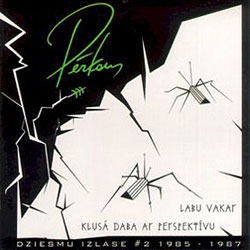
One of the all-time classic Latvian rock groups must be Pērkons, which has been releasing albums for more than 15 years. Thankfully for all of the many Pērkons fans, MICREC has released two compact discs with many of the group’s top songs. The most recent is Dziesmu izlase #2, 1985-1987.

In the summer of 1990, I had the good fortune to be able to participate in a Latvian music camp in Canada. The camp was organized by the renowned Latvian-American musician and composer Dace Aperāne, and Latvian musicians came from all over the world to participate. Among the musicians invited was Juris Kulakovs, the keyboardist and music composer for the famous Latvian rock group Pērkons.

Working with such a respected musician was quite the thrill. I wasn’t too familiar with the music of Pērkons at the time, having only heard one song, “Zaļā dziesma,” off the classic Mikrofons 88 collection. The song still today remains one of my favorite Perkons songs, and one of my favorite songs by any Latvian group.

During the closing show of the music camp, all the campgoers joined in and performed “Gandrīz tautas dziesma” with orchestra and choir! Quite an experience.

Around that time, Pērkons had released two of its albums—Labu vakar and Klusā daba ar perspektīvu—in the United States in cassette format and I was able to pick up a copy during the music camp. Though the sound quality of the recording wasn’t the best, and there were a few mistakes in the song listings, this was a tape I would continually listen to ever since.

During a trip to Latvia in the fall of 1998, I picked up the official Latvian cassette release of the two albums—this time with much better sound quality and the correct track listing. And all over again I began to listen to this tape all the time.

And now this collection of songs finally makes the transition to CD format—and what better format to hear these Latvian rock music classics in?

The CD is the second in the Dziesmu izlase series from Pērkons. The first CD, Dziesmu izlase #1, released in 1994, represented the years 1981 and 1982, and this CD represents the years 1985 to 1987. (Editor’s note: MICREC tells SVEIKS.com that “with luck” a third CD might be issued to complete the collection.)

Two songs were lost in the transition to CD—I’m assuming because of the space limitations of the CD format—“Sastrēgumstunda” and “Kā pasakā.” This is unfortunate, because “Sastrēgumstunda” is a favorite of mine.

Dziesmu izlase #2 contains Latvian songwriting and musicianship at its finest. Memorable songs include:

  • “Gandrīz tautas dziesma” with faux folk song lyrics.
  • The aforementioned “Zaļā dziesma,” a song dedicated and written for Greenpeace, showcasing the beautiful soprano voice of Ieva Akuratere.
  • The catchy humor of “Baletomānija,” featuring Kulakovs on his only lead vocal performance, and also Akuratere making a very off-key performance!
  • “Cik pulkstens,” which details the end of a relationship when two people are unable to express their feelings for each other.

Other favorites include “Mana dienišķā dziesma,” “Labu vakar” and “Slidotava”.

Many of the songs are very catchy and the group displays a growing maturity in its songwriting style and lyrics. A few of the longer songs drag a bit. “Lampas un zvaigznes” goes on for a bit longer than it should, and “Neatvadīsimies” is a bit repetitive, but these are just minor criticisms of this excellent CD.

Bonus points for including in the CD packaging all of the lyrics as well as previously unreleased photos of the band. But you have to wonder who was offering the band fashion advice in the photo on the inside back cover!

All in all, a great CD from a great band. Grade: 5 (the highest grade available in Latvian school – for those who might not know!).

(Editor’s note: This article orginally appeared on SVEIKS.com.)

Details

Dziesmu izlase #2, 1985-1987

Pērkons

MICREC,  1996
Egils Kaljo is an American-born Latvian from the New York area . Kaljo began listening to Latvian music as soon as he was able to put a record on a record player, and still has old Bellacord 78 rpm records lying around somewhere.

Repatriation brings a broken promise

Happy Girl

“God help you,” her father says, when Ilze Berzins leaves Canada for a new life in Latvia.

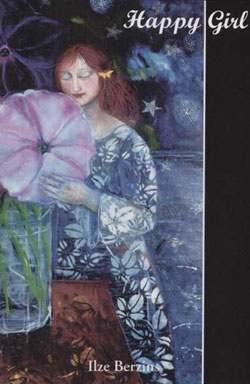
She has been raised on her mother’s nostalgic stories of an idyllic rural life in Beki, the farm that was abandoned when her family fled during the Second World War. Berzins was two years old. Now, more than 50 years later, she has come back to test her mother’s dreams. Happy Girl is a memoir of her experiences.

Berzins is determined to make a place for herself. Evicting the drunken louts she finds camped out in her room when she arrives in Rīga, she begins a series of bitter confrontations over housing. Beki, the family homestead, is devastated and unrecognizable after years of Soviet occupation. The tenants there don’t appreciate her sudden appearance. It is clear that their dislike could turn very ugly indeed. Full of energy at the outset, Berzins acquires and loses a series of jobs and apartments in Rīga—and even makes some friends. Eventually, however, the daily struggles of life in Latvia begin to wear on her. Locals are contemptuous of her desire to live there. She is beaten up by a militia man outside her apartment building while neighbours watch; she receives scant attention when she complains to the police. It’s easy, she says, to start drinking in the mornings in Latvia. Alcohol is a necessary cushion between self and reality.

"Kauns! Kauns!" (Shame! Shame!) people yell at her over any misunderstanding and label her "Trakā arzemniece!" (Crazy foreigner) for her eccentricities. Berzins wears leggings, running shoes and baggy sweaters in the street—to the horror of the more formal Latvians. Her colleagues at the Latvian Academy of Art sneer at her methods: she teaches French by singing popular songs, English via "Phantom of the Opera." She refuses to throw her garbage into the trucks like everyone else and leaves it at the curb for someone else to deal with. By her own account, Berzins makes enemies easily. Many of her friendships seem to follow a predictable course of enthusiasm, followed by deterioration, then recrimination.

She is conscious that her expectations are unrealistic: "I just wanted the folks at Beki to disappear. Like they wanted me to disappear. I wanted things to be like they were in my mother’s stories… I wanted impossible things." The myth of Latvia she carries within her is strong. Still, she cannot help but question her mother’s memories of life there: "From early childhood on, we had been brought up on a Latvia that no longer existed, if indeed it ever did exist."

The Latvia she discovers is rife with government and police corruption. Organized crime flourishes. Bribery and sexual harrassment are endemic. The Hare Krishna in Rīga don’t dance or sing in parks; they are too busy feeding the poor who line up outside their temple. Beggars and pensioners hold placards telling of their plight, and the prostitutes on Marijas Street ply their trade with feet wrapped in newspapers. Meanwhile, mafiosi in leather jackets talk on cell phones in expensive restaurants.

"Neņem galvā," the Latvians say. Don’t let it get to you; literally, don’t take it into your head.

Berzins goes to Latvia expecting reunion, completion; instead she encounters incivility, hatred and violence. Nevertheless, she does experience moments of pure joy, usually in the fields of Beki. When she finally gives up her dream of living there and decides to return to Canada, her disappointment and sense of failure drive her to the very edge of herself.

The result of her disillusion is a funny, lively, painful book, somewhat marred by typographical errors and minimal editing. It is a book written in anger. Berzins, along with a whole expatriate generation, was promised a fairytale Latvia that only needed independence to exist again. The promise is still unfulfilled.

(Editor’s note: This article originally appeared on the SVEIKS.com site.)

Details

Happy Girl

Ilze Berzins

Halifax, Nova Scotia:  Albert Street Press,  1997

Latvian music for happy feet

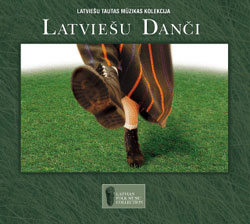
“It makes me feel happy.” A British executive of a prestigious international company said this when he heard the new Latvian Folk Music Collection’s Latviešu danči (Latvian Dances) playing as telephone on-hold music at his company. Overall, that is quite an accurate assessment of this disc.

To put it another way, the music on this album is, in two words, quintessentially Latvian. As ethnomusicologist Valdis Muktupāvels writes in the liner notes (in both Latvian and English, although a few of the English phrases are a bit awkward), Latvians love to dance. This love is truly evident in the joyous music on this disc.

The music was performed by a number of people, including Māris Muktupāvels (producer of this album) and Ilga Reizniece, both of whom are well known and highly respected in Latvian folk music circles. Other notable performers include Gints Sola, guitarist for the pop-rock group Jauns Mēness, and Mikus Čavarts, like Reizniece and Māris Muktupāvels a member of the folklore ensemble Iļģi. One surprise addition is Ilmārs Mežs and his family. Mežs, known in part for his research into Latvian demographics, also is lead singer for the folklore ensemble Eilenders.

Included in the liner notes are instructions (in Latvian only), written by Sniedze Grīnberga, for dancing the dances. It’s a wonderful idea, but does not work all that well. The directions particularly would not work well for two groups of people (other than those who do not read Latvian): those who are highly visually oriented and those who have no Latvian dance knowledge or experience. These people might be able to figure out only the simplest dances. I am quite visually oriented when it comes to dancing, never having been a big fan of written dance instructions with no illustrations because I have a very difficult time picturing the steps and formations. As for the dances on this disc, I was able to follow along the instructions mostly only to the dances that I have danced before.

However, on a purely musical level, this is absolutely fantastic music. The second track, “Cūkas driķos” is one of the more rousing versions I’ve heard and I had an almost irrepressible urge to begin dancing down the hallways of my office when I heard it. The tracks with vocals make you want to sing along at the top of your voice. The 15 dances chosen for inclusion on this disc offer a nice variety: some are fast, others are slower, some have vocals, others are instrumental. Most Latvians will be familiar with at least a couple of dances, such as “Tūdaliņ, tagadiņ” and “Mugurdancis,” which are classics that children learn at very young ages. Yet there also are tracks that will be new to many listeners.

Another enjoyable aspect of this disc is that dancers were a part of the recording. Not only does the listener hear the wonderful music, but also the actual dancing. In other words, it is very much a live recording. For those of us living outside of Latvia, at times this disc is as close as many of us will come to an authentic evening of Latvian dancing, singing and merrymaking.

This disc will make Latvians feel Latvian to the depths of their souls (and to tips of their toes) and it will give non-Latvians a greater appreciation of Latvian culture. Naturally, this is the somewhat biased opinion of a former dancer who is crazy about both Latvian dance and music, but if a half dozen co-workers from around the world at my office enjoyed Latviešu danči, I am certain all readers will as well.

Details

Latviešu danči

Latviešu tautas mūzikas kolekcija

UPE Recording Co.,  1999

UPE CD 011