Rich characters aren’t enough to save mystery

Riga Blanca

Riga Blanca, the latest mystery by Canadian-Latvian writer and artist Ilze Berzins, reads like an automobile stuck in the snow, unable to get any traction until, vroom!, away it goes before coming to a sudden stop. Although rich in its description of Rīga and of human emotion, the book’s story line doesn’t satisfy as much as the author’s last work.

Riga Blanca is the fifth Berzins mystery and the second set in Latvia. Two years ago, in Riga Mortis, she introduced the amateur crime-fighting duo of yellow journalist Arnie Dambergs and English-language teacher Vizma Gross, two Canadian-Latvian expats living in Latvia. They return as characters in the latest novel, although Dambergs figures less than Gross.

At the beginning of Riga Blanca, the reader is introduced to Paulette Laci, or Lācis, the French Canadian wife of a Latvian-Canadian crown attorney from Ottawa, Andrejs Lācis. She has become convinced that her husband has been unfaithful with a Russian woman from Latvia. Now she is plotting her revenge.

Soon afterward, the reader also is introduced to the Russian woman, Valeria Atnikova, a prosecutor from Rīga who had visited Ottawa, Canada, to attend a conference. There she had met attorney Lācis and had lured him into a hot tub. Now she’s pregnant, carrying the crown attorney’s child.

And so it goes, chapter after chapter: Paulette and Valeria, Valeria and Paulette. Berzins tries to create a tension between the two characters while also building the plot, but a third of the way into the book I was starting to wonder when something was going to happen. This is, after all, supposed to be a mystery.

Finally, on page 141, Andy Lāci is found dead in Atnikova’s Rīga apartment. Or maybe he isn’t. It is an interesting twist that Berzins introduces here, but it comes fairly late in the story.

Vizma Gross is the common bond between the two women and, when Paulette shows up in Rīga on a quest for the truth of her husband’s secret life, finds herself caught in the middle between her two friends.

As in the author’s previous novels, the female characters are rendered richer than the men. The wheels-are-turning look into the heads of Paulette and Valeria, in fact, is where Berzins appears to have invested much of her energy in writing this novel, particularly in the first third of the book.

Through her main characters, Berzins also provides a rounded view of life in Latvia. Valeria could have been rendered as a stereotype of an opportunistic Russian woman, but she also manages to come across as a sympathetic character. Paulette, who early on is hell-bent on tracking down her philandering husband, is taken by the beauty of the Latvia’s capital city while becoming acclimated to its vagaries. And Vizma is a pleasant expat, one who appears to have generally found success and happiness in the land of her ancestors.

Touching on such aspects as Rīga’s underworld, on the social network of North American expats and on the struggles faced by those who want to reform Latvia’s judicial system, Berzins brings to Riga Blanca more than enough detail to make for a credible backdrop.

However, good characters are just part of creating an engaging mystery.

Typographical errors have been troublesome in previous books by Berzins, but the problem seems to have increased with this title. It may seem trivial to mention the typos, but the errors aren’t a good advertisement for the author or the publisher.

And the climax and denouement in the plot line left me unsatisfied. They seem to come quickly—too quickly given the earlier pace of the book—while leaving one to wonder why some things have happened.

I won’t give away the ending, but the novel leaves the reader with too many unanswered questions. Perhaps that’s the intent: not all mysteries are meant to be unveiled. Still, after the build-up, it would be good to not leave the reader dangling.

Details

Riga Blanca

Ilze Berzins

Ottawa:  Albert Street Press,  2003

ISBN 0-9686502-5-2

Andris Straumanis is a special correspondent for and a co-founder of Latvians Online. From 2000–2012 he was editor of the website.

‘Sprīdītis’ raises but doesn’t answer key question

Sprīdītis Amerikā

The documentary film is just part of the “Sprīdītis Amerikā” project. An exhibit of photographs, including this image, has accompanied screenings.

Sprīdītis Amerikā vai Does it Look Like Happiness? tries to answer an important question: Why have so many Latvians in recent years decided to leave Latvia to seek their happiness in the United States, and have they found it?

It’s a much-debated question both in Latvia and wherever else more than two Latvians can be found. Sprīdītis (as well as another film on the same topic, Atrasts Amerikā) has certainly stimulated the debate. But, other than showing that, in general, happiness is hard to find and even harder to define, the film doesn’t really answer its own question.

The fault is perhaps with the premise itself. Looking at Latvia or the United States through the eyes of those who decided to choose one over the other doesn’t really address the merits or faults of either. By definition those who left Latvia found Latvia lacking and chose the United States as a place where whatever it is that Latvia lacks can be found. Those kinds of judgments are best left to those with an objective eye with nothing at stake.

Sprīdītis really isn’t a film about Latvia or the United States, so much as a film about individuals who seek the pot of gold at the end of the rainbow, and they can be found in any immigrant community regardless of county of origin or ultimate destination.

The short answer to whether they found their happiness in America is, well, really neither short nor simple. The film certainly demonstrates that for the most part they have not. But whether this was due to something intrinsic to the respective nations or the individuals in question remains unanswered. One gets the sense that they could have been just as happy or just as unhappy in either place. Their reasons might change, but the degree of either remains the same.

Sprīdītis is not a bad film. Other than at times comical English translation, it is technically well executed. One gets the sense of place and lives. The film flows with a natural rhythm that captures the spirit of the moment it sets out to capture. It fleshes out its background much better than Atrasts Amerikā. Where Atrasts Amerikā was mostly talking heads broken up by cutaways, which didn’t always add to what the heads had to say, Sprīdītis adds background footage that accentuates the interviews.

Overall, Sprīdītis offers a glimpse into the motives and introduces us to people who most of us might never otherwise meet. It’s a film that captures the immigrant experience, the hardships and sacrifices, even if it doesn’t really tell us anything particularly new about the place those immigrants left or the place where they now live.

Details

Sprīdītis Amerikā vai Does it Look Like Happiness?

Ieva Salmane, director

Projekts “Sprīdītis pasaulē”,  2003

Notes: In Latvian and English. Documentary, color and black and white, 52 minutes. Screenplay: Ieva Salmane; director of photography: Māris Ločmelis; composer: Pēteris Helms; production editor: Sandra Alksne; sound editor: Anrijs Krenbergs; video engineer: Andris Zemītis; producers: Ieva Salmane and Māris Ločmelis.

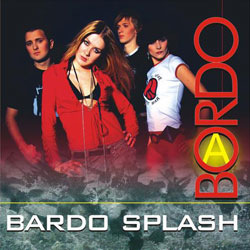
Influences of others show on Bardo Splash debut

Bordo

When I first heard Bordo, Bardo Splash’s debut album, I was at different points reminded of another Latvian group. But I couldn’t quite place it. Prāta Vētra? Jumprava? RamaDance? A bit of research revealed that at least the latter two are related.

Bordo, released late last year, was produced by Aigars Grāvers, one of the four members of the long-standing Jumprava and leader of the exciting Rama Dance project. And, it turns out, Bardo Splash’s lead singer, 21-year-old Rudīte Būmane, performed on Rama Dance’s second album, Extravagance.

Bardo Splash is relatively new to Latvia’s music scene, growing out of the now-defunct group Zupski Rubin. Bardo Splash has performed since 2001 in a variety of venues, including the noted Liepājas Dzintars and Sinepes un Medus festivals, as well as traveling around Latvia with the 2001 Priekšnams tour organized by Radio SWH. Attempts by media to pigeon-hole the group into a particular genre have mentioned modern rock, atmospheric rock, pop and other labels. On Bordo the group crosses and melds genres as needed. One track, “Māras avots,” in the liner notes is even described as postfeiklora, which, I suppose, can in turn be described as contemporary songs that sound like traditional Latvian folk songs but aren’t.

At the time the album was recorded, the group’s members numbered five: Rudīte Būmane on lead vocals and synthesizer; her brother, Renars Būmanis, on drums, programming and synthesizer; Aleksandrs Ruģēns (a.k.a. Sniegs) on vocals, acoustic guitar, Jew’s harp and programming; Edgars Dambis on electric and acoustic guitars, and Ieva Rudzīte on bass and acoustic guitar. Ruģēns was largely responsible for all music and lyrics on the album.

Since last summer, Dambis and Rudzīte no longer are with Bardo Splash, according to Baltic Records Group. A new guitarist and a new bassist are now working with the group in preparation for concerts. Ruģēns, meanwhile, is reported to be abroad, earning money to support his family.

I hope the departures, permanent or temporary, don’t hurt the group, because this is one band I’d like to see hang together for a while. How many rock or pop bands are there in Latvia today with a female lead singer? For Būmane’s potential as a role model alone, the band should survive.

Bordo also is just a good debut album, with an interesting mix of sounds and thoughtful lyrics. Anyone who has heard RamaDance’s Sāga or Extravagance will recognize similar electronica and folkloric elements in some of Bardo Splash’s work, especially on tunes such as “Māras avots” and “Spoku kamanas” (although for the latter the band cites influence from “post-folkore” group Iļģi).

But don’t expect that to be a constant on this album. The lead track, “Kad sajūtas mānās,” for example, is clearly a pop song, although the lyrics describe emotions encountered during a strange tusiņš.

The sweetest song on the album also is the shortest. At one minute and 12 seconds, “Kad straume projam iet” describes a simple philosophy about humankind’s relationship to the recurring forces of nature. Eight layers of Būmane’s vocals are accompanied just by an acoustic guitar. According to the liner notes, an earlier version of the song almost became the title track for the album.

Five of the album’s 14 tracks are in English, including one of the band’s better-known tunes, “Force majeure.” As with many other Latvian groups, Bardo Splash’s Latvian songs generally are better than their English material, although Būmane’s vocals and Ruģēns lyrics make for a nice combination. And, just as other groups lately have done, Bardo Splash offers Latvian and English versions of the some songs: “Glory Nights” is at least musically the same as “Kad sajūtas mānās,” “Four Fingers” is a relative of “Četri,” and “Initiation” is the anglicized “Māras avots.”

As we often lament in our reviews, the liner notes here are spartan. Lyrics are not provided. They would especially be helpful for the English-language tracks, where meaning sometimes is obscured by unpolished pronunciation.

Flaws aside, if you’re looking for something new from Latvia’s popular music scene, Bordo is worth seeking out.

Details

Bordo

Bardo Splash

Baltic Records Group,  2003

BRG CD 178

Andris Straumanis is a special correspondent for and a co-founder of Latvians Online. From 2000–2012 he was editor of the website.