New R.A.P. sounds like the same old R.A.P.

Maize

A compact disc cover with four gun-toting Latvians, a shot-up beer can and an album title that has nothing to do with the anything pictured introduces us to a seemingly new R.A.P. The band has its new album Maize, new manager Aivis Brūders, and a new image that has rather (drastically) changed from that of 2003. The nice guys have turned into bandits. It all looks so rugged, so different, so promising.  Unfortunately, it’s same-old-same-old on this frontier.

R.A.P. is a four-member band from Kuldīga. They are singer Artis Dvarionas, bassist Māsters (Artis Rozītis), guitarist Štro (Aleksandrs Stro) and drummer Gatis L. (Gatis Lagzdenieks).  Maize, released in October, is the group’s third album as R.A.P., but it’s the fourth album overall.

Because the album is not the group’s first, my expectations were high. However, the beginning of the album is weak, which is ironic considering the title of the first track—“Spēka būs gana” (Strength Enough). 

It wasn‘t until the fourth track, “Viss jau saplānots” (Everything is Planned), that I could say I was really drawn into the album. First of all, the opening of the song doesn’t feature the almost monotonous, twangy, lead guitar bits characteristic of the first three tracks. Second, the vocals are balanced well with the easygoing nature of the melody and the simple niceness of the bass. This track is worthy of being held way above the “background music” category. It is also no surprise that “Viss jau saplānots” was one of the singles featured on the radio.

The next two tracks of the album aren’t particularly noteworthy, but the melodies are good (drum effects, circus-like tunes, short acoustic guitar solos), and in a hard rock style like it should be. Then, after Track Six, the easy times are over. 

It should be pointed out that the album is set up in an interesting way. The songs in Latvian have been placed in the first part of the album, and the songs in English make up the rest of it.  For me, the arrangement works out, because I know when to stop the CD.

The seventh track, “Never Felt that Before,” has the basics, but the English is still questionable.  spent most of the second part of the disc trying to decipher the lyrics, and the effects of the music was almost missed. Incomplete thoughts coupled with shoddy spelling in the printed lyrics of the disc jacket made me really doubt the quality of what I was listening to.  “Plain” instead of “plane,” “circulationing” instead of “circulating” (kudos to Dvarionas, though, who at least sang the right word)… I hate to say it, but I can’t listen to the English lyrics on the album without grinding my teeth, and the typos in the booklet are unprofessional. 

Track Nine, “A Day Before Nothing” (also one of the radio singles) sets itself slightly apart from the other seven tracks sung in English. It sounds almost like a hyper version of something from The Doors. It may have to do with the combination of good music, balanced vocals, and cryptic lyrics:

The fire is on and the neighbours are sleeping
the heaven fell down when I saw a baby weepin‘
In the white snow – hot human show
No need to return from where you go…

Track 10 offers a contrast between the main melody and refrain that reminds me of what bands like 311 have done—a kind of island pop and alternative rock sound. The rest of the album is musically entertaining, but the faltering English lyrics ruin the moment.

As with R.A.P.‘s previous album, 2,  I got used to Maize after listening to it several times, though it quickly became an album that worked well just as background noise. The music is, as if I can’t repeat it enough times, stellar, but there’s still something missing. In an October interview in the newspaper Kurzemnieks, members of the band explained their music-making process, and a little light was shed. The group begins by creating the music and the melodies. They have jam sessions and work through what they like and don’t like. Only afterwards do they “look for a text.”

I may have read the interview wrong or the band members might not have had a lot of time to answer the questions, but what I understand from what was said is that R.A.P. puts most of the effort into the musical aspect of their albums, treating lyrics as more of a sidedish. And it shows, it really does. 

I can’t say I don’t like Maize. There are no problems with R.A.P’s music (it hasn’t really changed in three years, but then again, it wasn’t bad to begin with, so I’m not complaining), but the lyrics are either confusing, pointless, or, in some cases, completely lost under the music. Almost every single track lacks balance between vocals and melody. The lyrics could be replaced with “la la la” and the songs would sound just as good. Not only do I stand by my opinion of three years ago that the best of R.A.P. lies within the Latvian tracks, but the band’s efforts should concentrate a bit more on the content of the lyrics. There is space for improvement, and I look forward to the next album in the event it has been filled.

Details

Maize

R.A.P.

Platforma Records,  2005

PRCD 180
With help from Swedes, solo debut is a hit

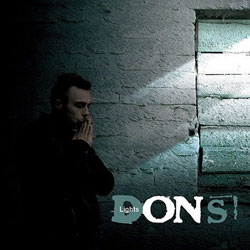
Lights On

The Latvian popular music scene never fails to amaze with its good supply of new and up-and-coming talent. To this list we can add the singer Dons, who recently released his debut solo album, Lights On.

The 22-year-old singer, whose real name is Artūrs Šingirejs, recorded the album with the help of Swedish producers and musicians in Stockholm. There are basically two producer teams on the album. Brothers Andreas and Martin Karlegård co-wrote, produced, performed and recorded five of the songs at K*Bros Studio, while Peter Månsson teamed up with James Cartiers on four songs and with Patric Sarin for one song at MIR Studios.

All the songs are sung in English and Dons does a great job with them. Actually, Dons is one of the few singers from Latvia who can sing in English with nearly no accent. His voice sometime sounds similar to that of Huey Lewis and at other times that of Red Hot Chilli Peppers singer (and Lithuanian-American) Anthony Kiedis.

Dons first gained wide notice in Latvia as one half of the duo Dons & Lily, paired with Linda Kalniņa. They met on the Latvian television reality show “Talantu fabrika.” The duo released one album, Viens otram, in 2004, but went their separate ways in 2005.

Lights On kicks off with opening track, “Take Me Alive,” a fast paced number that has a fabulous, screeching guitar solo. Dons really belts out the chorus line on this song. Next is the first single from the album, a ballad called “Light Out,” which has been getting good airplay on Latvian radio stations. There’s a videoclip to the song as well. This is the showcase for songwriters Dons and the Karlegård brothers.

“Jaded,” s song about the new generation taking over, has a little quote from The Doors’ song “When The Music’s Over.” This is not by coincidence, as one of Dons’ favorite groups is The Doors. “American Lovebite” is a Beatles-sounding song complete with a horn section. It’s one of four songs where Dons is not inolved as a songwriter, this being left to his Swedish counterparts.

Really grooving is “When Love Turns to Pain.” All the instruments are played by Månsson, while backing vocals are sung by Sarin. The song also has a catchy chorus.

The next three tracks on the album are produced by the Karlegård brothers, starting with “You Should Know Better,” a powerpop song that goes well together with the previous track. “Best Kept Secret” is a more poppy song, but again with a strong chorus. “Nothing’s Really There” is a song about childhood memories and shadows in the room that are just imagined.

The last two songs are produced by Månsson and Cartiers. “Mr. Greene” is the current single from the album, a steady-paced storytelling track that showcases Dons’ singing abilities. “Just Save Me” rounds out the album and is a rocking walking beat song where Dons goes looking for missing pieces, but I believe he has found them by creating this album.

All in all, the album has 10 good, strong songs, professionally performed, produced and recorded.

Details

Lights On

Dons

Platforma Records,  2006

PRCD 151

Where to buy

Purchase Lights On from BalticShop.

Note: Latvians Online receives a commission on purchases.

Raitis Freimanis lives in Stockholm, Sweden, and is a founding member of the Latvian-Canadian band Skandāls.

Wedding album gains Iļģi deserved notice

Ne uz vienu dienu

Ne uz vienu dienu, the newest compact disc by the Latvian modern folklore group Iļģi, has made it to No. 2 on World Music Charts Europe, where it is in good company with top groups from around the world. This is the highest international placing for a Latvian world music group and a powerful statement about the recording’s and the group’s quality.

Ne uz vienu dienu (Not for Just One Day) is a CD of wedding songs. But this is not an educational collection in the obvious sense; the songs do not form a complete wedding ceremony set. The best-known part of the ceremony—mičošana—is sung about in only one song, “Līgodama upe nesa.” Instead, Iļģi deals to a much greater extent with the more vague issue of beginning a new stage in one’s life.

“Tautiets jūdza bāliņš jūdza, Visi meži guni dega” and “Viena saule viena zeme” are beautiful texts about a bride wishing that her new home will be kind and that her married life will be gentle. These could be tear-jerkers, but Iļģi does not dwell on melancholy. Rather, as the liner notes state, even though a wedding is a serious event, it is nevertheless a happy one. The heavy “Dej eglīte, lec eglīte” bids a dignified farewell to the bride’s old life and proudly greets her new life. In “Kodaļa sprēslīca” the new bride’s lonely spinning wheel is encouraged to follow her to her new husband’s house, but the new couple has already exchanged rings, and now no one can undo the vows anymore. In “Skaista mana līgaviņa” the new bridegroom sings about his bride’s beauty and gently offers his shoulder for her to sleep.

Iļģi keeps on expanding its influences, this time by including African musician Samite on kalimba and German musician Mark Feder on banjo. Both instruments fit surprisingly well with Latvian folk melodies and the result is very pleasant world music. Of course, Iļģi plays all of its regular folk instruments as well: kokle, bagpipe, wooden flutes, ģīga, etc. The addition of Rūta Muktupāvela and three singers from the group Saucējas is also very fitting, because weddings are not usually the place for solo singing—everyone is expected to join in.

Despite a few calmer songs, the overall feel of Ne uz vienu dienu is almost exceedingly upbeat. All in all, though, this is another very polished CD typical of Iļģi, “restrained and yet refreshing,” according to World Music Charts Europe.

Details

Ne uz vienu dienu

Iļģi

Upe Records,  2006

UPECD 069