A Numbers Game – the future of the Latvian émigré community

(Continuation – Latvians Online published the first part in this two-part series on 8th May 2012)

The Jewish community has Birthright, a program which funds trips to Israel for Jewish youths. While not nearly as well endowed, ALA has Sveika Latvija. To date the program has for the most part been targeted at graduates of heritage language elementary schools. It must be expanded and marketed to include even those who don’t attend Latvian school or speak Latvian. We need to get as many young adults of Latvian descent as possible to visit Latvia.

The émigré community should work with Latvian authorities to promote tourism to Latvia among Latvians and non-Latvians alike. Iceland is a case in point. There are non-stop Icelandair flights from Minneapolis to Reykjavik. What’s the connection? The Upper Mid West was the destination for many Icelandic immigrants. Few if any now speak Icelandic but there is a connection. Enough to warrant direct air service. Air Baltic is lagging but it needs to be encouraged. When it does expand overseas, the émigré community needs to support the airline.

The émigré community should work with the Government of Latvia to encourage study and internships programs in Latvia. It needs to push for removal of obstacles to ensure that participants are welcomed, that their professional skills are recognized and that their weaker Latvian language skills and non-existent Russian is not held against them. It should facilitate visits by professionals of Latvian descent in order to share their knowledge and experience.

The post-war Latvian exile community was cultured and sports were on the periphery. With the restoration of independence, Latvia’s athletes have fanned out across the world and garnered Latvia publicity and good-will that money can’t buy. Yet when compared to the enthusiasm that ethnic Italian or Greek communities show their national football teams, the reception of Latvia’s athletes by the émigré community has underwhelmed.

For example, in 2008 eight hundred hockey fans from Latvia descended on Halifax in Canada for the World Hockey Championships. Another two hundred Latvians from Canada and the United States joined them. Even though this was the biggest gathering of Latvians in Canada in 2008, the event failed to get mention in that year’s annual report of the Latvian National Federation in Canada (LNAK). Go figure! Sports is one of the best ways to connect younger émigré generations to today’s Latvia and not just the young, but also those not interested in culture and more artistic pursuits.

The post-war diaspora survived for many years as a transnational community in large part by personal links the older generations had forged growing up in pre-war Latvia and later in Displaced Person camps. The links were renewed at larger gatherings such as Song Festivals and facilitated by newspapers such as Laiks that covered community news across the United States and elsewhere. Today, the émigré community is dependent on electronic and social media to sustain its transnational nature – email, web-sites, draugiem.lv, latviansonline.com, Facebook, Skype, news sites and web radio and television from Latvia.

Some community papers like Latvija Amerika published in Toronto continue their broadsheet format although a pdf version can be requested. Austrālijas latvietis is marketing both a print and electronic version and using electronic transmission to expand to its content and readership to new geographies. [The Australian Latvian press has two national publications – Australijas latvietis and Laikraksts Latvietis: the former is primarily a printed publication with a website attached, while the latter is an online publication with a printed option. Ed.] Jauno Laiks is a welcome quarterly supplement to the venerable Laiks, now published out of New York and Rīga. Jauno Laiks is colourful, with articles in both English and Latvian, typically written by younger authors and a good read. So stuff is happening. It needs to be encouraged, supported and sustained.

Work through émigré communities around the world Googling „Latvian New York”, „Latvian Denver”, „Latvian Toronto”, „Latvian Edmonton”, „Latvian Melbourne”, „Latvian Leeds” and you will bring up hundreds of links. They range from references to Latvian organizations on local registries to nicely constructed content-rich web sites. Some are produced by IT professionals while others are home-spun. Some smaller communities have done a nice job while some larger ones are missing. Some have created Facebook groups and rely on them to get the message out. Many sites struggle keeping content up-to-date. Yet they’re there and allow community members to stay connected.

The web is democratic, it relies on local initiative and it can’t be driven from the top. Yet émigré umbrella organizations could hire IT summer students to produce web templates that can be loaded through easy-to-use content management systems and made available to local communities at no cost. The umbrella organizations could line up Internet Service Providers for local communities to use eliminating the hassle to figure it out on their own.

Causes in Latvia continue to attract the interest and support of émigré Latvians. Nothing wrong with that and anyone can donate to any cause or charity as they see fit. However for the most part, it should be done on an individual basis. Direct funding from émigré community organizations particularly national and transnational organizations should be done selectively for sustainable priority projects and balanced with the needs of the community abroad.

This brings us back full circle to the political role that the émigré community should play both abroad and in Latvia. In today’s world with massive global movement of people, borders, time and space are disappearing. It is natural that émigré communities are interested in and have a role to play in their homelands. However that role must be realistic, aligned with the capacity of the community and once again, balanced with its needs abroad.

As the representative of the post-war diaspora, PBLA has little political power in Rīga and has struggled to attain its goals. The question of re-opening dual citizenship languished until Latvian politicians started taking mass emigration seriously. Teaching Latvian history as a subject separate subject in Latvia’s schools saw the light of day only when others picked it up locally. Efforts to rollback Soviet changes in Latvian orthography have gone nowhere. The charge for electoral reform is led by expats living in Latvia. They have been able to garner local support and as a result are making inroads. On its own, the post-war diaspora is not strong enough to mount a major political action in Latvia. To succeed it needs to find common ground and forge partnerships with local interests in Latvia that are strong enough to push something through.

With tens of thousands of recent emigrants abroad, this might be the time to push for formal representation for the diaspora in Latvia’s parliament. Latvia does have an Ambassador at Large for the Diaspora. Currently he is Rolands Lappuķe, who is an expat himself. Still, he is a representative of the Government of Latvia and needs to take orders from the mothership which is different than being elected by voters and accountable to them. Why not one deputy for Europe and the other for the Americas and Australia? Romania has diaspora representation, why not Latvia? Getting this won’t be easy but it is a goal relevant to Latvian communities abroad and would help both recent arrivals and the established to connect with Latvia.

The Latvian émigré community needs a paradigm shift in order to survive. It needs to be welcoming. It needs to be inclusive and reach out to Latvians and non-Latvians alike. It needs to be re-enterable for those looking to re-connect with their Latvian heritage. It needs to be multi-tier. It needs to reconcile with different levels of Latvian language proficiency. It needs to be modular and recognize that being Latvian abroad cannot be a 7×24 experience.

The Latvian émigré community needs “To encourage and enable positive individual connections with Latvian society, culture and Latvia”.

(This is the second in a two-part series of articles; originally published in the 23rd June-6th July edition of Jauno laiks)
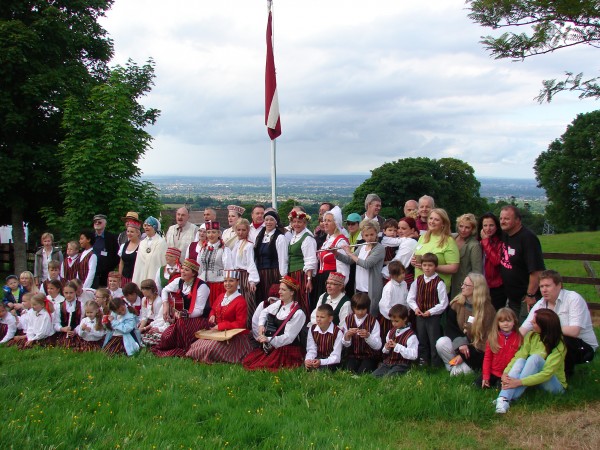
Latvia’s flag flies high over Dublin – during first 3×3 in Ireland

image

Opening ceremony participants at 3×3 camp in Dublin, Ireland together with members of eLVe and Mazais Letiņš choirs. Photo: Viesturs Zariņš.

Ireland now home to 20,000 Latvians

Ireland is now home to many Latvians. They arrived in large numbers from Latvia looking for work in what was then a booming Ireland.

Like Latvia, the global economic crisis of 2008 hit Ireland hard. Many recent immigrants from Latvia have headed for greener pastures but thousands stayed on. Over the years a total of 45,000 Latvians have registered with the Irish government but the number of Latvians in the 2011 census was around 20,000.

Most Latvians found work as unskilled labourers in the service and construction sectors although with the Irish financial crisis, construction jobs are now few and far between. There are families where one or the other spouse works in Ireland and the rest are back home. Earning close to minimal wages in Ireland it is possible to survive and still send back money to keep things afloat in Latvia.

The term Latvian is ambiguous and refers to those from Latvia without distinguishing ethnicity. Anecdotal evidence provided by the Latvian Embassy in Ireland suggests that the ethnic breakdown of immigrants from Latvia is opposite to the ethnic composition back home. Approximately 40% of those arriving from Latvia appear to be Latvian with the remainder coming from other nationalities mostly Russian.

Parallels with post-war trimda

Latvia’s ambassador to Ireland Peteris Elferts was one of the speakers at opening ceremonies on the afternoon of June 17. Elferts grew up in the Pacific Northwest of the United States and headed for Latvia soon after independence was restored. In addition to his diplomatic duties, Elferts and his family are visible and engaged within the Latvian immigrant community in Ireland.

Elferts sees similarities between the early years of the post-war exile community (i.e. trimda) of his parents and the emergence of Latvian choirs, folk dance groups, church congregations (the Latvian Lutheran and Catholic churches have both sent clergy to work in Ireland), media and heritage language schools in Ireland. A veteran of summer camps, high schools, youth seminars and conventions while growing up, Elferts was an early proponent of running the week-long 3×3 Latvian family heritage camp in Ireland and was one of its organizers.

Latvia’s Foreign Affairs Ministry would be well advised to carefully consider his replacement when that comes up in a year to ensure that the new ambassador does not limit his role to diplomatic corridors in Dublin but is also interested in and understands the needs of Latvia’s diaspora in Ireland.

Participants include all ages

3×3 was held June 17-24 at Scouting Ireland’s Larch Hill camp in the Wicklow Mountains with Dublin visible far below. Ireland has fickle weather, changing almost on the hour but the intermittent showers earlier in the day gave way to sunshine for the opening ceremony. Latvian choir eLVē and children’s vocal group Mazais Letiņš performed. Both are based in Dublin and eLVē recently celebrated its fifth anniversary. Folk dance groups and choirs from England and Latvia joined to mark the occasion.

Quarters were cramped for the 80+ registered participants of all ages at 3×3 including those who pitched in as kitchen staff. Although small in comparison to the 300 to 400 that attend 3×3 camps in Latvia, the turn-out was not bad for starters especially when compared with the United States and the 100+ persons who attend 3×3 in the Catskills or Garezers.

Latvian baby boom in Ireland

The youngest participant was a newborn only a few weeks old. A baby boom is underway as immigrants start families amongst themselves or with locals. Although the numbers are still small, a new category of arrivals to Ireland from Latvia are grandmothers who come to look after children while parents work. Given their limited English language skills, grandmothers can help teach Latvian to their grandchildren much like they did back in the 1950s.

There are now eleven Latvian heritage schools across Ireland, two in each of Dublin and Limerick as well as schools in Cork, Drogheda, Navan, Mayo, Portlaoise, Longford and Newry (Northern Ireland). They are attended by close to 300 students.

Across the Irish Sea, England has seen a similar explosion in the number of heritage language schools where a few years ago there was just one in London. In February 2012 Māris Pūlis, a retired headmaster and Chair of the Education Committee of the Latvian National Council in the United Kingdom, held the first ever workshop in Bradford for teachers of Latvian schools in Ireland and England.

Workshops keep participants busy

Former Bonn University professor of Baltic languages, Austris Grasis, who grew up in Sweden and now lives near Mazsalaca in Latvia ran a workshop on Latvian language. He focused on the state of the Latvian language today and the impact of structural reforms introduced during the Soviet occupation which were part of a broader Soviet campaign to ultimately have all its languages converge to Russian. These changes have been accepted in Latvia but undermine the grammatical structure of Latvian and according to Grasis are more dangerous than the influx of foreign words. Grasis also presented a number of grammatical rules that give Latvian speakers the ability to decipher a lot more Lithuanian than they would have thought.

Ilva Krama from Ireland ran a crafts workshop for school-aged participants, while Mārīte Briede from Latvia handled the youngest. Other workshops aimed at children and youths included the puppet theatre by puppet-masters Jānis and Laila Kirmuškas, ancient Latvian warfare by Jānis Krūmiņš and sports activities offered by Valērijs Martinkēvičs who runs sports camps in Dublin and Limerick. Māris Brasliņš led nightly folk dancing.

There was consensus that future camps need more activities for children especially those that would build and reinforce Latvian language skills and knowledge of Latvian culture and Latvia. Most children at 3×3 knew at least some Latvian but they often slipped into English during play-time and had to be reminded “runāsim latviski”, a refrain familiar to anyone from Latvian communities in Canada or the United States.

Workshops included the ever-popular family dynamics and relationships session run by 3×3 founder Līga Ruperte and Māra Tupese, both from the United States, sauna rituals by Aelita and Juris Batņas, history through your family photo album by Andris Tomašūns and Latvian cooking by the leader of Latvia’s 3×3 movement, Inese Krūmiņa.

Participants of Tomašūns workshop visited Peterson of Dublin. In the late nineteenth century, Latvian immigrant Kārlis Pētersons joined up with the Kapp brothers and became partner of the concern which is a now a renowned producer of quality pipes, all hand-crafted in Dublin. His nephew Konrads re-emigrated to Ireland after World War II and ran Ireland’s largest peat moss operation.

This author’s beer workshop proved popular and focused on gaining a deeper understanding and respect of beer, its different styles and history including Latvian and Irish beer. American graduate student Trevor Wirtenen, a student in Ireland demonstrated homebrewing.

The small number of adults at 3×3 meant some workshops ran with only a few participants but on the flip side this meant there was a significant amount of interaction with workshop leaders.

Late night “vegging” (nīkšana), always popular at 3×3 camps, included singing, conversations and board games such as Latvian versions of Trivial Pursuit and Scrabble.

Mobile Latvian food shop is popular

A popular and regular “visitor” to 3×3 was Elki, a refrigerated mobile Latvian food shop that sold imported goods from Latvia including sweets, cheese, canned fish, beverages and potato chips or crisps as they are called in the British Isles. The owners also sell their own smoked meat. With the Baltic States and Poland being members of the European Union, distributors load transport trucks with products from back home and feed a network of stores in Western Europe, particularly in the United Kingdom and Ireland, that sell Russian, Polish, Lithuanian and Latvian goods. Elki is a mobile shop and criss-crosses Ireland announcing dates and locations through social media sites such as draugiem.lv.

Through the eyes of Irish visitors

An interesting guest at 3×3 was Irish poet Michael O’Loughlin. After visiting Rīga on an European Union poet exchange program, he became aware of the connections between Ireland and Latvia as well as the similarities and differences between the two countries and their history. O’Loughlin proceeded to invent a literary persona Miķelis Norģelis, supposedly a Latvian poet who immigrated to Ireland. As an outsider, Norģelis was free to rail against excesses of the boom years in Ireland when it was all about making money. The ruse worked for a while before he was unmasked. When asked what has now happened to Norģelis, O’Loughlin stated that with the collapse of the Irish economy, Norģelis emigrated to the United States and rumour has it that he might be back in Rīga.

Another guest was Ruairj O Huiginn (Rory Higgins), a professor of Celtic languages and a former colleague of Austris Grasis. He compared the state of Latvian with the Irish language which came close to being extinct after English was imposed on Ireland. Today, although Irish is the official language of Ireland, only a minority speak it on a regular basis with English being prevalent. Participation of non-Latvian guest lecturers was welcome. Sometimes the best way to understand yourself is through the looking glass of others.

Keeping Latvians in Ireland connected

Sandra Bondarevska is editor of Sveiks, a Latvian broadsheet and Internet media outlet in Ireland. She had lined up a real-time connection with Radio SWH Rīga. Those present took great pride in singing Līgo songs that were being transmitted through Sandra’s cell phone and broadcast live in Latvia. It was as if they had a point to prove to those back home, that even though they were in Ireland, they too celebrated their heritage and Jāņi.

Sveiks features articles ranging from the latest news from Latvia and Latvian activities in Ireland to questions about schooling, social welfare,  tenant and worker rights in Ireland as well as classifieds and colourful advertisements for children’s Christmas parties, tour dates for musicians from Latvia and more.

A recent article profiled Sanita Pušpūrs, a Latvian immigrant who will represent Ireland in rowing at the London Olympics. According to Valērijs Martinkēvičs, the Irish focus on their traditional sports – rugby, Gaelic football and hurling leaving the field open in other sports for new arrivals.

Another useful Latvian Internet portal in Ireland is baltic-ireland.ie

Authentic Jāņi celebrated

Even though there were only around sixty participants at the 3×3 Jāņi, more than a few commented that this was the most authentic Jāņi that they had celebrated in years. Unfortunately most Jāņi in Latvia and around the world have degenerated into summer parties fueled by alcohol with little thought given to tradition apart from perfunctory on-stage choir and folk dance performances. At 3×3, participants gathered around a roaring bonfire, many in folk costumes, they ate cheese, pīrāgi and grilled kebobs, and celebrated by singing songs and dancing despite the steady drizzle throughout the night.

The first but not the last

Prior to closing on June 24, the adults participated in a round-table discussion about their 3×3 experience this past week. Everyone was asked to comment about their likes and dislikes. There was unanimity that the inaugural 3×3 camp in Ireland was a success. Yes there were glitches and gaps that need to be filled, but sometimes you just have to go with it and learn from experience. Plans are now underway for another 3×3 in Ireland. It will be easier to attract partiucipants the second time around because the message will spread by word-of-mouth. Some participants also indicated they now planned to attend 3×3 in Latvia.

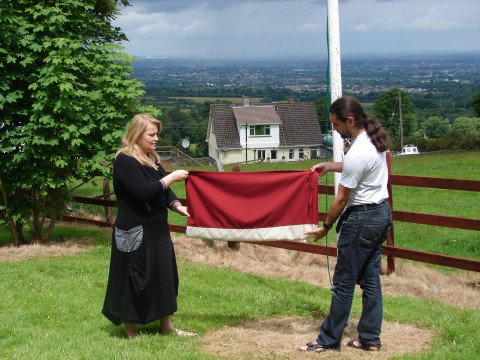
On June 24, Ilze Čeiča, Head of the Organizing Committee, and Kārlis Briedis, Chairman of the Latvian Society in Ireland, lowered the Latvian flag to officially close the first 3×3 camp in Ireland. Along with Baiba Kalniņa, Sandra Bondarevska and Ambassador Elferts, the five were called out and received a standing ovation for their efforts organizing 3×3 in Ireland.

The need for 3×3 in Ireland, America, Australia, elsewhere in Europe, not to mention Latvia, continues. As Inese Krūmiņa commented at the opening ceremonies – when Latvia regained its independence we could all answer that we’re Latvian but beyond that response there was little substance. The post-war exile community understood that it requires a conscious effort to maintain a Latvian identity and it is they who brought 3×3 and its ideals to Latvia. 

Conversations reflect sentiments of Latvians in Ireland

It was interesting listening in on conversations throughout the week. There were conversations about children’s schooling in Ireland, about the role of the Catholic Church in Ireland, about discrimination in schools against non-Catholics, about job opportunities, about the challenges of getting children to speak Latvian. There were comments about visits to Latvia becoming less frequent as lives became rooted in Ireland, of there being less and less in common with those back home particularly for those born in Ireland.

There was anger that some in Latvia considered those living in Ireland as traitors who had abandoned Latvia. They were making good money and owed something to those back home even though the reality was that most held menial jobs in Ireland and worked long hard hours to make ends meet.

Most of all there was the sense that those living in Ireland wish to be treated on equal terms with Latvians living anywhere else. No hyphens. No Irish-Latvians. Just Latvians who happen to live in Ireland. And there were those who stated unequivocally that they would move back to Latvia at a moment’s notice if the economic conditions and job market improved.

Others were doubtful and a poignant reminder was the Čikāgas Piecīši song Pazudušais Dēls (Prodigal Son) sung by Ilze Čeiča one evening with the verse „Dzimu te bet augu tālā Amerikā / Vai atgriezties man kādreiz būs vēl lemts” ( „I was born here [i.e. Rīga] but grew up in far-off America / Will it be my fate to ever return”).

Ireland’s example

Having said that, Ireland is a case in point. There are over 70 million Irish descendants in the world. Until recently Ireland lost many emigrants to poverty, famine and war. During the boom years of the Celtic Tiger, emigration was stemmed and many returned, only to see the tide reversed with the recent economic troubles. Next year the Irish government is hosting The Gathering, a series of festivals and events that showcase Ireland calling out to the Irish throughout the world to return and visit Ireland and „Whether you’re Irish-born, Irish-bred or Irish in spirit, get involved and celebrate a year of Irish connections”. Latvia should take note.

image

Lowering of the Latvian flag at the closing ceremony of 3×3 camp in Ireland. Photo: Viesturs Zariņš.

image

The Latvian younger generation’s peformance at the opening ceremony of the 3×3 camp in Ireland. Photo: Viesturs Zariņš.

image

Childrens’ activities at 3×3 heritage camp in Dublin.

Bitter Sweet World Hockey Championships for Latvia

With everything said and done, Latvia placed 10th at this year’s International Ice Hockey Federation (IIHF) World Championships. Victories against Germany and Italy as well as a goal differential advantage over Germany and Switzerland who finished with the same number of points was enough to propel Latvia from last year’s 13th place finish to 10th.

Despite the jump in the standings, Latvia’s loss to Norway and then Denmark which eliminated them from a quarter-final berth, stands out as a major disappointment. Likewise Latvia did not automatically qualify for the Winter Olympics in 2014 at Sochi. It will now have to host one of three final Olympic qualification tournaments in February 2013 and will have to win against France, Kazakhstan and a yet to be determined entrant to get there.

The performance of the team was criticized by Kirovs Lipmans, head of the Latvian Hockey Federation (LHF) at a press conference following Latvia’s final game and loss to Sweden. He made it clear that the team had not met its goal of a quarter-final spot and blasted Dinamo Rīga players who did not give it their best specifically naming captain Jānis Sprukts and one of the KHL’s top forwards Miķelis Rēdlihs. The impact of Dinamo Rīga on the National Team has been simmering for a number of years. Critics argue that before Dinamo Rīga, Latvia’s players would come to the World Championships ready to play and hungry in search of next year’s contract. Now, with well-paying jobs for about half the National Team during the season in Rīga almost guaranteed, their motivation at the World Championships has been questioned. Lipmans did compliment a group of younger players who came out and seized the moment.

Ted Nolan, first year Canadian head coach of the Latvian National Team echoed Lipman’s comments but refused to criticize anyone while complimenting Miks Indrasis, Māris Jučers, Koba Jass and Jānis Andersons as some of the new arrivals who performed. He pointed out that the National Team has a solid core of veterans and promising youngsters who can take Latvia to the next level with a proper long-term development plan.

Some of the players that will be a big part of Latvia’s hockey future were still in North America and could not make this year’s championships. That includes Kristians Pelšs, an Edmonton Oilers draft pick playing in Canada’s Memorial Cup junior championships and turning pro next season, Zemgus Girgensons, another junior playing in the United States and expected to go in the first round of the NHL’s draft this year which would be the highest ever for a Latvian and Artūrs Kulda, a rugged defenseman who was still playing in the AHL play-offs and was called up this season to the NHL’s Winnipeg Jets.

Whether Nolan comes back for a second year is a hotly debated question in Latvian hockey circles. He has gone on record saying that he loved the experience, liked working with the players, being in Latvia and Rīga and that he’d be willing to continue working with and developing the National Team. Others say that Nolan doesn’t understand the mentality of Latvian hockey or that Latvian hockey players are not ready for a Canadian and former NHL coach. Ultimately the decision will be with Lipmans and the Latvian Hockey Federation.

But Latvia will be back at next year’s championships to be co-hosted once again by Sweden and Finland. This year’s semi-finals and finals are being played in Helsinki while next year they will switch to Stockholm. Of note is that this will be Latvia’s 17th consecutive year at the top level of international hockey. Quite an accomplishment for a country that has less than 5,000 registered hockey players of all sizes and ages.