Bumerangs perfects craft of schlager

Agrāk un tagad

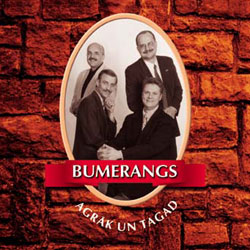
One of the hardest things to define in the Latvian music world is šlāgermūzika. It sounds as if it is rooted in Latvian folk music, but with traces of American country and a few parts pop—and with an accordion thrown in for good measure. The best I can say is that you will know it when you hear it. And hear it I do on the Bumerangs "best of" compilation called Agrāk un tagad, which includes songs from all of its 14 years together as a band.

The group is made up of Aivars Trēziņš on voice and accordion, Vents Krauklis on voice and clarinet, Juris Skrajāns on voice and guitar, and Edmunds Mednis on voice, drums and synthesizers. Mednis also wrote a few of the band’s songs as well. Bumerangs was also one of the hardest-working bands in Latvia (the liner notes mention that in 1988 they played 332 concerts in one year). I even saw it play one time in the early 1990s in Limbaži. However, the band is currently on extended hiatus, as Mednis has moved to the United States.

This album is packed. The recording is almost 80 minutes long. Also, as seems to be the trendy thing to do these days, these songs are not the originals, but re-recorded versions of the band’s hits (as Labvelīgais tips and Zeļļi have done on their "best of" collections as well). Although I’m not a fan of bands rerecording their songs (especially if I’ve gotten attached to the originals), these songs are not much different than the originals.

A novel thing that Bumerangs does is to take a standard Latvian folk song, change the melody around and sometimes add additional words. The result is a completely different song. Sometimes this works very well, sometimes the results are… a little unusual. One of my favorite songs on the album is the Bumerangs version of the Latvian folk song "Līgo laiva uz udena." The band’s version is more uptempo than the more somber song that I remember. The lyrics of the song itself are very sad, telling the story of a poor guy who says that if he doesn’t marry a particular ploughman’s daughter, he will die of sorrow. He goes on to give detailed instructions about where and how he is to be buried.

Another folk song that gets the Bumerangs treatment is the classic, "Pūt, vējiņi!" This time, except for a few verses of the original, the song would be completely unrecognizable as the band adds a lot of new words to the song and offers a much more uptempo version. Also, in a move that apparently caused some controversy at a Gaŗezers concert a while back, during the verses the band adds the Russian words "Ochen horosho!" (Very good!). I guess some of the old-school Latvians didn’t like their folk songs being tainted with Russian words. Though the original version of "Pūt, vējiņi!" is one of my favorite Latvian folk songs, I do actually like this version, too.

Bumerangs also does a song called "Klētiņa" that listeners might know as "Mīļā mazā Lulu, sapnoju par tevi vien." This is a song I used to sing in summer camp and one I originally heard on the Trīs no Pārdaugavas debut record. In an attempt to show the band’s linguistic talent, the entire song is sung in Italian! The novelty of this wears off in a hurry, as I would have preferred to hear the song in its original Latvian.

Not all of Bumerangs’ songs are joyful and happy. In fact, its version of the soldiers’ song "Baltā roze" is one of the saddest I have ever heard. The song is about a soldier leaving his loved one. It begins with the lyrics "Baltā roze nozied dārza malā / Velti lūpas tavu vārdu sauc" (A white rose wilts at the edge of the garden / In vain my lips call your name) and gets more depressing from there. It is a very beautiful song, and will move even the most hard-hearted of listeners.

Bumerangs even has some songs that are more intended for "mature" audiences. Take a listen to its version of "Meitas mani aicināja," another Latvian folk song, complete with anatomical references and double entendres.

Another favorite on the record is the band’s version of the Raimonds Pauls ditty "Varbūt," a song that the aforementioned Trīs no Pārdaugavas did on its Mīkstas mēbeles record many years ago. The vocals have a bit of a lounge feel to them (given that it is a Pauls song, that should not surprise me). Also listen to "Vilciens Rīga-Valka," a sad song about yet another poor guy who meets a girl on a train and makes plans to see her later… and wouldn’t you know, she doesn’t show up. (This is another song that Trīs no Pārdaugavs did on its No tālām robežām record.)

Other oddities on the record include "Pretī (Tavs logs pretī manējam)," in which Bumerangs attempts a reggae-influenced song. There is also "Pūš sejā," a rare, politically themed song. Also, the brief song "Bez mājas tā lieta neiet" sounds more like a commercial jingle for the mortgage department of Unibanka (one of the sponsors of the album).

A recurring complaint I have in my reviews is "Please include the lyrics!" Besides making my job easier, it also helps the listener develop a greater appreciation for the band and its songs, especially if your band has not released any compact discs prior to this one (and, as it appears, will not be releasing any more CDs in the future).

All in all, this is a good record and a good retrospective on a band that was at the forefront of šlāgermūzika throughout its extended career. If you can’t stand šlāger, this album won’t exactly make a believer out of you. If you don’t mind listening to šlāger, then you will appreciate this record, as Bumerangs has perfected its craft.

Details

Agrāk un tagad

Bumerangs

Platforma Records,  2000

PRCD 043
Egils Kaljo is an American-born Latvian from the New York area . Kaljo began listening to Latvian music as soon as he was able to put a record on a record player, and still has old Bellacord 78 rpm records lying around somewhere.

Dependable rock from good, old Līvi

One of the very few rock groups that can be considered a Latvian institution would have to be Līvi. From their beginnings in Liepāja back in the mid 1970s, they have been playing their own unique and recognizable music for almost a quarter century now. Even though they have gone through many lineup changes, their commitment to great and uncompromising music has been unwavering.

Līvi were formed in 1976. Fronted by the late Ēriks Ķiģelis, they produced many great songs from their inception to the mid-1980s (see the Līvi album Bailes par zinģēm, and the Feliks Ķiģelis album Rudens vēju muzikants for the only versions of these songs available in compact disc format). After Ķiģelis’ death, they continued to make exceptional records, each one expanding their popularity not just in Latvia but other countries as well.

The group have had a long line of hit songs and albums. Hit songs include Zīlīte (from the Mikrofons 1981 collection), “Dzimtā valodā” (which won first place in a mid-1980s Mikrofons song competition), “Ozolam” (from the Mikrofons 1988 collection) and “Lai notiek viss” (from the 1994 Mikrofons collection). Recent hit albums include Bailes par zinģēm and Viva.

My first experience with Līvi was with their self-titled 1988 album. My dad had bought it for me, mainly because he thought I would enjoy the album because the cover pictured a bunch of long haired guys screaming. He was right, and I have been hooked ever since.

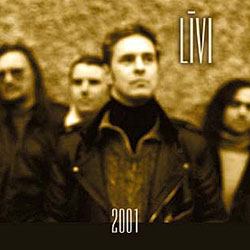
Their latest album is simply called 2001, and it continues the same course set by the 1998 album Viva. The lineup is the same as on the Viva album: Ainars Virga on guitar and voice, Dainis Virga on drums, Jānis Grodums on bass and vocals (according to MICREC, he’s the only original member still in the group), and Tomass Kleins on guitar and vocals. Stylistically, the 2001 album is not much different than the Viva album, with short, catchy songs, raspy vocals and distorted loud guitars. This album has noticeably more “testosterone influence” (never a bad thing), as the overall album is heavier than its predecessor, and contains fewer “ballads.” As with previous albums, most all of the songs feature lyrics written by Guntars Račs. The overall theme of the album seems to be to live for life and to not waste your time worrying about small details. Another theme is independance of the spirit—dictate your own life’s course.

The album starts off with an uncharacteristally mellow first song, simply called “Intro.” It is a minute and a half of muffled piano and vocals, sounding like something played over an ancient radio, perhaps to ease the listener into the album. Or perhaps it is to give the listener a false sense of security. Once the second track, “2001,” kicks in, the listener will be wide awake, as it is one of the fastest and heaviest songs on the album. (Interestingly enough, some of the lyrics of “Intro” reappear in the song “Tik un tā!” in a more up-tempo form.)

“Dieva dēls” was a Christmas song that originally appeared as a “guest” track on MICREC’s Dziesma 2000 collection. The vocals are sung softly and the song shows a great deal of restraint in that it keeps the loud guitar down. Līvi make good use of an understated keyboard part in the background as well. This song reminded me of their other holiday song “Eglīte,” which is found on the Karogi greatest hits collection.

Another favorite is “Mana vienīgā zinģe,’ which is probably the catchiest song on the album, with its chorus of “Tu, mana vienīgā, vien Tu, vien Tu.”

“Cigarete, rums, meitene un zāle zaļa” is also a memorable song, with its anthem-like chorus, “Neguli, nesapņo. Dzīvo un jūti!” (Don’t sleep, don’t dream. Live and feel!). The song also makes the point, “Cigarete, rums, meitene un zāle zaļa / Kas gan vēl man varētu būt vajadzīgs?” (A cigarette, rum, a girl and green grass / What else could I possibly need?).

Another anthem-like song is “Rudens”, with its chorus of “Uguni! Ūdeni! Zeme cietājā, Zilajās debesis” (Fire! Water! Hard land and blue skies).

The only oddity on the record is the closing track, simply called “Coda,” which is almost the exact same song as “Intro,” the only difference being the lyrics are sung in English. I’m not sure what purpose this served, other than leaving the album on the same mellow note as it started.

Līvi fans should not be disappointed at all by this latest offering. It provides all that Līvi fans have come to expect from their records. The production on this record sounds better than on Viva, as that album sounded muddy in various places. Līvi are not a highly experimental band, and they don’t need to be. They are as dependable a band as any in today’s world of rock and roll, be they Latvian or be they from any other country. The sound and songs are familiar without being tired or predictable. This is the kind of record that makes me want to pick up my guitar and start to play (I’ve already started to learn some of the songs on the record), and should be a welcome addition to the music library of anyone who has even the slightest appreciation for Latvian rock music.

(Editor’s note: This article originally appeared on SVEIKS.com.)

Details

2001

Līvi

MICREC,  2000

Egils Kaljo is an American-born Latvian from the New York area . Kaljo began listening to Latvian music as soon as he was able to put a record on a record player, and still has old Bellacord 78 rpm records lying around somewhere.

Čikāgas Piecīši re-releases are history lessons

Čikāgas piecīši

For nearly 40 years, Čikāgas Piecīši have been recording songs in their unique Latvian style, as well as playing to audiences all over the world. The Piecīši, although their number has rarely been five, have long been an institution and an important musical voice during the years that Latvia was occupied by the Soviet Union. Unfortunately for many of their fans, the records they released in the 1960s and 1970s have been long out of print and extremely difficult to find. And even when found, the years had taken their toll on the recordings, leaving the original releases scratchy and unlistenable.

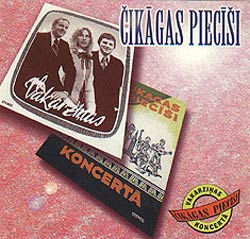
Thankfully in this compact disc age, those great old albums have found a second life in digital format. These two compact discs collect four older albums: Sanfrancisko – Rīga, No Lielupes tilta, Vakarziņas and Čigākas Piecīši koncertā. These albums were recorded in a time when the prospect for Latvia’s future independance was very bleak. They paint a picture of what it was like to be a Latvian exile at that time, about people adapting to life in the United States and other foreign countries, while still never forgetting their Latvian origins.

Actually, three of the four albums reviewed here are not true Čikāgas Piecīši recordings. Sanfrancisko – Rīga and No Lielupes tilta are recorded solely by Alberts Legzdiņš and Janīna Ankipāne; Armands Birkens joins them for Vakarziņas. The only album that features the entire Piecīši ensemble is Čikāgas Piecīši koncertā. However, all the records fall under the Čikāgas Piecīši umbrella due to the presence of their leader and main songwriter, Alberts Legzdiņš. Legzdiņš is perhaps one of the greatest Latvian songwriters and lyricists, and these albums are a testament to that.

Čikāgas Piecīši draw influences from all areas, including Latvian folk songs and American instruments and sounds—such as the banjo and harmonica. Their songs range from humorous observations on everyday life to more melancholy melodies. A recurring theme throughout many of their songs is what it is like to be Latvian in the United States.

The oldest album here is Sanfrancisko – Rīga, a collaboration between Legzdiņš and Ankipāne released in 1969. Here the Latvian folk song influence is at its most apparent, as many of the recordings on this album are either Latvian folk songs or sound very much like them. The Latvian folk songs include “Es adiju raibus cimdus,” “Staburadze” and “Mans brūtgans ir jātnieks,” a song I remember singing in Latvian camp. A favorite on the record is “Es savai līgavai,” a Legzdiņš original. A recurring theme in Legzdiņš’ songwriting is the paucity of Latvians around the world. This theme appears in the song “Tautas skaitīšana.”

No Lielupes tilta, released in 1971, also teams up Legzdiņš and Ankipāne, for a very similar record as Sanfrancisko – Rīga, as it is also a folk song-influenced record. One of my favorite Latvian folk songs, “Nāks rudentiņis,” is performed here. Another favorite Legzdiņš original is “Piektdienas vakars,” a song about the adventures of the narrator and “Braunu kundze” (Mrs. Brown) while the narrator waits for ground beef to thaw in the sink one particular Friday night.

The track listing on Sanfrancisko – Rīga / No Lielupes tilta appears to have one error, as the song “Ezers tīruma galā,” although listed as being on the Sanfransisko – Rīga portion of the CD, actually appears later on the No Lielupes tilta portion.

Vakarziņas, originally released in 1970, contains some more melancholy moments. One of the sadder songs on the record is “Mātei dzimtenē,” a song about a mother in Latvia who in vain awaits the return of her sons. Vakarziņas also contains one of the most beautiful songs in the Piecīši library: “Līgo dziesma,” a song about the Latvian celebration of Jāņi (Midsummer). “Līgo dziesma” is a song urging mothers and fathers to teach their children all the songs of Jāņi so that they will never be forgotten.

The humorous side of the Piecīši also is very much alive and well on this record, as songs like “Man garšo alus,” a song with a well-known Latvian theme: beer, and how no other alcoholic beverage can compare to it.

Čikāgas Piecīši koncerta, released in 1975, as far as I can tell is a live recording of a Čikāgas Piecīši performance. I’m not entirely positive that it is a live recording, as the audience’s clapping and song introductions seems to be pasted together with the songs themselves. However, it is still a collection of great songs. This is the only album (of the four reviewed here) to feature the full Čikāgas Piecīši group. Perhaps one of the most famous Piecisi songs is “Pazudušais dēls” (The Prodigal Son), with words written by Uldis Streips about Latvians returning to visit Latvia after having left the country many years ago. The “Amerikāņu popurijs” (American Potpourri) on Čikāgas Piecīši koncertā is different than the one on the 1996 “best of” collection, Agrīnie gadi. This version contains a lengthy section about Latvian-American leader Uldis Grava. Another beautiful tune from the pen of Legzdiņš is “Es redzēju bālēliņu,” a song about young men going to war and how they leave behind loved ones, as well as how their great deeds are forever remembered in the words of folk songs.

One of the more amusing tracks is “Sekss ir labs” (Sex Is Good), which is a song about procreation sung to the tune of a Latvian children’s song. As introduced on the record, the song is meant to be taught to children at a young age to decrease the low childbirth rate among Latvians. And how can you argue with a line like “Gliemeži ir pacietīgi, eži dara uzmanīgi, vāveres uz katra zara, Dievs zin kā to čūskas dara” (“Snails are patient, hedgehogs do it carefully, squirrels on every branch, Lord knows how snakes do it”)?

The major complaint I have about the CDs is the packaging. There is very little of it. Besides the album cover and list of songs (and, in the case of the Sanfrancisko – Rīga CD, a brief statement from both Legzdiņš and Ankipāne) there isn’t anything else! Lyrics are especially missed. Many times I can’t really catch what is being sung. Legzdiņš being the great songwriter that he is, I think it would be of benefit to many to have the lyrics available. And because Čikāgas Piecīši have such a lengthy and interesting history, pictures and stories from their past would be fascinating, too.

Packaging aside, these are great records, and I recommend them highly. Hopefully the interest in these CDs is great enough to warrant the re-release of the other Cikagas Piecisi albums. I’m especially waiting for Mēs, puisēni, an album I used to listen to over and over again when I was a little kid. I still have the severely battered vinyl record somewhere.

These records show a great group at the height of their songwriting and performing, and still sound great today, almost 40 years later.

(Editor’s note: This article orginally appeared on SVEIKS.com.)

Details

Vakarziņas and Čikāgas Piecīši koncertā

Čikāgas Piecīši

Čikāgas Piecīši,  1998

Notes: Also reviewed is San Francisko – Rīga / No Lielupes tilta, a 1998 re-release of two albums by Janīna Ankipāne and Alberts Legzdiņš.

Egils Kaljo is an American-born Latvian from the New York area . Kaljo began listening to Latvian music as soon as he was able to put a record on a record player, and still has old Bellacord 78 rpm records lying around somewhere.