Unplugged, Līvi can rock just as hard

Live albums are an unusal entity in the rock world. They are intended mainly for longtime fans, who are looking to have the experience of seeing a band in concert contained in a recording. But Līvi’s latest, Spoku koks, is not just any live album. It is an acoustic live album by a veteran hard rock band.

The album is a re-release, but it is the first time this concert is available on CD. It is a recording of concert Līvi performed Dec. 16, 1994, in the Latvian Radio 1 studio in Rīga.

So can a veteran hard rock band still give a good concert, even if you replace their electric guitars with acoustic ones? If they are Līvi, the answer is a resounding yes.

As the liner notes indicate, this recording was meant to be a Christmas present for all the longtime Līvi fans, and what a unique present it is. Not only is the concert an intimate, acoustic show, but the song selection is interesting as well. Līvi chose to not play any of their big hits, but instead performed rarities and other songs that you would not normally hear them play.

In fact, of the 15 live tracks on this album, I had only heard six of these songs before—and to my knowledge, I have most every album Līvi have released, so there is quite a bit here that would be of interest to any Līvi fan.

The band members on this record are today’s members (Ainars Virga and Tomass Kleins on guitars, Jānis Grodums on bass guitar and Dainis Virga on drums) with the addition of since-departed vocalist Aivars Brīze.

One of the songs that I had heard before was not one orginally done by Līvi. They do a version of the old Pērkons song “Lakstugailis” (which can be found on Pērkons’ Dziesmu izlase #1 album) but with their own twists on the song. Līvi also have good interaction with the audience, as is heard here in the audience participation on the “Un tapēc rīt, vai aizparīt” part of the song.

Chronologically, I think this live album fits in right before their 1996 K.M.K.V.P. album, as Spoku koks contains live versions of two of the songs—“Meitene” and “Var jau būt…”—that would appear on this album. What is odd, though, is that one of the songs “Guntis ir muļķis patiešām” (which gets the award for funniest song title) is introduced as a new song, but is partly credited to Ēriks Ķiģelis (the former band leader who had passed away many years before) so I’m not sure how that is possible.

Also, being a Christmas concert, there are a couple Christmas songs as well. The only real “hit” on the record is “Eglīte.” That song is introduced with a bit of history: When the song was originally recorded in Soviet times, Līvi were not allowed to use the word “Ziemassvētki,” so they had to replace it with “Jaunais gads.” Now that that era has thankfully passed, they now sing “Ziemassvētki klāt.”

The other Christmas song here is simply called “Ziemassvētku dziesma.” It is a very mellow, yet catchy celebration of the season.

The album concludes with a great acoustic version of the song “Kad saule riet,” originally found on their self-titled 1988 album. Although this version is acoustic, it loses none of the power that the original “electric” version had.

There are two common problems that live albums in general have: either they sound too polished (due to post-concert studio fiddling with the songs, usually removing or re-recording of bad notes or vocals) or they don’t sound live at all (the live experience has two parts, the band playing and the audience reacting). I’m happy to say that this album has neither of these problems. Though there was inevitable studio tinkering with the show, it’s not much. According to the liner notes, the original release of this show was available the day after the concert, which is not enough time to redub vocals or guitar parts. In a few spots the vocals are a bit off or somebody plays a wrong note, but that is part of the live experience! Also, the audience is very much present on this recording. Though small, it is noisy and actively participates in many of the songs.

In addition to the live recording, two “bonus” tracks have been added to the CD: studio recordings of “Lakstugailis” and “Līviskā ziņģe.” Though it is nice to hear studio versions of these songs, they are not much different than the live versions. On some parts of “Lakstugailis,” Brīze sings as though he was in a great deal of pain—hope he’s feeling better!

On an unrelated note, this is one of the new releases from MICREC that has a reduced price tag. I purchased this record in Latvia for LVL 6 (a bargain compared to the price of other new CDs, often as much as LVL 10 or 11).

For longtime Līvi fans, this record will be a treat to listen to for all the rarities contained on it as well as for the acoustic performance. Casual or new Līvi fans will like this as well, as you don’t need to know much about Līvi to enjoy this release. The album also begins the celebration of Līvi’s 25th anniverary as a band. According to the MICREC Web site, 2001 will see the re-release of their older records as well. I think Spoku koks is a great way to kick off that celebration.

Details

Spoku koks

Līvi

MICREC,  2000
Egils Kaljo is an American-born Latvian from the New York area . Kaljo began listening to Latvian music as soon as he was able to put a record on a record player, and still has old Bellacord 78 rpm records lying around somewhere.

Sampler is primer on Latvian classical music

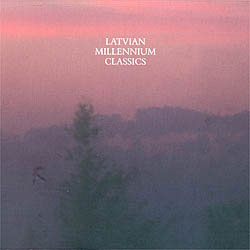
Latvian Millenium Classics

In my library of recordings, I have a substantial classical music collection. Composers such as Beethoven, Chopin, Bizet, Rachmaninov and Gershwin are found there, representing diverse nations such as Germany, Poland, France, Russia and the United States. However, up until this year, if you asked me to show you my Latvian classical compact discs, I would have been unable to do so. As for why there were no Latvian classical artists, there were a few reasons. I would plead ignorance, because Latvian classical music almost never gets played in the United States and recordings were also fairly scarce. And even though I knew of the existence of Latvian classical music, it never occurred to me to pursue learning about it, because I knew absolutely nothing about the composers.

This all changed over the course of the past year. Through a very strange set of coincidences, I was able to participate in the Latvian music camp in Ogre this summer. At the camp, I was exposed to a world of music that I never knew existed. Every night there was a concert, and many of the works were Latvian compositions. Such previously unfamiliar names such as Ivanovs, Vasks, Vītols and Einfelde became known to me.

Latvian Millennium Classics is a compilation of 20th century classical pieces by many different Latvian composers, covering all types of styles and genres, with both instrumental and choral works. It is meant to be an introduction to the many great works that were composed in Latvia over that time, and is as good as any introduction to Latvian classical music and performers.

National pride is a theme that is found in many a composer’s music and Alfrēds Kalniņš is no exception. One of my favorite works on the CD, "Mana dzimtene" (My Homeland), reflects that in a symphonic style that reminded me of composers such as Dvorak and Smetana.

The Latvian celebration of Midsummer, Jāni, also is featured in the track from Emīlis Melngailis, "Jāņuvakars" (Midsummer Eve). This is one of the choral pieces on the CD, and probably the one I like the most. The lyrics are all taken from traditional Jāņi songs—it seems like every line comes from a different song. But they all come together to form a very beautiful choral arrangement.

The liner notes (written by Inese Lūsiņa) mention that the "Melanholiskais valsis" (Melancholy Waltz) by Emīls Dārziņš is the most popular symphonic piece of all time in Latvia, and it easy to see why, as it is a simple waltz full of emotion and beauty.

"Bakarola" (Bacarole) by Andrejs Jurjāns, is another memorable symphonic piece, especially for the gorgeous french horn solo by Arvīds Klišāns.

The more modern selections on the CD start with Juris Karlsons’ "Neslēgtais gredzens" (The Open Ring) with lyrics by Rainis. This is another choir piece, performed by the famous Ave Sol chamber choir. However, modern choir music is not something I’ve learned to appreciate yet. The song starts out normally, but soon becomes discordant. Eventually the singing stops and is replaced briefly by chattering of some kind. Interesting, but not really my cup of tea.

Pēteris Vasks, probably the most famous Latvian composer outside of Latvia, gets represented by two works in this collection. Even though he gets two, they are two completely different compositions. The first is "Ainava ar putniem" (Landscape With Birds), a solo flute piece performed by Dita Krenberga. Through the flute, Vasks is able to paint a detailed picture of a field of birds, which I could imagine when I closed my eyes. And at the end, all the birds fly away!

The second piece is the "Cantabile per archi," described in the liner notes as a work of "concentrated spiritual power." This somber string work also expresses great sadness, a common theme throughout many of Vasks’ works.

The "Maija balāde" (May Ballad) by Maija Einfelde, with lyrics by Aspazija, is another modern choral piece, and again, though unique and innovative, is not something I could find myself listening to for an extended amount of time. As the liner notes indicate, Einfelde "works with human voice in the most creative way," something that is clear when listening to this piece.

The organ work "Lauks" (Field) by Imants Zemzaris is best described in the notes as a "meditative" work. I guess it can also be called minimalistic, since it is pretty much the same theme repeated over and over again the entire work. Meditative is an appropriate description, because is does seem that listening to this is like meditation—repeating a mantra over and over again until enlightenment is achieved. Though deceptively simple, listening to this put me into a trance-like state.

The final work on the CD is the fifth and sixth part to the "Kāzu dziesmas" (Wedding Songs) by Romualds Kalsons, a fitting celebratory end to this compilation. This piece reminded me a bit of Prokofiev, but with a unique Latvian flavor to it.

For those who were like me and knew nothing about Latvian classical music, this CD is a great introduction to it. Not only for the composers, but for the performers as well, including conductors such as Leonids Vigners and Vaisily Sinaisky, the Latvian National Symphonic Orchestra, and organist Tālivaldis Deksnis (who is also a fascinating lecturer on the topic of organs), among many others.

I only have very minor complaints about this recording. The liner notes are too brief, with barely a sentence about each composition. Very little history is given, and I would have appreciated knowing when each work was composed, and a bit more biographical information about some of the composers. Also, conspicuous by their absence are Latvian composers Imants Kalniņš and Jānis Ivanovs (probably my favorite Latvian composer). But because this is meant to be an introduction to Latvian classical music, it would have been unrealistic that they could have covered the entire spectrum of classical music in Latvia.

Whether you are a devoted classical music listener, a casual listener, or even if you only know the first few notes in Beethoven’s "Fifth Symphony," Latvian Millennium Classics is a worthy addition to any collection, and will hopefully introduce many people to the world of Latvian classical music.

Details

Latvian Millenium Classics

Various artists

UPE Recording Co.,  2000

Egils Kaljo is an American-born Latvian from the New York area . Kaljo began listening to Latvian music as soon as he was able to put a record on a record player, and still has old Bellacord 78 rpm records lying around somewhere.

So much schlager, so little time

Šlāger music is quite the phenomenon in Latvia. I’m always amazed how in some of the music stores there are racks and racks of compact discs and tapes that represent this music. And every time I go there, it seems that there is more and more of it—new šlāgeraptaujas (šlāger compilations) seem to come out every month. Quite impressive for a style of music that gets sneered at by snobbier music fans, and gets derided in a variety of ways, like “It all sounds the same,” “That’s music only my grandmother would listen to,” etc.

Personally, I don’t mind the stuff. It is simple, but catchy, and most of the songs are the type you can start singing along before the song is even done.

But of course, the issue is that there is so much šlāger, so little time. So whom to listen to? There are so many groups (and I will admit that many of them do sound the same in the end) that it is hard to figure out which recordings in particular to purchase, and which of the many, many šlāger groups are worth listening to.

A group whose songs I often heard over the years is Zeļļi (roughly translated to “chaps” or “fellows”). The band is made up of Raitis Treijs (voice), Jānis Vējiņš (keyboards), Ivars Birkāns (on saxaphone, one of the unique sounds in Zeļļi), and Pēteris Vējiņš (guitar and voice). Though similar to many other šlāger groups, they had some truly memorable songs. Judging from the 1995 release Mikrofona 20 labākās dziesmas, Zeļļi had a number of hits. These include “Krustceles,” a hit in 1993. Another hit was “Vel tu nāc,” a song from 1994. My favorite song by them is “Vedej, pasteidzies”, which I had originally heard on the 1991 album Ratiņa aptauja, also put out by MICREC.

So with Dziesmas Tev un man, I was expecting an album full of Zeļļi classics.

Much to my surprise, I was disappointed by what I heard.

As with the Labvēlīgais tips and Bumerangs best-of collections, these recordings are new recordings of old songs. I can understand the reasoning for re-recording old versions of songs, maybe to record them better (because technology has improved over the years) or maybe because the members of the band have become better musicians. The Tips and Bumerangs collections are still fully in the spirit of the originals, and the changes aren’t too startling for someone who has heard the old versions of the songs. However, in Zeļļi’s case, the new songs are sometimes markedly different than what I remembered.

An example of that is “Vedej, pasteidzies,” a song about a guy who is rushing to get home to his beloved, but arrives just in time to see her get married to someone else. The version on the Ratiņa record was a simple yet catchy folk song. The version on the new CD has been given a dance beat, with an over-loud drum track. I think this totally ruined the mood of the song. Somehow I don’t see this getting played in a dance club anyway!

The new version of “Krustceles” is not much different than the version I had heard on the 20 labākās dziesmas album. The original was a slower, more relaxed song about relationships (including the great line “Ne jau visi atkusi nes pavasari, ne jau katra aizraušanās mīlu līdzi nes”—Not every thaw brings spring, not every diversion brings love). The major, upsetting difference is that the original had a great saxaphone solo to close out the song, but this re-recording completely omits that. Just when I thought the saxaphone would start, the song ends! I was most saddened by its absence.

But there are plenty of worthwhile moments on the album, even though it seems that every song was designed to be “danceable.” “Rudzupukes,” “Lilijas” and “Skaudība” are all examples of what šlāger is all about: songs that upon first listen make you think you’ve known them your entire life. Also, the new version of “Vel tu nāc” is one of the few songs on here that is better than the original.

There’s a Latvian version of the song “Blowing in the Wind” called “Atbildi zina tikai vējš.” It’s the same as the English version. However, they don’t even credit Bob Dylan as the writer of the song (for shame!).

Unfortunately, the second half of the album falls into the same šlāger music trap: It all begins to sound the same. The second half mostly has slow ballads that seem to fade into each other without any way to distinguish between all of them. Even after repeated listenings, I can’t immediately distinguish some of the songs.

I really, really did want to like this record, as I think Zeļļi are a very talented band with a number of great songs, but this album is not the best representation for them. I’d suggest seeking out the 20 Labākās dziesmas album (which, to my knowledge, is long out of print) or some early šlāgeraptaujas with the original versions of these songs.

And again, no lyrics! I am completely aware that sometimes it is simply an issue of cost that the lyrics are not attached. But if this is your first CD release, and you want your fans to really appreciate your words and your songs, please attach the lyrics for the songs.

Ardent šlāger fans will probably love this record, as it is completely predictable and contains no shocks or surprises, which is to be expected from šlāger music and not entirely a bad thing at all. However, anyone who expects to be even slightly challenged by the music they listen to will be disappointed. Though Zeļļi are a cut above the “average” šlāger band, this album does not show that as well as it could have.

Details

Dziesmas Tev un man

Zeļļi

Gailītis-G,  1999

Egils Kaljo is an American-born Latvian from the New York area . Kaljo began listening to Latvian music as soon as he was able to put a record on a record player, and still has old Bellacord 78 rpm records lying around somewhere.