Credo’s creativity hasn’t changed

Viss mainās...

Though there are many perks to being in a band that’s been around for a long time, there also can be more pressure. Music fans tend to be a cynical bunch, and even though you may have sold boatloads of records in the past, one bad record will turn your fans against you. The pressure comes from how to keep it interesting. The band may have established a sound, but there is a danger of going to the well once too often. Deviate from that sound too much and run the risk of alienating your fans.

Of course, there are some bands out there, be they Latvian or otherwise, that have made a career of making the same album over and over again. And there is a place for that, but very few can get away with it and still maintain fan loyalty.

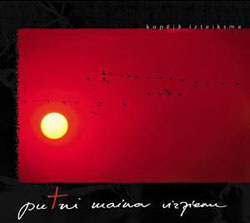
Another one of the veteran bands of the Latvian rock scene, Credo, in September released its latest album, Viss mainās…

After more than a quarter century of making music, did they keep it interesting? I would say that they did.

I was a bit apprehensive about reviewing this record, since I know nothing of Credo’s history, besides the fact that they have been around for a while, so I wouldn’t have the ability to "show off" my supposedly large knowledge of Latvian music. Before this record, I had heard all of three songs of theirs. "Vecais draugs" (from the Mikrofona 20 popularākās dziesmas collection), "Lietus" (from the Visu laiku labākās latviešu rokbalādes collection), and probably their most famous song, "Zinģe par bailēm" (from the Latviešu roka tautasdziesmas collection). And while I liked the songs, I never had any initiative in finding out more about this band.

That is something that I now regret, considering how much I liked the new record, which was an interesting collection of old sounds, new sounds and unique sounds.

The members of Credo are Guntis Veits (voice, rhythm guitar), Armands Alksnis (guitar), Aivars Vīksna (bass guitar) and Guntars Brečs (percussion). The prolific Latvian lyricist Guntars Račs also lends a hand with words to a few of the songs.

A recurring theme through this album is the idea that although things may change, one has to accept them. Appropriately enough, the album title is Viss mainās… (Everything Changes).

"Vējā" (In the Wind) is the first track and is probably my favorite song on the album. An uptempo tune with a great melody, it is a philosophical song about the changes and the fortunes that wind may bring: "Vēja māte vēja zirgiem, pakavus no laimes kal" (The Wind Mother makes horseshoes from fortune for the wind horses).

The second track, "Dzivē gadās arī tā" (That Happens in Life), sounds like it would be more at home on a Santana record, since it has a Latin feel to it. I think it is a successful experiment, because many times when artists attempt Latin sounding tunes, it comes across sounding forced. But, reflecting the carefree spirit of the album, it comes across very well. The song tells the story of a guy, who while talking to one girl, is looking over her shoulder at two other women. I keep waiting for Carlos Santana to start playing a guitar solo!

Another favorite track is "Septītajās debesīs" (Seventh Heaven), if only because it is a Chuck Berry-style, straight-ahead rock-and-roll song: not many chords, but the kind of song that if you hear it while driving, the gas pedal gets used more frequently.

Actually, I lied earlier. I had heard four songs by Credo prior to hearing this album. The final track "Kā būs, tā būs" (What Will Be, Will Be) originally appeared on the Dziesma 2000 compiliation (though it wasn’t credited to Credo, but just to Guntis Veits). It’s a fitting end to an excellent album, reinforcing the spirit of the album—looking forward without any fear of the future.

Viss mainās… is a solid effort by the band and it has been finding its way into my CD player quite frequently. Though a rock record in spirit, it has enough eclectic influences to make it good listening for any music fan, even those cynical ones who think that the old-timers can’t make relevant music anymore. Fortunately for Credo, even after so many years making albums, they still have enough creativity and to make excellent album.

Details

Viss mainās…

Credo

MICREC,  2000

Egils Kaljo is an American-born Latvian from the New York area . Kaljo began listening to Latvian music as soon as he was able to put a record on a record player, and still has old Bellacord 78 rpm records lying around somewhere.

Unpredictable Kalniņš pens music for son’s group

Logs puspavērts

Imants Kalniņš is one of the most adept composers in Latvia. Not confining himself to any one style, he can move between symphonic work (a great example being his “4th Symphony”) to film work (the music to “Pūt, vējiņi!”) as well as to popular music. He brings his style to every form of music that he composes, making it at once unique, but also recognizable. One never knows what to expect next from him.

One of his most recent projects is writing the music for the group Autobuss Debesīs, whose first album, Logs puspavērts, came out earlier this year.

Autobuss Debesīs is a new group, but one that I liked after hearing just one song. I had heard the song “Sitiet bungas, mani mīļie” on the MICREC release Superizlase and was anxiously waiting to hear more from the group. Though that song isn’t on this release, there are many other great songs that make this record a good listen.

Of course, it is not just Imants Kalniņš that made this record possible. The band is made up of Kalniņs’ son, Marts Kristiāns Kalniņš, on vocals; Kārlis Auzāns on lead guitar; Andrejs Grimms on acoustic guitar; Ervings Znotiņš on keyboards; Armands Treilihs on bass, and Emīls Zilberts on percussion. The lyrics are provided by Ieva Roze, Māra Čakla and Aigars Jirgens. Latvian actress Rēzija Kalniņa (now appearing in the new film Labas rokas) shows up to add vocals to two songs as well.

As with most music by Imants Kalniņš, it can be very hard to describe at times. Being an accomplished composer, most of the music is rather intricate and involved, taking a few listens to appreciate. The first few times I listened to the album, I didn’t think too much of it. The album seemed to be a bit too “artsy” for my tastes. But after repeated listenings, I began to enjoy it much more. The music is complex, so this record might not be for everyone, but I think even those people whose musical tastes are more toward the simpler style will find many things to enjoy.

The album opens up with “Alejas,” which is one of the more intricate songs (and, at more than six minutes, one of the longer ones). The singer describes himself as “apmulsis gaiss” (confused air) and wants to add green to the air in your alleys, or something like that.

Two of my favorite songs on the album are the second and third, “Es to tev teikšu” and “Kur slēpies tu,” which are more traditional in the sense that they are very catchy and have great melodies. “Kur slēpies tu” contains some great lead guitar work by Auzāns. These songs show that Autobuss debesīs are quite capable of playing great three-minute pop songs as well.

“Kad migla” recalls other Imants Kalniņš songs; it’s a subdued, keyboard heavy piece. It reminds me of the songs Kalniņš did with Ainars Mielavs, very relaxed and understated.

“Pie mežrozīša krūma” is another lengthy pice, clocking at the eight-minute mark. It starts off slowly, leading you to believe that this will be another relaxed song. Then suddenly, the song really kicks in and the tempo increases, allowing the musicians to shine in lengthy instrumental passages. But the song doesn’t seem to drag at all.

The song “Logs puspavērts” is a very pretty tune that features the vocals of Rēzija Kalniņa, as well as some beautiful cello work by Auzāns. It is another subdued piece, but also evokes a great sadness. Marts Kalniņš sings as well, but his vocals are mixed much lower than usual, so Kalniņa gets the chance to really shine in this song.

The lyrics on Logs puspavērts (which are included in the liner notes) also are on the artsy side, more poetic than the standard rock release. My knowledge of the Latvian language is fairly decent, but these lyrics had me reaching for the Latvian-to-English dictionary more often than usual.

Imants Kalniņš fans will like this record, as it features his trademark unpredictable style. The album can be enjoyed by all, from casual music fans to more serious listeners. It does take a few listens to get into, but it is worth it. Even if you’ve never heard of Imants Kalniņš before, this would be a good way to introduce yourself to his music, as there is plenty more good stuff where this came from.

Details

Logs puspavērts

Autobuss Debesīs

UPE Recording Co.,  2001

UPE CD 024

Egils Kaljo is an American-born Latvian from the New York area . Kaljo began listening to Latvian music as soon as he was able to put a record on a record player, and still has old Bellacord 78 rpm records lying around somewhere.

Latest by Labvelīgais Tips lacks classic song

Eiropa mūs nesapratīs

One of the few things left to depend on in this world is the yearly arrival of a Labvelīgais Tips album every April 1. For the last seven years, each April Fool’s Day brings another release from this ensemble, making them probably the most prolific band in Latvia. This past April 1 came Eiropa mūs nesapratīs, a collection of 14 songs.

Labvelīgais Tips is a band that is hard to categorize. Humor is a major part of their arsenal, and many of their songs are in the schlager style (though a more "modern" interpretation of that form). Their songs are about simple topics, finding the humor in everyday occurences. The band itself is larger than your everyday rock band: besides the usual guitar, bass and drums, they add trumpet, flute and accordion, not to mention a string quartet.

I only became a fan of Tips upon the release of their "best of" collection in 1999. I had heard a few of their songs prior to that, but I suppose I wasn’t yet able to get the joke at that point, as Labvelīgais Tips have a very unique sense of humor that takes a certain mentality to appreciate. But after listening to the collection, and hearing tales of omnibuses in people’s backyards and brothers in Chicago, I was hooked. And though I didn’t get all the jokes (it seems most are geared towards people who have spent their lives in Latvia), I began to listen to them much more frequently. I also picked up their 2000 release Atkārtot!, which was another great collection of songs.

Surprisingly, I found Eiropa mūs nesapratīs a bit disappointing. Though the classic Tips "sound" was there, after listening to the album a number of times it seemed to me that something was missing: a truly classic Tips song. The "best of" collection was full of these classic songs, and Atkārtot! added a few more, but there aren’t really any songs on Eiropa that can stand alongside their earlier material. Not that the songs are bad: All the songs are solid, but there aren’t any songs that I would look forward to hearing if I were to see these guys in concert.

The songs continue to have an even more eclectic sound, with influences ranging from reggae to Latin. "Koka klucis Konstantīns" sounds like a combination of Latin and lounge music. The song "Pazudis ir miegs" also has a Latin sound, but also strikes me as that "Russian-Latin" sound that many Raimonds Pauls songs in the 1970s seemed to have.

The old Latvian standard, "Augstu laimi un prieku" (the "Lai dzīvo sveiks!" song), is redone a la Tips, this time in a Mexican mariachi style.

Many of the songs here defy description, which is part of the charm of Labvelīgais Tips, though some may be turned off by the constant changing of styles. There is always some new sound, some new surprise on each of their records. Even the lyrics defy description, as some of the songs left me scratching my head and thinking, "What was THAT about?" Songs such as "Smilšu krasas portfelīts", "Dubļi mani dubļi" and "Tu, mana ģeometriskā" either show off the creativity of the band or leave some thinking, "These guys will write a song about anything."

"Eiropa mūs nesapratīs" is a song in waltz style that tells the story of a Latvian guy and his great-great-great-great-great (and a few more greats) grandfather, both of whom have been to neither Germany nor Denmark and don’t have any Hungarian or Irish friends. This probably alludes to the fact that to truly appreciate and understand Labvelīgais Tips you have to be a Latvian living in Latvia.

The packaging of this album, though it looks nice, also is lacking in a few ways. Particularly annoying is the absence of lyrics. Having those would make a lot of their jokes easier to understand. Also, though the members of the band are listed, nowhere is it written what they do or what instruments they play.

Maybe the need to release an album every year has started to take its toll and isn’t giving them enough time to properly craft an album. Many of the songs wind up sounding a bit repetitive, often repeating verses and choruses a few more times than necessary. Perhaps the reason that Atkārtot! was such a good album was that it was two years after the last recording of new material.

Die-hard Tips fans will like this record. I don’t dislike it, but don’t think it will be making it into my CD player with any great frequency. If you don’t have any Tips recordings, this is probably not the one to start with. I’d recommend starting with the "best of" release. If you really like what you hear there, you might just like Eiropa mūs nesapratīs.

Details

Eiropa mūs nesapratīs

Labvēlīgais Tips

MICREC,  2001

Egils Kaljo is an American-born Latvian from the New York area . Kaljo began listening to Latvian music as soon as he was able to put a record on a record player, and still has old Bellacord 78 rpm records lying around somewhere.