Forward into 1980s with latest Piecīši re-release

Last year saw the release of the latest compact disc of Čikāgas Piecīši re-releases, which takes us into the 1980s. The album Par mani, draudziņ, nebēdā was originally issued in 1982, while Made in Latvia was released in 1988. Both are collected now on CD.

Already in the 1980s the Piecīši were in their third decade of performing and recording, and as they are getting older, their songs have begun to develop a more sentimental (not to mention patriotic) bent to them. The distinctive tounge-in-cheek humor is still there, but it is enhanced with songs that show a group that has become older and wiser through the years.

It is not clear from the liner notes what the lineup is on the Par mani record, though I can be fairly certain that at least Alberts Legzdiņš, Armands Birkens and Janīna Ankipāne are there. “Made in Latvia” lists Legzdiņš, Birkens, Uldis Streips and Lorija Vuda as singers; musicians are Birkens on guitar and R. Daughtry on guitar and bass guitar.

Patriotism is a strong theme in these two recordings. One of the highlights is the song “Par mani, draudziņ, nebēdā,” the Piecīši tribute to the Freedom Monument in Rīga. The song is sung from the monument’s perspective, telling everyone “not to worry about me”—a song of optimism where no matter how bad things go, they will turn out fine in the end. And they did, so it was a prophetic song in a way.

Also in patriotic style is the song “Made in Latvia.” It is about how, even though everything in his house is imported in some way (Japanese shaver, South Korean alarm clock, Danish table), at the very least, his beloved is 100 percent Latvian. She is so Latvian that even when the neighbors ask her to play bridge, she can’t, as she is making pīrāgi.

Though the leader of the Piecīši will always be Legzdiņš, who provides almost all of the words and music, the real star of this release is the achingly sincere tenor voice of Armands Birkens. Just hearing his voice will make the listener weepy. Even if he sang the phone book, most listeners would break into tears! This is best displayed on the song “Lai visa pasaule to redz” (a duet with Lorija Vuda), a song about two lovers, one in Rīga, one in Chicago, who want the whole world to see how great their love is, regardless of the distance between them. This song is one of my favorites on this release.

Sentiment is also heavy on the song “Mūsu mīlestība,” a song about someday meeting again, because their love will never end. This song again features the voice of Birkens.

Now that the Piecīši have grown older, and have had had children, it was inevitable that there would be songs about the trials and tribulations of getting these children to Latvian school on Saturday mornings. The similarly titled “Piektdienas vakars, sestdienas rīts” and “Sestdienas rītā” are about the occasional panic attacks on Friday nights, and the massive process of getting everyone ready Saturday morning. Reminds me of the many occasions in my family when on Friday evening I realized that I had a domraksts to get done by the next morning!

On certain songs, the Piecīši display their growing country music influence, complete with twangy guitars, baying vocals and songs where a pickup truck is a major plot device—see “Šoferdziesma”. This song is actually a bit too country for me, featuring Birkens howling in the background. I usually skip over it.

Though heavy on sentiment, the distinctive Piecīši humor is still present. The opening track is “Kurpniekzeļļi,” a song about shoemaker apprentices who spend more time staring at women’s legs than doing their job. This song’s “sequel” is “Skroderzeļļi,” this time about the great life a tailor’s apprentice enjoys, which is apparently much better than a shoemaker’s apprentice’s life.

Also in the humorous vein is “Trīs vecenītes,” which is about three old ladies sitting around and bragging about what they have managed to keep “real,” even in their old age. Legzdiņš encourages the audience to spit along with the chorus.

My main complaint about this release is the same complaint I have had about the other Piecīši re-releases: the packaging. I think I have already whined about this enough in my previous reviews, so go read those, because I don’t think I have anything different or more insightful to say this time.

Though they may have gotten older, and their songs have gotten (perhaps a bit too) heavy on the sentiment and patriotism, these Piecīši re-releases still occupy a very important space in the Latvian music world. They give voice to the many Latvians in the United States (and elsewhere outside of Latvia) who were also growing older, and at the same time facing similar problems such as raising Latvian kids and trying to keep their Latvian identity. Though they have gotten advanced in age, these records still sound fresh and relevant today. They reinforce once again the importance of the songs of the Čikāgas Piecīši, both in the 1980s as well as today.

Details

Par mani, draudziņ, nebēdā & Made in Latvia

Čikāgas Piecīši

Balss,  2001
Egils Kaljo is an American-born Latvian from the New York area . Kaljo began listening to Latvian music as soon as he was able to put a record on a record player, and still has old Bellacord 78 rpm records lying around somewhere.

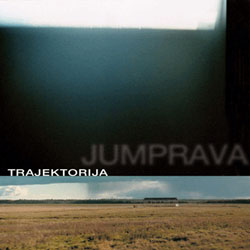
It’s Jumprava, so never mind the synthesizers

Trajektorija

I find it extremely difficult to leave a record store without buying anything. Sometimes I feel like I have to justify the time spent in the store browsing and listening by having something to show. It’s a problem that’s especially severe in Latvia, so I have many šlāgermūzikas tapes to show for my troubles.

Sometimes I will pick up something that I really had no interest in buying, and it turns out I will really like it. This happened in 1998, when I was in a record store in Rīga, had no idea what to buy, but knew I couldn’t leave empty-handed. I spotted a compact disc by Jumprava, Laika atšķirību romance, and picked it up on a whim.

I had heard a few of their songs before then, like the quirky “Peldētājs” and the keyboard-heavy “Ziemeļmeita,” but had no idea what to expect of the album. Much to my surprise, it became one of my all-time favorites. From the opening track, “Pastorāle,” to the Indian-influenced “Jaganatha,” the album rarely left my CD player.

The late 1990s saw many Jumprava-related releases. After Laika atšķirību romance, Platforma Records in 1999 released a Jumprava best-of CD, Labāko dziesmu izlasem, which also became one of my favorites because it gathered into one place the earlier Jumprava songs that I had scattered over multiple tapes and records. The year before, Jumprava founder, guitarist and vocalist Aigars Grāvers released his collection Pret vēju pēc 90-ta, which gathered together a number of songs from the various bands he played with. In 2000, Grāvers and Latvian poet Nataradža collaborated on the Rama Dance project, Sāga. Both Grāvers and Nataradža were influenced by Indian culture and folklore and the album bore the fruits of their efforts, combining Sanskrit, Latvian and plenty of keyboards to produce another excellent and unique album.

After all that, Jumprava returned late last year to deliver an entirely new album called Trajektorija. I was very curious what it was going to sound like. Was it going to be more like Rama Dance or Laika atšķirību romance, or was it going to sound completely different?

I must say I wasn’t expecting what I heard. However, after a few listens this album really grew on me and I believe it has become a very worthy addition to the Jumprava catalogue. This release will find its way into my CD player quite often, even in the distant future, which is a testament to its staying power.

Though the participants on the album are not listed anywhere in the liner notes, Jumprava’s lineup has not changed: Aigars Grāvers, Aigars Grauba, Aigars Krēsla and Ainārs Ašmanis make up the band. Nataradža also returns to provide lyrics to a number of the songs.

Many of the tracks on the album strike me as classic Jumprava, and some were a bit unsettling to hear at first. I wondered, “Does anyone actually play bass or guitars or drums on this album, or is it all synthesized?” However, because Jumprava have always been a synthesizer-intensive group, the less-organic feeling of the album can be forgiven.

A reoccurring theme over the course of the album is flight. This is first made clear in the opening song, “Lidosta mehāniskiem putniem.” Heavy on electronics, the opening beats of this song sound like an airplane getting ready to take off. The song makes for a great start to the album.

Next up is “Dzinējsuns,” the most techno-sounding song on the album. This one is a bit too techno for me. It reminds me of the frantic music in those Mortal Kombat video games. It also features practically “rapped” verses, presumably by Grāvers.

A favorite on the album is “Divi putni.” Cheesy 1980s-sounding keyboard intro aside, this up-tempo and hard-driving track features some great vocals and lyrics by Nataradža.

Another favorite on the album is the more somber “Anastasijas vārdi.” The track features a number of effects adding to the rather “mysterious” sound of the song.

The song “Baiga vasara” is from Grauba’s film of the same name set in Latvia during World War II. It features lyrics like “Ja lūdzam ar noliektu galvu, vai eņģeļi sadzirdēs mūs?” (If we pray with bowed heads, will the angels hear us?). Though the song is bleak, some hope remains.

The song I liked the most is the last one, “Nedaudz par viņu,” written by Grauba. Out of all the songs on the album, it best displays the Jumprava sound. Painted in both broad and fine musical strokes, the song has a rather simple keyboard part that is very involving. Grauba’s practically pleading vocals are also memorable, as he sings “Mīļā, kāpēc es neredzu savadāk?” (My love, why do I not see differently?). It’s definitely a classic Jumprava song.

Combining elements of Rama Dance, their most recent recordings, as well as their classics, Trajektorija is another great album from Jumprava. Don’t let the heavy synthesizers and downright techno sounds discourage you. Jumprava are still at the peak of their creativity and songwriting skills.

Details

Trajektorija

Jumprava

Platforma Records,  2001

Egils Kaljo is an American-born Latvian from the New York area . Kaljo began listening to Latvian music as soon as he was able to put a record on a record player, and still has old Bellacord 78 rpm records lying around somewhere.

Angry? Have a dose of Latvian ‘Nu metal’

The Inevitable

As music evolves through the years, listeners often get to hear strange and unexpected hybrids of different genres. One of the most unusual combinations to have become popular in recent years is the combination of rap and metal, sometimes given the goofy “Nu-metal” label. One would have thought that the two styles of music, what with their devout fans and uncomprising musicians, would never have come together. However, because both styles are often outlets for anger and aggression, perhaps it is not too much of a surprise that this style has become very popular in recent years.  The best known group in this style is Rage Against the Machine, but groups like Limp Bizkit and Korn also have incorporated it into their music.

This trend has also taken hold in Latvia, evidenced by the release of The Inevitable by the group F[ei]K. The album is entirely in English and contains all the loud guitars and anger you could possibly need in a rap-metal album.

F[ei]K are made up of Ansis “Rooc” Auders on guitars, Gusts Leimanis on bass, Verners Biters on vocals, Martins Opmanis on drums and Kristaps “Krii” Krievs on “effects” (and who, according to the band’s Web site, has already left the group). Auders founded the group in 1998. The Inevitable is their debut album.

I would have to admit that this style of music never particularly appealed to me. I’m not really sure why, as I have been a devout heavy metal fan for most of my years. Maybe it is because it is simply too much anger and angst to digest. This music is like a sledgehammer to the mind, relentless and unyielding.

This record reminds me a bit of the latest Dzelzs vilks album, as many of the songs seem to follow the same formula: Start off quiet, with some soft vocals and clean guitars, then suddenly burst into screaming vocals and super-distorted and heavy guitar power chords. This does get tiresome after a while.

The opening song, “Egoism” sets the stage for what is to follow. The heavy guitar and bass form a very formidable combo, and with lyrics like “I can’t tolerate you anymore, my misinterpretations ruin my life,” the group is not willing to take any prisoners.

The band’s Web site has this to say about the lyrics: “The lyrics are about the problems and experiences in life, about how other people make you feel.” This is made clear in the song “Sigh,” which contains the lyrics, “You let me down. The teardrop fades on me.”

“Flying” starts off with some interesting guitar effects, while drummer Opmanis gets to shine in the solo opening to the track “The Same.” There is also an instrumental “hidden” track, which is quite different than the rest of the album. Actually, it is mostly just effects strung together, and makes for a rather strange coda to the album.

Liner notes are meager, mainly filled by each bandmember’s thanks. I recommended that the listener visit the Web site to find the lyrics, since most of the singing is either unintelligible or buried under thundering guitars.

The Inevitable unfortunately winds up being a rather ordinary rap metal album. If you are already a huge fan of this type of stuff, you’ll probably like it. However, this album will not make believers of the doubtful, as there is not much to distinguish itself from the tidal wave of bands that play in the same style. There is of course the novelty that they are from Latvia, a place which, not surprisingly, breeds a lot of angst in its youth. Because the album is released by MICREC, it is a professional effort thanks to the production of Tālis Timrots and the band F[ei]K themselves. But the album is best consumed by the very angry and those who could never imagine listening to mellow music.

Details

The Inevitable

F[ei]k

MICREC,  2002

Egils Kaljo is an American-born Latvian from the New York area . Kaljo began listening to Latvian music as soon as he was able to put a record on a record player, and still has old Bellacord 78 rpm records lying around somewhere.