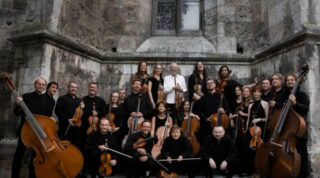
Liepāja SO album features music inspired by Latvian nature

Throughout the years, many superlatives have been used to describe nature and the natural objects in Latvia. Latvian nature has inspired artists and art of all kinds – paintings, stories, poems, and also many pieces of music.

Recognizing this, the Liepāja Symphony Orchestra, conducted by Guntis Kuzma, selected several symphonic works that were, directly or indirectly, inspired by Latvian nature. The works selected are from throughout the history of Latvian symphonic music (nearly a century and a half) and were released in 2022 on the album Flowering Jasmine (or Plaukstošais jasmīns).

The collection spotlights both well-known names and works by composers that are heard less often these days, presenting a variety of styles, displaying some of the trends and evolution of Latvian symphonic music over the last century. Most of the works included here, regardless of when they were written, could be characterized as being in a romantic (or romantic inspired) style – even though some of the works were written a century apart, the collection flows almost naturally – no jarring or harsh selections here.

Ādolfs Skulte’s celebratory ‘Uvertīra’ (or ‘Overture’) opens this collection. Full of sweeping orchestra flourishes and almost playful melodies, the work exhibits Skulte’s mastery of the symphonic form (he has nine symphonies, among many other symphonic works, to his credit).

No Latvian symphonic music compilation would be complete without a selection from perhaps Latvia’s greatest symphonist – Jānis Ivanovs. On Flowering Jasmine, that is ‘Varavīksne’ (Rainbow). Ivanovs often was inspired by nature (particularly the nature of the Latgale region), and often looked for the relationships between colors and sounds, which is displayed brightly in this work.

Alfrēds Kalniņš’ ‘Pie Staburaga’ is a tribute to the limestone cliff on the Daugava River. Written before the sinking of the cliff (in 1966, when building the Pļaviņas hydroelectric plant, that section of the river was flooded, leaving Staburags underwater), the reverent work paints a dramatic picture of the cliff, which was not just a major natural Latvian monument, but a place steeped in mysticism and folklore.

The works of Georgs Pelēcis have become popular throughout the world, perhaps due to the composer’s deceptively simple style, skill with melody, and, most of all, the pure beauty of his music. The work ‘Plaukstošais jasmīns’ with its tender, almost fragile string melodies, is enhanced by the haunting melody of the vibraphone, played here by Marta Kauliņa.

The collection also includes works by Jānis Porietis (the melancholic, affecting ‘Rīts’), Jānis Ķepītis (the reserved, gently flowing ‘Liriskā balāde’), Ādolfs Ābele (‘Meditācija’ – full of introspection and richly emotional), Agris Engelmanis (‘Zīmējums sēpijas tonī’  – pulsating and in a state of near constant motion), and Ēriks Ešenvalds (‘Noktirne’ – mysterious and intriguing, and inspired, like many of his works, by the poet Sara Teasdale, featuring the orchestra whispering lines from her poem ‘Twilight’).

The CD booklet offers not just details on the compositions, but also offers interesting, even humorous anecdotes and details about the composers themselves. For example, Ādolfs Skulte was an adept repairman, and was able to fix the gearbox on his Volga car himself, Jānis Ķepītis was also a skilled beekeeper, and that Ādolfs Ābele never used an ashtray when he smoked (which regularly resulted in ash on both his shirts and his piano).

Revealing not just the richness of Latvian nature, but also the richness of Latvian symphonic music, the collection of nine symphonic poems and miniatures found on Flowering Jasmine presents works from more than a century of Latvian music. Vividly performed by the Liepāja Symphony Orchestra and conductor Guntis Kuzma, this collection offers both a broad, engaging panorama of music and an enveloping, absorbing journey through the nature of Latvia.

For further information, please visit the Skani website and the Liepāja Symphony Orchestra website.

Flowering Jasmine

Liepāja Symphony Orchestra, conductor Guntis Kuzma

LMIC/SKANI 127, 2022

Track listing:

1. Ādolfs SKULTE Uvertīra / Ouverture

2. Jānis IVANOVS Varavīksne / Rainbow

3. Alfrēds KALNIŅŠ Pie Staburaga / At Staburags

4. Georgs PELĒCIS Plaukstošais jasmīns / Flowering Jasmine

5. Jānis PORIETIS Rīts / Morning

6. Jānis ĶEPĪTIS Liriska balāde / Lyrical Ballad

7. Ādolfs ĀBELE Meditācija (Vientulībā) / Meditation (In Solitude)

8. Agris ENGELMANIS Zīmējums sēpijas tonī / Illustration in Sepia

9. Ēriks EŠENVALDS (1977) Noktirne / Nocturne

Egils Kaljo is an American-born Latvian from the New York area . Kaljo began listening to Latvian music as soon as he was able to put a record on a record player, and still has old Bellacord 78 rpm records lying around somewhere.

Trejasmens album presents cultural and historical wealth of Ropaži

Latvian folk ensemble Trejasmens perform songs from and about the Ropaži parish (in the Vidzeme region, east of Riga) in Latvia. Combining songs and stories, their albums reveal the extensive cultural and historical richness of this region.

Their latest album – Mežā un ciemā – was released in 2022, and, as per the group, this collection is dedicated to the ‘cultural and historical monuments, historical events and natural treasures’ of Ropaži.

Trejasmens, who have been performing together since the early 2000s, combine many different styles into their performances – from more traditional, even ancient styles to songs in a more modern style with electric instruments. The Latvian kokle provides the foundation for the somber ‘Divi dienas mežā gāju’, while ‘Kas redzejēa Auseklīti’, a song about going off to war, is infused with the sounds of Renaissance-era music.

The initial calmness on the album is broken by the sounds of electric guitars on ‘Ogļdeģi’, a song that would also fit in with the repertoire of Latvian metal ensemble Skyforger, ‘Juglas bērni’ is only vocals and electric guitar, but no less intense or powerful.

As on their previous album – 2018’s No Ropažnieku dzīves – the songs are interwoven with spoken stories. On Mežā un ciemā these include ‘Kūpošie Uzkalniņi’, a story about burning trees and the resulting charcoals (there are approximately 4000 such charcoal piles), as well as ‘Mazās Juglas Kaujas’ – Latvian rifleman Kārlis Baltgailis’ harrowing memories of the battle of the Mazā Jugla River during World War I.

Though most of the performances on the album are somber and serious, with mainly folk song texts, the album takes an unexpected turn at the end, concluding with the almost ‘indie rock’ style of ‘Skolas diena’, a bouncy song about the first day of school.

The CD booklet supplements these stories (in Latvian and English) with additional historical notes – like the venerable old oaks of Ropaži,  the unique geological formations of the ‘Lielie Kangari’ nature reserve, and the Endzeliņi Tavern, a place that often resulted in supernatural occurrences for visitors.

Blending both ancient and modern instruments, Trejasmens present the cultural wealth of the Ropaži Parish on Mežā un ciemā. The group is deeply studied in history and archeology, and the knowledge they have gained adds to the authenticity of the performances on the album.

For further information, please visit the Lauska website.

Mežā un ciemā

Trejasmens

Lauska CD099, 2022

Track listing:

  1. Divi dienas mežā gāju
  2. Kas redzēja Auseklīti
  3. Vēlā vakarā Kangaros
  4. Ropalniekam trīs dēliņi
  5. Kūpošie uzkalniņi
  6. Ogļdeģi
  7. Lielā Jugla – pavasara ceļš
  8. Juglas bērni
  9. Gadījumi Mācītājmuižā
  10. Mazās Juglas kaujas (Strēlnieka Kārļa Baltgaiļa atmiņas)
  11. Kad ar uzvaru
  12. Naudas māte
  13. Skolas diena

Egils Kaljo is an American-born Latvian from the New York area . Kaljo began listening to Latvian music as soon as he was able to put a record on a record player, and still has old Bellacord 78 rpm records lying around somewhere.

Mixed choir Juventus celebrates centenary with works by Latvian composers

Mixed choir Juventus, of the University of Latvia, has had a long and storied history. Founded in 1920, the choir has been active for more than a century and has been led by many distinguished Latvian conductors, such as Haralds Mednis, Daumants Gailis, and Juris Kļaviņš. Throughout its history, the choir has been recognized as one of the premiere amateur choirs in Latvia.

The choir, which celebrated its centenary in 2020, is now conducted by Valdis Tomsons. To celebrate their 100th anniversary, the choir recorded an album of new works – twelve works by twelve distinguished Latvian composers. No small feat, considering that much of the work was done during a global pandemic, when choir rehearsals and performances almost came to a complete halt worldwide.

The resulting album – entitled Jauns sākums (or New Beginning), was released in 2022, and is a digital-only release that can be found on multiple streaming services. The album serves as a bridge between the choir’s two centuries of activity.

The celebratory ‘Rasa’, with music and words by composer Laura Jēkabsone, along with elements from Latvian folksongs, opens the collection. The choir delivers a clearly articulated and crisp performance, as Jēkabsone’s composition moves from an energetic beginning to a more melodic mid-section.

Guitarist Kaspars Zemītis provides the peaceful, jazzy ‘Dialogs’, which begins and ends with the choir simulating the sound of rain, and then, accompanied by the composer himself on guitar, the choir forms a kind of dialog between the male and female voices, resulting in a gently flowing performance.

Composer Jēkabs Jančevskis contributes the somber and haunting ‘Klāt pie sevis’. Similarly, Irīna Mihailovska’s composition ‘Semikols’ (Semicolon), for which Mihailovska also wrote the words, also has tragic undertones – the semicolon here is a symbol of those who have had suicidal thoughts, and the choir provides an achingly beautiful interpretation of this emotional work.

Ārījs Šķepasts has often had world music elements in his choir music, particularly Eastern motifs. ‘Tu tuvināji mani mūžībai’ is inspired by Indian raga music, infused with elements from Latvian popular music (particularly the work of Imants Kalniņš) and the resulting work is atmospheric and immersive, enhanced by the soaring voices of the choir.

The choir presents works of many styles on this collection, and does not shy away from more challenging and difficult works. Composer Andris Dzenītis is known for his complex and intricate choir compositions, and ‘The Morning of the World’ (words by Pablo Picasso) is no exception. At times discordant and harsh, but also harmonious and calm, the work displays the versatility of the choir when singing this multi-faceted and multi-layered composition.

The album also contains works by Valts Pūce, Arturs Maskats, Jēkabs Nīmanis, Andris Sējāns, the group “Sigma”, and Jānis Ķirsis.

In 2023, in addition to preparing for the Latvian Song and Dance Festival in July, the choir will also be traveling to Maribor in Slovenia for the Gallus – Maribor International Choral Competition.

Though the choir is now in its second century of activity, it remains true to its name (‘Juventus’ meaning ‘Youth’), and the dozen performances on Jauns sākums confirm Juventus’ status as one of the best amateur mixed choirs in Latvia. In addition to displaying the skills of the choir and conductor Valdis Tomsons, it also reveals the wide variety and styles of Latvian composers – at times melodic, at times challenging, other times melancholy, even tragic. Juventus and Valdis Tomsons have set a new course – a new beginning – with these twelve memorable performances.

For further information, please visit the Juventus website and the choir Juventus Facebook page.

Jauns sākums

Mixed Choir Juventus

2022

Track listing:

  1. Rasa – Laura Jēkabsone
  2. Dialogs – Kaspars Zemītis
  3. The Morning of the World – Andris Dzenītis
  4. Mēs iedegamies cits no cita – Valts Pūce
  5. Vējasuns – Arturs Maskats
  6. Tu tuvināji mani mūžībai – Ārijs Šķepasts
  7. Tulkojums – Jēkabs Nīmanis
  8. Un tad vienā jaukā dienā – Andris Sējāns
  9. Klāt pie sevis – Jēkabs Jančevskis
  10. Semikols – Irīna Mihailovska
  11. Kalnā – music by the group “Sigma”, arranged by Platons Buravickis
  12. Gaisma – Jānis Ķirsis

Egils Kaljo is an American-born Latvian from the New York area . Kaljo began listening to Latvian music as soon as he was able to put a record on a record player, and still has old Bellacord 78 rpm records lying around somewhere.