One of the most noteworthy and popular Latvian rock groups, Pērkons, marks its 25th anniversary this year. Due to the band’s groundbreaking style, as well as its at times rowdy concerts, the Soviet Latvian government on more than one occasion banned performances. Though considered troublemakers by government, Pērkons was one of the most important and beloved groups in Latvia in the 1980s and early 1990s, and even today its popularity has not waned. Throughout the group’s entire existence, Pērkons has been led by keyboardist and composer Juris Kulakovs.
The roots of Pērkons, which was founded in 1980, can be found in the group Menuets. Menuets, a group that performed songs by well-known composer Imants Kalniņš, invited Kulakovs to be keyboardist in the late 1970s. At the same time, Kulakovs founded his own instrumental ensemble, called Arka. Though Arka was made up of students, some of the most famous names in Latvian rock music were members, including Armands Alksnis (current guitarist of Credo), Jānis Lūsēns (a respected composer and a founding member of Zodiacs), Ainārs Ašmanis (later a member of Jumprava), and drummer Andris Reinis, who later also joined Zodiacs and is now in the group Mazā Ģilde. Arka’s most notable work was the Kulakovs-composed “Gadalaiki.” When Arka disbanded, Kulakovs founded Pērkons, bringing along some other members of Menuets: brothers Juris and Leons Sējāns, as well as Menuets drummer Raimonds Bartiševics, who actually became a singer for the group. Rounding out the group were singer Ieva Akurātere, whom Kulakovs had known through the Latvian State Conservatory (now the Latvian Academy of Music), as well as drummer Dainis Strazdiņš (from Pļaviņas, brought to the group by the Sējāns brothers). The original line-up of Pērkons was Kulakovs on keyboards, Juris Sējāns on bass guitar and vocals, Leons Sējāns on guitar, Akuratere and Bartaševics on vocals, and Strazdiņš on drums.
The new group’s debut was in 1981 at the Art Academy Carnival. The first concerts had a different format than they do today. Continuing a tradition begun by Arka, the first half of consisted of performances of classical music, including works by Edvard Grieg and Modest Mussorgsky, as well as Kulakovs’ own instrumental works. The second half consisted of noisy rock music, something that already had been performed elsewhere in the world, but in Latvia this was something very new. Pērkons also used pyrotechnics during its concerts, adding to the noise factor. Previously, concerts had been very polite affairs, with occasional dancing, but certainly not the screaming and yelling and jumping up and down that is associated with rock concerts of today. It was a kind of a release for the youth at the time—these young, long-haired musicians performing aggressive and at times angry rock-and-roll—and marked a sea change in a culture that during the previous decades had been dominated by the music of Raimonds Pauls and similar artists.
The group was also unique in its choice of lyrics. Most were written by young poet Māris Melgalvs, though not specifically for Pērkons. Lyrics were chosen by Kulakovs. Melgalvs’ lyrics could be heard in such Pērkons hits as “Pie baltās lapas” (retroactively voted in the Mikrofons survey of 1993 as the most popular song of 1983) and “Balāde par gulbi,” a song containing the famous line “Ak vai cik stulbi ir nosist gulbi, bet stulbāk vēl ja vēlāk žēl” (How stupid it is to kill a swan, but it is even stupider if later you are sorry). Lyrics weren’t always provided by young poets. Classic Latvian poets were also represented, including Rudolfs Blaumanis and his poem “Pērkons,” as well as poetry by one of Kulakovs’ personal favorites, Eduards Veidenbaums, with his poem “Iedzer, brāli!”
Early in 1982, the group was joined by singer Nauris Puntulis, a tenor who would go on to a career in the Latvian National Opera. Puntulis came to the group from the Lielvārde “Lāčplēsis” ensemble.
Not long after that, presumably due to the group’s iconoclastic style, Pērkons in 1983 experienced its first ban and was forbidden to perform. The root of the ban was a concert in Rīga at the the Railroad Workers’ Cultural Center, where it so happened that a Communist Party director was in attendance. The party director, not appreciating the loud volume and rowdy public (totally unacceptable at the time), reprimanded certain members of the audience for their behavior. Those reprimanded ignored the commands of the party director. The party director got all in a huff, and, seeing as the concert was held in the railroad workers’ cultural center, called the railroad militia for help. The railroad militia basically said that it was not their problem, and so the party director called the city militia. The city militia, in turn, also denied responsibility for the problem, and the party director then contacted the party commission. The Communist Party commission then sprung into action (reprimanding the railroad and city militias for their inaction) and dispatched militiamen to keep the “peace” at the following Pērkons concerts. Not long after this incident, the group was forbidden to perform.
Though prevented from performing, the group stayed together and in a home studio recorded classic albums, Mākslas darbi and Zibens pa dibenu. Both were released unofficially in 1983, because no Soviet-sponsored record label could possibly have released them. The albums became two of the most widely circulated bootleg or pagrīde (underground) cassette tapes in Latvia. The tapes eventually make their way to Hamburg, West Germany, where certain songs were included on an album called Vel ir laiks, released by the KGB—the “Kultūras glābšanas biedrība” (The Society for Cultural Salvation). One side of the record was all Pērkons’ songs, while the other side included songs by Zigmārs Liepiņš, Dzeltenie pastnieki, Sīpoli and others. Mākslas darbi and Zibens pa dibenu were later officially re-released in the 1990s, and highlights from these two albums are collected on the compact disc Pērkons: Dziesmu izlase nr. 1, 1981–1982, released by MICREC in 1994.
The songs weren’t all noisy affairs. One of the band’s popular early songs was a song about corn, “Kukurūza,” with lyrics by influential Latvian poet Klāvs Elsbergs. Originally released on Zibens pa dibenu, the song is loosely based on the old Latvian song “Zaļā krūze” and may seem to about life and love on a collective farm, but as with many Latvian poems, there are a few deeper meanings. Firstly, it is a play on the name of Latvian poet Kārlis Krūza, the master of the triplet style in Latvian poetry. The lyrics also hold a bit of irony, as kukurūza (corn), does not grow well in Latvia, although Nikita Khrushchev, after becoming enamored of the crop during a visit to the United States, decided planting it just about everywhere in the Soviet Union would be a good idea.
Through his work with Menuets, Kulakovs became acquainted with composer Imants Kalniņš. In 1984, Kulakovs, Juris Sējāns and Kalniņš collaborated on the rock oratorio “Kā jūra, kā zeme, kā debess…” (with lyrics by Māris Čaklais). Pērkons also recorded the Kalniņš rock opera “Ei, jūs, tur!” These collaborative efforts with a renowned composer helped pave the way for the group to be allowed to perform again. Actually, though the group did perform again in the summer of 1984, it was careful not to call itself Pērkons but a name far more agreeable to the ruling authority: Rīgas rajona kolhoza “Padomju Latvija” ansamblis (The Ensemble of the Rīga Region Cooperative Farm “Soviet Latvia”).
Performances continued in 1984 and 1985, but then another fateful event caused the group to be banned for a second time. In an event that some consider to be one of the flashpoints in the budding Latvian independence movement, after a Pērkons concert in Ogre in the summer of 1985, a group of teenagers caused irreparable damage to two train wagons. The Soviet authority was aghast at such an act of vandalism—presumably inspired by the “subversive” music and lyrics of Pērkons—and the group was immediately banned from performing again. The events, and the subsequent trial of those responsible, formed part of the famous Latvian documentary Vai viegli būt jaunam?, a film that also featured a number of Pērkons’ songs. Kulakovs became persona non grata in the field of music, and it was even suggested he leave Latvia.
Two years passed and though the group continued to work on new songs, the public heard nothing of them. Finally, Pērkons returned to the stage at the concert “Liepājas dzintars 1987,” once again under a respectable Soviet name, Tukuma rajona zvejnieku kolhoza “Selga”ansamblis (The Ensemble of the Tukums Region Fishermen’s Collective Farm “Selga”). Drummer Strazdiņš left the band and was replaced by Ikars Ruņģis in 1988. Ruņģis had recently returned from service in the Soviet army, and had been recommended to the group by vocalist and violinist Zigfrīds Muktupāvels. Strazdiņš went on to be the director of the Pļaviņas Cultural Center.
Pērkons’ most beloved songs came out of this period, collected on two unofficially released albums, Klusā daba ar perspectīvu (1985) and Labu vakar (1987). Klusā daba ar perspectīvu features songs like “Cik pūlkstens” and “Mana dienišķā dziesma,” and Labu vakar has such Latvian rock classics as “Zaļā dziesma” (second place winner in the Mikrofons 88 competition) and “Gandrīz tautas dziesma.” In these songs, the group had a more refined and polished sound than the practically garage rock sound of its early years. The group also continued the use of contemporary Latvian poets for lyrics, notably Melgalvs and Elsbergs. The albums were released together in 1989 on one cassette tape by the American Latvian Youth Association (Amerikas Latviešu jaunatnes apvienība), when Pērkons toured major Latvian centers in the United States. The albums were only released in Latvia in 1996 on cassette tape, and a few years later on CD (minus a few songs due to time constraints) as Dziesmu izlase Nr. 2, 1985 – 1987. Besides being one of the band’s most popular songs, “Zaļā dziesma” (Green Song), with lyrics by Melgalvs, became the anthem of the Green movement in Latvia at the end of the 1980s, and also became a dedication of sorts to the work of Greenpeace.
On the eve of Latvian independence, Pērkons rode a wave of popularity to achieve first place in the Mikrofons 1989 competition with the song “Mēs pārtiekam viens no otra” (with lyrics by Viktors Kalniņš, brother of Imants Kalniņš). The group’s next two albums, Ballīte and Latviskā virtuve, continued the refinement of its musical style. The lyrics also became more varied. Beyond the already familiar names, lyricists on these albums included Andris Žebers, Juris Kronbergs, and Latvian-American Anšlavs Eglītis and Linards Tauns, among others. The lyrics chosen were at times bizarre. “Lūgums,” with lyrics by Žebers, politely asked folks to please not stand on the toilet seat, as that leaves big black footprints. “Ballīte,” with lyrics by Eglītis, could be considered to be in the schlager genre (though with tongue firmly in cheek), a true departure for the group. It was one of the songs chosen as finalists in the Mikrofons 90 Vecais ratiņš competition (the Mikrofons competitions had by then split in two, one for rock music, and Vecais ratiņš for schlager or more traditional songs). Ballīte was released on vinyl in Latvia in 1990, but Latviskā virtuve was first released in France in 1991, prior to the group touring there.
The two albums were finally released on cassette and (again, due to time constraints, minus a few songs) on CD in 2003 in the collection Dziesmu izlase Nr. 3, 1990 – 1991. These were the final albums released by Pērkons, though the band did continue to record individual songs (notably the song “Kāzas” on the Mikrofons 93 cassette.) The group also continued to perform regularly, and still today gives many concerts.
Puntulis left the group in the mid 1990s to concentrate on his opera work. In addition to his work with the Latvian National Opera, he also is one of the Three Tenors, a group that Kulakovs also works with, serving as artistic and musical director, as well as principal accompanist. The Three Tenors have released two CDs and have gone on multiple tours, including two major tours of the United States in 2002 and 2004.
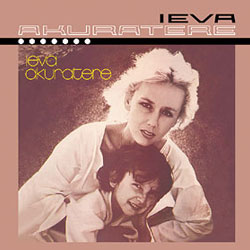
Akuratere, widely acknowledged as one of the best Latvian female vocalists, has had a successful solo career. Particularly notable is her 1988 album Spogulis (re-released on CD by MICREC in 2005), which contained one of the most beloved songs of the National Reawakening period, “Manai tautai”, in which she sings “palīdzi, Dievs, visai latviešu tautai” (God help all Latvians). Akuratere has also recorded two additional albums with the group Simulācija, including 1997’s Atkal un jau, which included the hit “Mākoņu pilsēta.” She also recorded an album with rock singer Igo (Rodrigo Fomins), Klusums starp mums , originally released in 1991 and re-released on CD in 2003.
Kulakovs has focused his career on composition. He considers himself as a symphonist with the soul of a rock musician, focusing mainly on symphonic works, including oratorios and cantatas. Particularly notable compositions are “Mateja Pasija” and the cantata “Sarkanais vilciens, ” which used poetry by Pēteris Aigars and was written in remembrance of the mass deportations of Latvians in the early Soviet years. “Sarkanais vilciens” premiered March 26, 2005, in the Ave Sol Concert Hall in Rīga in a performance that included Kulakovs himself, the girls choir from the Riga Cathedral Choir School, as well as Pērkons.
One of his most recent compositions is the cantata “Vēstules uz bruģa” (with text by Normunds Beļskis), premiered on Jan. 16t in the National Theatre as part of the 15th anniversary of the Rīga barricades. Guest performers of this work included Pērkons, folk singer Zane Šmite, the wind orchestra of the Latvian National Army Headquarters, the Ave Sol choir, and the the vocal ensemble of the Civil Guard.
Kulakovs also composes music for theater productions and for choirs.
Kulakovs, Juris and Leons Sējāns, as well as Raimonds Bartaševics still perform in the group Menuets, and released a new album at the end 2005 called Cilvēks, kas smejās, with music composed by Imants Kalniņš and lyrics by brother Viktors Kalniņš. Kulakovs also serves as musical director for the group.
In their free time, Ikars Ruņģis is a music teacher at the Mārupe Children’s School of Music, Juris Sējāns works as an editor n the academic music department of Latvian Television, and Leons Sējāns runs his own recording studio in Jūrmala.
The group has also been an influence on both contemporary and younger groups. The rock band Līvi perform the Pērkons song “Lakstu gailis,” a live recording of which can be heard on its CD Spoku koks. Among younger groups, a capella sensation Cosmos recorded “Pie baltās lapas” for its self-titled debut CD released in 2003. Even cello trio Melo M included an instrumental version of “Dziesma par sapumpuroto zaru” on its self-titled debut CD, released in 2005.
And so, in 2006, Pērkons celebrates its 25th anniversary, with a major concert scheduled June 10 in the Dzintari Concert Hall in Jūrmala. Following the concert, the group plans a tour of Latvia.
Pērkons also expects to release another album. A few songs have already been recorded, but no release date has been set.
No zemes un debesīm — Pērkons, a book about the group by Māris Ruks, was released May 12 by the Antava publishing house. The book chronicles the history of the group. Along with the book, it is expected that some currently out-of-print Pērkons records will finally make their way to CD (notably the recordings of Ei, jūs tur! and Kā jūra, kā zeme, kā debess).
The songs of Pērkons have been etched in the hearts of many Latvians, both young and old. They are part of the Latvian rock canon. Three Pērkons songs (“Balāde par gulbi”, “Zaļā dziesma” and “Gandrīz tautas dziesma”) were performed by the combined youth choirs of about 2,000 singers during the 2003 Song Festival Youth Choir performance. The band’s music has always resonated with the youth, beginning in the early 1980s, and still resonates today.
(Editor’s note: The author thanks Juris Kulakovs for his assistance with this article.)
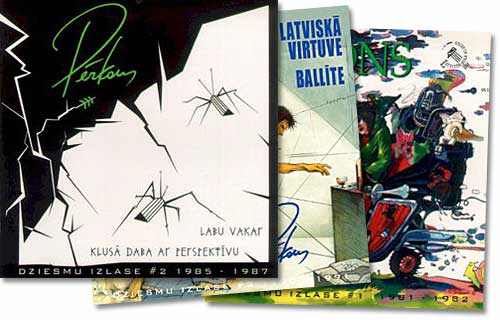
Three compact discs, all released by MICREC, contain many of the songs recorded by Pērkons from 1981 through 1991.