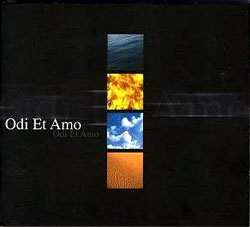
Emotion, history combine in album

If you’re Latvian and grew up in the United States or Canada, perhaps you can remember all the times people thought you said you speak Latin rather than Latvian. After all, everyone’s heard of Latin. It’s Latvian that’s the obscure language, right? It’s for all those times we wish we’d had an album like Odi Et Amo to serve as a comeback to our errant acquaintances. “Here,” you could have said. “Listen to this. It’s a bunch of Latvians singing in Latin. Just to confuse you even more.”

And that’s what Odi Et Amo is: a bunch of Latvians singing in Latin. But this is no ordinary bunch. Its producer, singer and musician Uģis Prauliņš working with the well-known and respected Rīga Dome Boys Choir.

The 13 tracks on this album take the choir, directed by Mārtiņš Klišāns, in a new direction. These aren’t the sweet and thoughtful compositions often performed by the choir. Rather, Prauliņš takes spiritual texts and with his musical arrangements moves the listener through a range of emotions, from reflection to anger, perhaps even to fear.

The album’s title track, “Odi Et Amo” (I Hate and Love), is taken from a short work by the Roman poet Gaius Valerius Catullus, who died about 50 years before the birth of Jesus Christ. The poem speaks of the conflict within one’s soul and sets the tone for the rest of the album:

Odi et amo, Quare id faciam, fortasse requiris.
Nescio, sed fieri sentio et exrucior.
(I hate and love. And if you ask me why,
I have no answer, but I discern, can feel,
my senses rooted in eternal torture.)

Three compositions on the album are based on verses from the Biblia Vulgata, the biblical translation by Eusebius Hieronymus, the Balkan-born linguist, scientist and philosopher who lived from about 340 to 450 and who at one point was headed down a path that could have seen him chosen pope.

It is one of these compositions, “Quare Fremuerunt Gentes,” that is the most surprising. The track begins with men’s voices intoning the title only to suddenly have the boys launch into a rap, accompanied by heavy, driving guitar and bass chords. The piece, based on Psalms 2 and 74, even has the boys screaming, something they probably couldn’t get away with in the Rīga Dome Church. Played loud, this track also is perhaps the most unsettling on the album … as art should be.

It is followed by the almost Enya-sounding homily “O Beata Trinitas,” a proper piece with which to settle one’s nerves.

In addition to the Biblia Vulgata, Prauliņš drew from other historical material, some by well-known literary or religious figures, some not. For example, “Ad Dianam” presents fragments from a work by English poet Thomas Campion (1567-1620), who used the character of Diana to praise Queen Elizabeth. “Pangue Lingua” comes from a hymn by 13th century theologian and philosopher St. Thomas Aquinas. And the “Chorus Novae Ierusalem” is from an Easter hymn, penned by Bishop Fulbert of Chartres, sung during the Crusades.

One favorite on this album is “Qui Creavit Coelum,” a song originating in the Nunnery of St. Mary in Chester about God’s creation of the world. As the choir sings the refrain, “Lully, lully, lu,” you almost have to smile, something that’s otherwise difficult given the seriousness of the rest of this album.

Besides the choir and Prauliņš, who provides narration and vocals as well as performing on keyboards, samplers, the kokle and the fiddle, a number of other musicians and vocalists helped out on this project. They include Armands Alksnis and Arnolds Kārklis on guitars, Arvīds Klišāns on French horn, and Aigars Godiņš, Edgars Janovs, Māra Kalniņa and Mārtiņš Klišāns on vocals. Kalnina, who also performed with the folk group Ilgi, was killed in an automobile accident in late August, just a few months after this album was released.

In conversations we’ve had with people who have listened to this album, it has been suggested that with the proper exposure, Odi Et Amo could raise Latvia’s stock in the music world. Certainly, the fact that it’s in Latin—and not Latvian—opens the album to a wider audience, at least intellectually. We have to agree that it’s worth the effort.

Details

Odi Et Amo

Uģis Prauliņš and Rīga Dome Boys Choir

UPE Recording Co.,  1999
Andris Straumanis is a special correspondent for and a co-founder of Latvians Online. From 2000–2012 he was editor of the website.

Latvia: Land of Pirates?

One of the great challenges of Latvia’s foreign policy makers, its ambassadors, and its cultural activists is to improve the image of the country in the eyes of outsiders. However, within the international music and software businesses Latvia’s image in recent months has become tarnished. Despite several years of anti-piracy promotions and police crackdowns, just three months ago, Latvia was named among the countries where pirating of recorded music is the highest. And in September, claiming that 90 percent of software in use in Latvia is pirated, Microsoft Inc. announced a marketing campaign aimed at encouraging consumers to purchase legal copies of its products.

During the past several years, late August through early September in Latvia has been the time for a big anti-piracy push. Led by LaMPA, the Latvian Music Producers Association, music producers, artists, and media have united in an effort to raise the public’s awareness about music piracy. At times, these efforts have been coupled with well-publicized police raids on vendors in open-air markets in Rīga.

This year was no different. LaMPA organized a slogan contest for signs to be used at a September 1 protest outside the parliament building (the contest promotion included a rather melodramatic warning to consumers, reminding them that by purchasing pirated music they were supporting “murder for hire”). Radio stations played no music for one hour on September 1, while music stores opened later than usual and the three leading TV channels played no music videos. The same day, state revenue agents announced the results of a raid in a market, netting 1,600 compact discs containing pirated music and software.

But Latvia’s piracy rate remains high and, if figures are to be believed, is increasing. According to the International Federation of the Phonographic Industry (IFPI), more that 50 percent of the compact discs and cassettes sold in the Latvian market are pirated. That now puts Latvia in the company of such other pirate havens as Ukraine, Russia, Bulgaria and Estonia.

Worldwide in 1998, pirated music sales represented a third of all sales, or USD 4.5 billion. Although the situation looks bad, one reason for the apparent increase in pirate sales in Latvia is that the acknowledgement and reporting of the problem has increased, says Elita Milgrāve, director of the music publishing company MICREC and head of LaMPA. “The problem has always existed,” she tells SVEIKS.com, “but we have obtained more information about it and have more closely monitored it. Thus, we have been able to clarify the degree of piratism.”

One problem the anti-piracy movement has is the lack of hard data about the illegal business. “Everything is pirated!” complains Milgrāve. Organized distribution brings into Latvia illegal compact discs from Russia, Poland, the Czech Republic and other locations, while pirated cassettes are produced domestically. Provisional data suggest that in one year about 1 million pirated CDs came into Latvia just through the Grenctale border point. In all, authorities figure that Latvia loses about LVL 5 million annually in tax revenue because of pirated recordings, Milgrāve says. Sales of pirated recordings tend not to include the work of Latvian artists, but nonetheless hurt the local music business by robbing music publishers of revenue that could be directed toward Latvian artists’ projects.

Perhaps one reason for the current success of music pirates in Latvia is that they provide an affordable product to consumers who otherwise might not be able to afford to shop for legal recordings in legitimate stores. A pirated CD might cost about LVL 2.50 to 3.00, while legal CDs might cost two to four times more. But Milgrāve argues that’s not a justification. “If I can afford one original pair of jeans,” she says, “I buy those rather than going to the market to buy three pairs of knock-offs. I know that those are illegal, that I’m being cheated. I know they aren’t quality products.” The same principles apply to recorded music, Milgrāve adds, pointing out that there’s also a moral question involving one’s support of a favorite artist.

Milgrāve notes that sellers of pirated recordings usually have disappeared underground when the annual anti-piracy activities pick up. However, in recent weeks the efforts of revenue police and other authorities appear to have been sustained, thanks in part to recent changes in state laws and agreements between the music publishing industry and law enforcement officials. Of course, it’s too early to tell whether the effort will pay off in the long run and will enable Latvia to salvage its image in the music publishing industry.

(Editor’s note: This article orginally appeared on SVEIKS.com.)

Andris Straumanis is a special correspondent for and a co-founder of Latvians Online. From 2000–2012 he was editor of the website.

Happy days are here again

On the three-hour automobile trip to a Jāni celebration in mid-Wisconsin, our passengers included two twenty-something au pairs from Latvia. Figuring they might be starved for the latest music from back home, we took along a few newer compact discs: Prāta Vētra’s Starp divām saulēm, The Satellites’ Piens and, just for kicks, Guntars Račs’ retrospective Dienas. We thought these two young Latvian women especially would be eager to hear the latest Prāta Vētra recording. Nope. “Put in that Račs CD!,” they begged.

Even if you’ve never heard of Guntars Račs, if you’ve listened to popular Latvian music you most likely have heard his song lyrics. Does your CD or tape collection include anything by the group Bet Bet (which includes Račs)? Do you have something by the guitar rockers Līvi? How about something by Igo? Chances are you’ve heard one or more tunes penned by Račs.

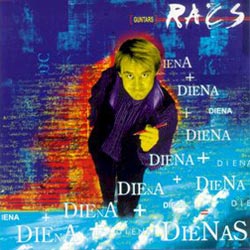
Dienas pulls together 16 of Račs’ best-known songs from the past two decades. Most have been released earlier. Songs include:

  • “Diena,” performed by Račs himself in a new recording backed by the rest of the Bet Bet crew.
  • “Piedod man,” performed by the group Līvi from Liepāja. The track is taken from 1997’s Bailes par zinģēm.
  • “Vakara vējā,” performed by Bet Bet with lead vocals by Zigfrīds Muktupāvels.
  • “Tikai tā!,” performed by Liepājas brāļi.
  • “Vai ar to tev nepietiek,” performed by the pop-rock group Jauns Mēness, led by Ainars Mielavs. Recorded in 1988 when Račs was the drummer for the group.
  • “Es esmu vēl dzīvs,” also performed by Jauns Mēness and, like the song above, recorded in 1989 but not previously released.
  • “Vējs,” by the long-time group Zodiaks.
  • “Pūt, vējiņi,” also by Zodiaks.
  • “Ozolam,” another one by Līvi.
  • “Dzīve ir viena,” by Olga & Tango.
  • “Lietus,” by another long-time group, Credo.
  • “Bumerangs,” by Igo (Rodrigo Fomins), another singer from Liepāja whose career is just as notable as Račs’.
  • “Vētrasputns,” performed by Varavīksne.
  • “Romance,” performed by Neptūns and not previously released.
  • “Kapteinis,” performed by the jazz singer Laima Vaikule.
  • “Tā ir jānotiek,” performed by Zvaigžnu koris.

“Once about a hundred years ago,” music critic Klāss Vāvere writes in the liner notes, “some journal proclaimed Račs as the new hope of national poetry. Even though I never read poetry journals, I read his verses and concluded: here’s a sensible fellow.”

Reading the lyrics in Dienas (and the liner notes thankfully include them) we encounter simple thoughts wrapped in visions found in nature. For pop songs, it’s a wonderful formula. In the liner notes, Račs explains himself: “The wind blew me here from Liepāja and therefore it’s no wonder that my songs are about the wind, the setting sun and love… I am truly happy about all that is going on with me and around me at the great threshold of the millenium.”

Račs has good reason to be happy. He’s a successful pop song lyricist, he’s a successful drummer (usually performing for Bet Bet), and he’s the successful marketing director for Latvia’s top recording label, MICREC. Raitis Sametis, who produces the music e-zine Kieģelis, has tagged Račs one of the 10 most influential people in the Latvian pop-rock music scene, particularly for his efforts to make Latvian artists known outside of Latvia.

Račs also was honored during the Latvian recording industry’s “Gada Balva 98” awards ceremony in April when the song “Par to (raudāja māte)” was named the best schlager style song of last year. Račs wrote the lyrics and Raimonds Pauls the music. The tune perhaps is best recalled as the theme song for the 1998 film by director Jānis Streičs, Likteņdzirnas. We almost wish the song was on this album, if for no other reason than to offer a counterpoint to the generally fast-paced tunes.

As for the songs that do appear on the album, about the only one worth criticizing is “Diena.” The song itself is good, but the studio performance here is embellished by a couple of special effects that don’t add anything to the presentation and seem to be included only because digital technology allows them.

This one point aside, Dienas is a worthy addition to any collection of recorded Latvian music.

Details

Dienas

Guntars Račs

MICREC,  1999

Andris Straumanis is a special correspondent for and a co-founder of Latvians Online. From 2000–2012 he was editor of the website.