BrainStorm readies for Chicago’s song festival

If there’s a darling of the popular music business in Latvia these days, it has to be BrainStorm (Prāta Vētra). The group, led by the exuberant Renārs Kaupers, has won the hearts of fans in Latvia, who have watched and cheered as the group has become the country’s best-known band both at home and abroad.

Formed in 1989 by high school classmates from Jelgava, BrainStorm released its first single in 1992. Several singles and albums have followed, each one garnering a larger fan base in Latvia and, gradually, in neighboring countries.

Its third-place showing in the 2000 Eurovision Song Contest raised interest in the band throughout the continent, earning it further exposure and record deals. Being the warm-up act for The Cranberries during part of the Irish band’s recent European tour didn’t hurt, either.

And now the band is set to stir up a storm as it plays to fans during the Latvian Song Festival in Chicago this week. Those who never have seen the band perform in Latvia will get a chance to see lead singer Kaupers, guitarist Jānis Jubalts, bassist Gundars Mauševics, drummer Kaspars Roga and keyboardist Māris Mihelsons play both at the Club Metro on July 19 and at an official song festival dance July 20.

BrainStorm’s latest albums, the English-language Online and the Latvian-language Kaķēns, kurš atteicās no jūrasskolas, share music but not lyrics. Both were released last year and singles from Online continue to earn impressive results in pop music polls around Europe. The album recently went gold in Poland (selling 35,000 units), and the video for “Waterfall” made it to the top spot on Slovakia’s pop chart as well as the MTV Nordic chart.

Between touring and getting ready for Chicago, Kaupers via e-mail answered some questions about the band and the changes it has seen over the years.

Q: How did the group come up with the name BrainStorm (Prāta vētra)? Were there other choices, and why didn’t you pick those?

The idea came from our drummer Kaspars’ aunt, who by the way is from America. She went to one of our first concerts in the Jelgava high school, and afterwards said that was some kind of brainstorm. As you know, “brainstorm” in English means when ideas happen or are generated. We translated BrainStorm to Latvian and got Prāta vētra. Of course, there were other choices, such as Swordfish or, in Latvian, Zobenzivs.

Q: Just a few years ago you were a new and pleasant group from Jelgava, but now you are known in a number of European countries. You no longer have concerts just in the homeland, but everywhere, soon even in the United States. Your music videos are professionally produced, you’ve appeared with The Cranberries, etc. What in your opinion has changed, and what has stayed the same?

The most important thing is that we began playing music as friends—and we still are friends. During these years our friendship has become closer. BrainStorm is like our second family. We’ve changed musically and, we want to believe, have become more professional.

Q: Two years ago BrainStorm earned third place in the Eurovision Song Contest. At the time, some predicted big things for you. Was the Eurovision result meaningful for BrainStorm’s development outside Latvia. And will BrainStorm benefit from Marija Naumova’s victory this year?

Of course, we can’t deny the meaning of Eurovision to BrainStorm’s success. But Eurovision by itself was not our goal. Rather, we saw it as a platform and a way to draw attention to ourselves, because it’s hard for a group from Eastern Europe to show the Western world that we too can record songs that meet Western technical standards. Eurovision has a gigantic audience and even though we don’t play the kind of music usually heard in Eurovision, from our vantage point it doesn’t matter whether you’re playing in the Glastonbury festival in Great Britain or in Eurovision, because everywhere the audience always is and will be people. Marija’s victory of course reminded those who had forgotten that two years ago BrainStorm got third place. In my opinion, that’s good. And every such victory or gaining of attention is good for all Latvian popular music.

Q: As with many other groups, the group’s leader becomes a star while the others stay in the background. We often see or read about Renārs Kaupers doing this or that. On your Web site it’s Kaupers who provides news. Kaupers starred in a film, Vecās pagastmājas mistērija. And so forth. What do the other group members think? Are they jealous? Do they also have side projects?

I’m the singer and I’m the one who has to appear out front on stage. And because of that I’m also the focus of attention. But day to day, working on albums or music videos or other things, we are all equally valuable. Everyone can speak his mind—we have a democracy. I think the others aren’t jealous and they may even have it better, because they have to work less. For example, when we were in Prague filming the video for “Maybe,” on the second day I was practically the only one from the group who had to be in front of the camera. The rest of the them could wander the streets of the Old City and soak up the sun. Perhaps at times I’m jealous of them!

Q: It is the rare Latvian musical artist who can make a living just with music. What about BrainStorm? Do you have enough work?

We used to all have other jobs, but then we understood that if we want to give ourselves completely to music and to prove ourselves outside Latvia, then we have to concentrate only on music. That’s what we did.

Q: What is your opinion of your recordings? How have your music and lyrics changed in recent years?

A person changes over the years and is influenced by various things, feelings and people. Each album we try to record as the best, concentrating all our energies and skills. Right now we’re working on new songs for a new album, and we’re doing it with the same attitude. If you’re not “on fire” about it, it’s not even worth doing. Our musical style has change over time, as we search for our own way of expressing ourselves and new directions. At present, we’re searching for a producer for our new album, someone who sees the big picture. The right producer is important, because they for the moment become the sixth band member. In terms of lyrics, those are inspired by specific events, specific people, specific things at specific times in our lives, but they can just as well be brought on without specific occurrences or thoughts. Sometimes that works better, because the musical material is primary. Sometimes inspiration can come from ice cream or even an ironing board.

Q: Online and Kaķēns, kurš atteicās no jūrasskolas represent the second time BrainStorm has released English and Latvian albums simultaneously. Will you continue to do that, or will you drop Latvian at some point and record only in English? And what about Russian?

I think we’ll continue to record in both languages—Latvian for Latvia and English for abroad—because our audience in Latvia is very broad, from little children to gray-haired gentlemen and ladies, and not all of them understand English. (To do otherwise) wouldn’t be right, because they are our dearest and most loyal fans. We did record one song in Russian, but for now we don’t feel it’s necessary to sing in Russian. Our English albums have been released in Russia, our songs are played on the radio and our videos have been shown on Russian MTV.

Q: In July you head to Chicago to participate in the Latvian Song Festival. It won’t be your first time in the United States, but do you have any plans to try to achieve something in the American music market?

I know that our recording company, Microphone Records (MICREC), has contacts in America through which they are trying to arrange something. But America is one of the largest markets in the music industry. It’s not easy to break into it. Besides, America has different kinds of music. Even groups from Great Britain find it hard to break in, not to mention groups from elsewhere in Western Europe. Of course, we won’t give up hope and will do all we can. However, for now we definitely are concentrating more on Europe. As someone from a record company once told me, at first you have to gain success in your neighboring countries and then, gradually, farther and farther away. We’ve had success with that, in Estonia and Lithuania, also Poland, and now the Czech Republic and Slovakia, as well as Scandinavia.
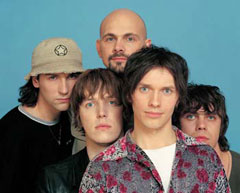
Prāta Vētra

BrainStorm includes, from left, drummer Kaspars Roga, keyboardist Māris Mihelsons, guitarist Jānis Jubalts, lead singer Renārs Kaupers and bassist Gundars Mauševics. (Photo courtesy of MICREC)

Andris Straumanis is a special correspondent for and a co-founder of Latvians Online. From 2000–2012 he was editor of the website.

Let us rejoice in our womanhood

It is a great pleasure and an honour to be here in Goteborg, among such a diverse group of distinguished Zonta delegates from 69 different countries. I thank President Magee and the Swedish chapter of Zonta International for the opportunity to address this convention. I hope that this important event will serve both to raise public awareness about women’s issues, and to induce concrete action for strengthening the role of women in societies across the world.

The participation of Zonta members from the three Baltic States, including Latvia, at this convention in Goteborg is a welcome testimony to the increasingly active role that women from the formerly captive nations of Central and Eastern Europe are now playing in international organizations. Four years ago, at the Zonta convention in Paris, the Latvian flag was flown for the first time in the organization’s history. And although the first Latvian Zonta chapter will celebrate only its tenth anniversary next year, I am proud that it has already acquired the capacity to act as a co-organizer of the event here in Goteborg. That is why the logo of this convention bears the blue and yellow colours of the Swedish flag, along with the carmine and white colours of the Latvian flag. The experience that Zonta’s newest organizers will gain from this event is just one of the benefits that this established organization—already more than 80 years old—can provide to its newer members.

International non-governmental organizations such as Zonta have had an important role to play in making the Baltic countries better known in the world. In that, they have provided a welcome complement to the recognition that our star athletes, artists, musicians, writers and scientists have managed to achieve. Zonta projects in Latvia have benefited hundreds of women and children, including orphans, as well as old age pensioners.

Within the framework of its particular emphasis on children and on women’s education, the Zonta scholarships available to Baltic students and scientists represent a valuable contribution. The Amelia Earhart Scholarship Fund for women scientists in aerospace and engineering, and the Jane M. Klausman scholarship for women students in business and business management are a fine example of encouragement for women to take up careers in the widest possible range of professions.

We are proud of the fact that during the short time that Latvian women have been active in the Zonta movement, two high school students, Dagnija Lībane and Laura Plūmiņa, have received the Young Women in Public Affairs Award. For Laura this convention is an event of special significance, as she will be addressing the participants here in Goteborg on Wednesday, July 3rd. Congratulations, Laura, and all other high school students present.

Ladies and gentlemen, the issue of women’s rights is and remains on the international agenda for the simple reason that in nearly every country on this planet women are still subjected to varying degrees and forms of discrimination. In general, those countries with the least democratic political systems and the most authoritarian forms of government are evidencing the most widespread abuse of human rights and the highest degree of discrimination against women.

In any society, the cultural and social mores regarding the role and status of the sexes, including ingrained prejudices, are culturally determined and transmitted to each succeeding generation through the process of social acculturation. The good news about this is that anything that has been learned can also be unlearned and relearned in a different way. That is why, in many parts of the world, the general attitude towards the role of women in society has been changing, and doing so in the direction of greater equality. In many countries, women’s right to vote and their right to stand for election to public office have become so self-evident that they are taken for granted. Yet nearly a century ago, women were denied these rights nearly everywhere on the planet.

Latvia and Estonia, upon declaring their independence from Russia in 1918, were among the first nations in Europe to accord women both the right to vote and the right to stand for election. Only four other European countries—Norway, Finland, Denmark, and Iceland—had preceded Latvia and Estonia in adopting these progressive measures in the processes of democracy. The last three European nations to lift voting restrictions on women were Switzerland, in 1971, Portugal, in 1976, and Liechtenstein, in 1984.

Today, in the year 2002, such countries as Kuwait—which does not accord women either the right to vote or the right to stand for office—have fortunately become the exception, rather than the rule. While the status of women in many parts of the world has experienced a marked improvement over the past century, this progress has not been uniform and equal across the board. A country may have made strides in one area, yet lag in several others.

In my own country of Latvia, there are many domains of social activity in which women have achieved complete equality. I have already mentioned the right to vote and to stand for office. Latvia now has the first woman head of state in the history of Eastern and Central Europe. The very fact that a woman has been democratically elected as president of one of the three Baltic countries demonstrates, I believe, the high standards our democracies have managed to reach since the recovery of independence in 1991.

Despite the fact that Latvia had to rebuild its economy from the ground up after regaining its statehood, it has become a dynamically developing Northern European nation. A high proportion of women has been represented in a number of professional fields such as medicine, dentistry, law, science and engineering. The number of university students in the country has tripled during the past decade, and over 60 percent of them are women. The proportion of women university graduates reached 63 percent last year, and women are represented in practically all fields of doctoral studies.

However, despite these encouraging developments, Latvia’s women still have a way to go before they become fully equal players in the political, economic and educational decision-making processes of the country. Only two of Latvia’s 15 Cabinet ministers and 21 of its 100 parliamentary deputies are women. In the academic sphere, only 40 of the country’s 300 professors are women, and only 13 percent of the full members of the Latvian Academy of Science are women.

Zonta could prove of valuable assistance in this regard by supporting the internships of Latvian female doctoral students abroad, in partnership with Latvian universities. And Zonta’s academicians could provide significant moral support to Latvia’s aspiring women scientists, by providing them with advice, involving them in international projects, and supporting the publication of their writings in scientific journals.

Ladies and gentlemen, this discrepancy between the proportion of women students and women leaders in many societies is connected in part with the issue of child bearing and child rearing in relation to women’s professional development. Over the ages, the capacity to bear children, which distinguishes women from men, has often served to the great disadvantage of the former in nearly every country on this planet. This function of biological reproduction, which is of vital importance for the continued existence of the human race, compels every childbearing woman to invest a considerable amount of time and energy into child rearing. In addition, women still assume a disproportionate amount of their families’ domestic duties, which include cooking, housecleaning, and doing the laundry. These, as it happens, are not biologically determined.

We face the challenge in the modern world of redefining our image as women, of breaching age-old stereotypes and freely combining useful elements not just from the past and the present, but also from roles or character traits that traditionally have been rigidly separated into masculine and feminine. Some social scientists call this the new androgyny. I would prefer to call it a creative redefinition of what it means to be a human being who happens to be of the female sex.

Girls should not be brought up to fit into narrowly confined sexual, procreational and nurturing roles, but encouraged from their earliest childhood to develop all of their talents and follow their interests, wherever these might lead them. The stereotype that women are not fit for positions of authority is one of the deepest and most resistant to change. Women can help to break it by accepting responsibility whenever it is offered to them and showing by their success that they are able to handle it. Each woman’s success then becomes an encouragement to others, be it in leading a small business or a large enterprise, a municipality or a country.

But success in fields heretofore considered as exclusively masculine should not mean that women have to renounce their femininity or repress their feminine instincts. Girls should be girls and women should be women. They should be neither imitations nor caricatures of men. There are some professions, such as acting, singing and modelling, where clearly a woman’s sexuality and good looks may be a professional asset and even lead to fame and fortune—but only for a very few. Becoming the pampered, decorative wife of a well-to-do husband is also the dream of many a woman, and for a certain number of them it does become a real option. There are other professions where the exploitation of sexuality can lead to the gross exploitation of individuals and endanger their dignity as human beings. These, of course, are prostitution and pornography, which too many girls enter into with the illusion of having an easy life by simply exploiting their physical attributes. Our educational programmes should be designed in such a way that girls, even those from disadvantaged families, even those who are intellectually not the brightest, are protected from making choices that are likely to be harmful to their physical and mental health.

In the Western world, prostitution and pornography (both legal and illegal) are very big business, with links to organised crime, even in those countries where they have been legalised. In the former Communist countries, prostitution used to be strictly controlled by the secret services, and women were used either for rewarding party faithfuls or for serving as agents.

Since the collapse of Communism and the fall of the Iron Curtain, the income disparity between the Western and post-communist countries has created a massive influx of women and minors into prostitution, both voluntarily (on the basis of poverty) and involuntarily through coercion, fraud and brute force.

The large demand for such services by clients in the richer Western countries has thus generated a supply from their poorer neighbours, and resulted in the illicit traffic of human flesh controlled by international crime rings. This has become a serious social problem that requires a concerted international effort in order to be contained. It also requires control measures that would target not just the supply side of the problem, but the demand side as well.

Influential nongovernmental organizations such as Zonta International, which seek to promote justice and universal respect for human rights, have an important educational role to play in this regard. Considerable educational effort is required at every level, with the state at one end and the family at the other. Young girls must be taught that their biological destiny as child-bearers, or that their attractiveness as sex objects need not exclude them from achievements in business, science, politics or the arts.

I hope that women everywhere in Europe and in the world will increasingly explore and enter roles that traditionally have been the exclusive domain of their male counterparts. I am convinced that women will find fulfilment and satisfaction in doing so, and that through their activities, women will contribute even more to the overall wealth of their countries and to the benefit of the societies in which they live.

We must achieve an equilibrium in our societies, and avoid the extremes that we witnessed under the Taliban in Afghanistan, where women were deprived of the most elementary rights and freedoms. We must also avoid the other extreme—the stereotype of the Superwoman as she is sometimes represented in the American popular media, a woman who is supposed to be everything to everybody and do it all at the same time. Superwoman is an impossible example to follow, and women should not be made to feel guilty if their aim in life is to be nothing more—but also nothing less—than an ordinary human being!

To the Zonta sisterhood, and to all women everywhere I would say this: Let us rejoice in our womanhood. Let us continue our efforts to ensure that equal opportunities and equal rights are accorded to human beings of both sexes, wherever they might be born. Let us continue to work for the good of our families, our communities, our countries, and our planet. And to you who are here in Goteborg—do have a splendid convention.

Mūsu pienākums ir atgādināt, ka tas bija noziegums

Augsti godātie represētie, mīļā latviešu tauta,

Mēs esam pulcējušies šeit sēru zīmē par visiem tiem, kas nevainīgi tika tiesāti un sodīti, bet bez tiesas un apsūdzības, pašiem to nezinot. Tas bija noziegums pret cilvēci, tas bija genocīds pret latviešu tautu, tā bija zvērīga necilvēcība, kuru mēs šodien atceramies un pieminam. Mēs noliecam galvas to priekšā, kas pārdzīvoja šo šausmīgo datumu mūsu tautas vēsturē, mēs izsakām līdzjūtību visiem tiem, kas to ir pārdzīvojuši un kas zaudēja savus radiniekus, savus mīļos, savus draugus un kaimiņus.

Šis datums bija viens no pēdējiem lielo deportāciju vilnī, bet arī varbūt pats šausmīgākais izsūtīto skaita ziņā. Bija pieprasīti desmit tūkstoši ģimeņu kā upuri, lai tiktu iebiedēta Latvijas tauta. Un tika izsūtīti trīspadsmit ar pusi tūkstoši ģimeņu, vairāk nekā četrdesmit viens tūkstotis nevainīgu civiliedzīvotāju, lai iebiedētu Latvijas tautu, lai nostiprinātu komunisma režīmu, lai sadzītu ļaudis kolhozos, lai aplaupītu tos, kas kopš klaušu laikiem paaudzi pēc paaudzes sūri, grūti strādājuši un izcīnījuši savu zemi, izcīnījuši to no purvājiem un no mežiem, iekopuši laukus un tīrumus, godīgi strādājuši, audzinājuši savus bērnus, un tagad bez brīdinājuma izrauti no savas dzīves un aizsūtīti mokpilnā tālumā.

Mums ir jāatceras šis notikums, jo to prasa mūsu taisnības izjūta. Mums ir jāatceras šis notikums, lai atgādinātu, ka tas bija noziegums, kam nav attaisnojuma. Ne visi, kas toreiz bija vainīgi, ir stājušies vai kādreiz stāsies cilvēciskās tiesas priekšā, bet es esmu pārliecināta, ka Dieva priekšā savu sodu viņi saņems. Mūsu pienākums ir atgādināt, ka tas bija noziegums, ka tas nav pieņemami. Tie nebija nekādi varoņi, kas uzlika savu parakstu šo nevainīgo ļaužu izsūtīšanai, šādus ļaudis dēvēt par varoņiem ir rupjš izaicinājums pret visām cilvēcības vērtībām, un šādus ļaudis apveltīt ar sarkanām neļśēm ir ciniska un klaja ņirgāšanās par latviešu tautas ciešanām, par cilvēka ciešanām vispār. Tas nav pieņemami, un mēs vienmēr atgādināsim, ka tā nedrīkst notikt, un tas nav un nebūs nevienam pieņemami, nekad un nekur mēs to nedrīkstam pieņemt. Noziegums ir noziegums un kā tādam tam ir jābūt pazīstamam gan mums pašiem un nākamām paaudzēm, gan visas pasaules acīs.

Šogad ir tā sanācis, ka 25.marta izvešanu atcere iekrīt arī Klusajā nedēļā, tieši pirms Lieldienām. Un varbūt mēs varētu izmantot šo datumu sakritību, lai šajā dienā padomātu arī par šśīstīšanos, par izlīgšanu ar savu pagātni, jo ne jau sveša vara vien bija atbildīga par šiem izsūtītajiem. Uz izsūtīto parakstiem bija arī paši latvieši svešu vārdu vidū. Un mēs ļoti labi zinām, ka bija kangari, iztapoņas un oportūnisti, kas ar prieku palīdzēja veikt šo akciju, lai pēc tam karinātu medaļas sev pie krūtīm par šo sasniegumu un nopelnu. Es aicinu Jūs padomāt par to, kā viņi uzvedās tad, kad pārnāca atpakaļ šie izsūtītie no izsūtījuma. Varbūt kaimiņi bija paņēmuši viņu mājas, dzīvokļus un īpašumus. Lai atceras katrs, kas pārgāja pāri pār ielu, kad redzēja pretī nākam savu agrāko skolas biedru, draugu, darba biedru, kaimiņu un izlikās viņu nepazīstam un nepalīdzēja viņam iekārtoties darbā, novērsās no viņa, un tā turpināja to sodu, ko viņš Sibīrijā jau bija paguvis izciest un tomēr pārdzīvot.

Es domāju, ka mūsu tautai daudz kas guļ arī uz pašas sirdsapziņas. Un šajā sēru dienā mēs varam no šīs vainas atpirkties, gan godam cienījot tos, kas ir cietuši, gan arī paši domādami par to, ko mēs varam darīt, lai izpirktu savas tautas vainu nākotnes priekšā. Man šśiet, ka vislabākais gandarījums netaisni cietušajiem būtu gādāt par to, lai tā valsts, kuru mums tomēr izdevās atgūt, būtu stipra un droša, lai tā būtu civilizēta valsts, kurā kaut kas tāds vairs nedrīkst notikt, lai tā būtu valsts, kurā valda tiesu vara un taisnība, lai tā būtu valsts, kurā cilvēka dzīvībai ir augstākā vērtība un kurā mēs visi kopā esam gatavi strādāt un pūlēties, lai veidotu tādu valsti, par kuru tie, kas gāja bojā, varētu justies, ka ir gandarīti un atriebti.

Novēlu visiem šajā dienā, lai jūsu pārdomas jums dod jaunu spēku, ceļot nākotnes Latviju.