Latvia waiting for its daredevils at Sochi Games

image

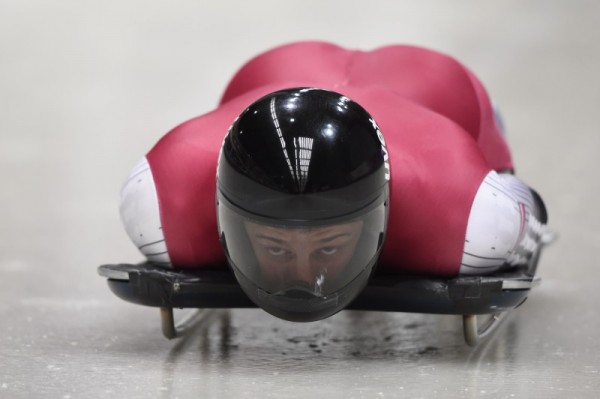
Latvian skeletonist Tomass Dukurs in training at Sochi. Photo: AFP/Scanpix.

Latvia has a respectable contingent of 51 athletes at the Winter Olympic Games in Sochi although 25 are from the men’s hockey team. Medal hopes are resting with Latvia’s daredevils, the sliders, the athletes who compete in the skeleton, luge and bobsleigh.

In particular, the pressure is on the Dukurs brothers, Martins and Tomass. Martins is the reigning World Champion four years straight but missed gold in Vancouver by a whisker and had to settle for silver. Tomass had a breakthrough season and has seen a number of podium finishes on this year’s World Cup circuit. Their father Dainis is their coach. They will be competing on February 14 and 15. Here’s hoping they come through.

Latvia’s lugers have picked up medals at the last two Winter Games. At the 2006 in Turin, Mārtiņš Rubenis picked up a bronze while brothers Andris and Juris Sičs picked up a silver in the doubles at Whistler in 2010. The men have already gone and Rubenis finished 10th at Sochi this past weekend and promptly announced his retirement. Other lugers include Oskars Gudramovičs, Pēteris Kalniņš, Imants Kivlenieks, Kristaps Mauriņš, Elza Tīruma and Ulla Zirne. Gudramovičs and Kalniņš have had top 10 World Cup finishes in 2012 and 2013. The women compete on February 10 and 11, the doubles follow on February 12 with the team relay on February 13.

There is a cute story about how the Sičs brothers got started. They lived near Sigulda, home of Latvia’s only sliding course, and would sneak in to try it out. They were caught by a security guard. Rather than being reprimanded, the guard connected them with a qualified coach and the rest is history. 

Latvia has 8 bobsleighers at Sochi. The two four man pilots Oskars Melbārdis and newcomer Oskars Kibermanis have been on the cusp at the World Cup circuit this year with top 10 and even medal finishes. The rest of the team consists of Raivis Broks, Daumants Dreiskēns, Vairis Leiboms, Helvijs Lūsis, Jānis Strenga and Arvis Vilkaste. They are coached by Sandis Prūsis who competed between 1983 and 2003. Back when Latvia was breaking away from the Soviet Union, he was one of many who risked all to man the barricades in the Riga to protect the nascent government from Soviet attack.

The Latvian bobsleighers are big guys all easily topping 6 feet and 200 plus pounds. One American sports announcer recently commented on television that in the United States guys this size become football linebackers while in Latvia they become bobsleighers. The bobsleigh two man event is on February 16 and 17 while the four man crews race February 22 and 23, the last two days of the Games.

Latvia’s hockey team consists primarily of players from Dinamo Rīga and other KHL teams along with two young budding stars, Zemgus Girgensons from the NHL Buffalo Sabres and goaltender Kristaps Gudļevskis vying for a position with the Tampa Bay Lightning, along with players from a number of other top European leagues. They take to the ice on February 12 when they play the Swiss. They follow with games on February 14 against the Czech Republic and the next day against Sweden in the preliminary round. Further games will depend on how they fare. It will be tough for Latvia to advance.

Latvia’s coach Ted Nolan is also the coach of the Buffalo Sabres. He is a seasoned professional and junior coach and a Native Canadian from the Ojibway nation in Northern Ontario. Nolan has garnered a lot of attention and recently was featured in the Wall Street Journal and how as a Native Canadian he can relate to a small nation like Latvia and the importance of its language – http://online.wsj.com/article/AP6879990d85e74564834f0c58bdd14492.html

The captain of the hockey team is Latvian legend Sandis Ozoliņš, the only Latvian to win the NHL’s Stanley Cup back in 1996 with the Colorado Avalanche. He is currently captain of the Dinamo Rīga team in the KHL. A seven time NHL all-star, he was chosen to be Latvia’s flag bearer at the Opening Ceremonies in Sochi.

While much has been made of Latvia’s orange-brown official uniforms with some commentators calling them downright ugly, this author liked them and pointed instead to the fluorescent green Lithuanian uniforms, the American sweaters that reminded him of tacky Christmas sweaters or the tourist billboard on the Tongan uniforms as being more likely contenders for uniforms off the mark.

Rounding off Latvia’s team at Sochi are downhill skiers Inese Āboltiņa who at 18 is the youngest member, Lelde Gasuma, Martiņš Onskulis, Roberts Rode and Kristaps Zvejnieks, cross-country skiers Inga Dauškane, Jānis Paipals and Aivars Liepiņš, women’s skeleton competitor Lelde Priedulaine, biathlon competitors Zane Juskāne and Andrejs Rastorgujevs, as well as short track skaters Roberto Puķītis and Haralds Silovs. They are not expected to come close to medals.

Latvian sports fans have a number of sites they can use to follow the games including http://sportacentrs.com/soci_2014/ ,  http://www.diena.lv/sochi2014 and http://www.sochi2014.com/en/team-latvia.

Latvian Hockey heading into Sochi

image

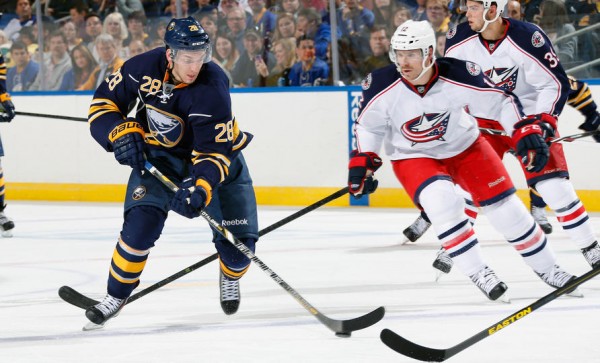
Forward Zemgus Girgensons (#28). Photo courtesy of the Buffalo Sabres

Take note of two names – Zemgus Girgensons and Kristers Gudļevskis. Just out of junior ranks, they’re making a statement. They’re here and ready for prime time.

Forward Zemgus Girgensons, the highest ever Latvian player drafted into the NHL, was only nineteen at the start of this season yet he has nailed down a position with the Buffalo Sabres. Even though Buffalo has been one of the weakest teams this year, Girgensons has shown he can play shoulder-to-shoulder against the world’s best hockey players. Coincidentally his coach Ted Nolan has also been the coach of Latvia’s national team for the past two years. Recently Nolan paid Girgensons a compliment by comparing him to retired hockey super-star Wayne Gretzky in his youth.

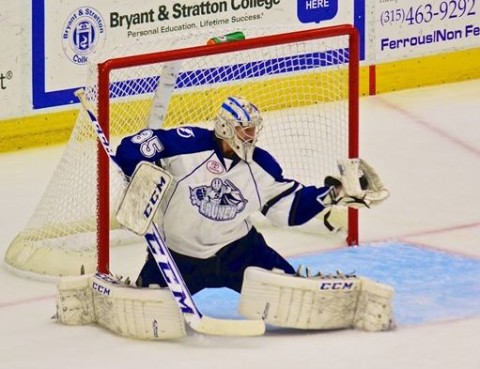
A year ago, lanky twenty one year old goaltender Kristers Gudļevskis was playing with the Dinamo Juniors in Riga. He was Latvia’s third string goalie at last year’s World Championships. But when the top two faltered, Nolan tapped him on the shoulder and Gudļevskis seized the opportunity and starred. A month later, the NHL’s Tampa Bay Lightning grabbed him and Gudļevskis ended up in their training camp. Gudļevskis was first sent down to the Lightning’s farm team in the ECHL two levels below the NHL, but by mid-season, he was up with the Syracuse Crunch of the AHL only one level below the NHL. He has posted excellent numbers and was even named AHL player of the week in January. It appears that the Lightning are betting on Gudļevskis maturing into a NHL goaltender. Gudļevskis will likely be Latvia’s starter at the Sochi games. Goaltending has been a hit and miss proposition for Latvia since the heyday of legendary Arturs Irbe and Gudļevskis might be the answer.

This season the last two of a promising crop of players born between 1986 and 1988 played out their NHL dreams and headed back to Europe. Even though forward Kaspars Daugaviņš spent last year’s abbreviated lock-out season with the Ottawa Senators and Boston Bruins, he was not offered a return contract. He joined Geneva Servette in the Swiss League. The pay is good, the road trips are short, the living conditions are excellent and the level of play is high. Daugaviņš is one of the team’s top forwards and over the Christmas break helped Servette win the Spengler Cup awarded to the winner of a long standing prestigious six team invitational tournament hosted by Switzerland’s Davos Hockey Club. Daugaviņš made the tournament’s all-star team.

Arturs Kulda had played a handful of games with the NHL’s Atlanta Thrashers and Winnipeg Jets but spent last season in Russia’s KHL. After his KHL season ended, the Jets signed him for the final month. He practiced with the team but never saw action and the best the Jets would offer Kulda this season was a two way contract unwilling to guarantee him a position with the big team. Kulda returned to the KHL and signed a two year deal with Ufa. He is among the team’s top defensemen and will be a stalwart for Latvia at Sochi.

Ten or fifteen years ago, there was a host of players from Latvia in North America’s minor pro leagues. These days they are few and far between. The exception this year is defenceman Ēriks Sevčenko from Daugavpils who is playing in the ECHL with the San Francisco Bulls. Unless a player has been spotted by the NHL, most players opt to play in Europe. The pay is better than North America’s minor pros and there are benefits playing close to home. 

There are however a host of juniors from Latvia playing in North America hoping for the big break. At the top are five in Canada’s three major junior leagues. Nineteen year old forwards Roberts Lipsbergs of the Seattle Thunderbirds and Edgars Kulda of the Edmonton Oil Kings are playing their second year in the WHL. Forward Nikita Jevpalovs is also back north of Montreal with the Blainville-Boisbriand Armada of the QMJHL. Eighteen year old forward Rihards Bukarts is with the Brandon Wheat Kings of the WHL as is Georgs Golovkovs with Quebec’s Drummondville Voltigeurs. All five are among the top players on their teams.

Forward Haralds Egle is playing in the USHL with Michigan’s Muskegon Lumberjacks but has not been able to put up the numbers. The USHL is the top junior league in the USA but a notch below Canada’s major junior leagues. The NAHL is a level below the USHL and three players from Latvia are on the Soo Eagles in Northern Michigan. They are defenceman Kristofers Bindulis and forwards Bruno Birzītis and Sandis Zolmanis. Kristaps Bažēvics is with the Wichita Wildcats also of the NAHL.

Among the juniors, Jevpalovs and Bindulis have attracted attention and are on the list of prospects prepared by the NHL’s Central Scouting Bureau. That doesn’t mean other players don’t have a chance but the odds are against them.

There are probably at least a dozen younger players from Latvia scattered from coast to coast playing high school and lower level junior hockey in the USA. Canada restricts imports from Europe to just two on each major junior team while the USA also has restrictions but unlike Canada, Europeans can play at any level.

Two players are with tier-1 NCAA university teams in the USA. Teodors Blūgers, a draft pick of the NHL’s Pittsburgh Penguins, is a sophomore at Minnesota State University Mankota while Ralfs Freibergs is also in his second year with Bowling State Green. Twenty two year old Freibergs was selected for Latvia’s team at Sochi.

Lipsbergs, Kulda, Jevpalovs, Golovkos, Egle, Birzītis and Bažēvics joined Latvia’s Under 20 (U20) team at the tier two World Championships in December held in Poland. The exclusion of Bindulis was a surprise. The U20 juniors were charged with winning the tournament and returning to the elite level next year. They failed and lost in the key game against Denmark. This was disappointing particularly to Latvian fans in Eastern Canada who had hoped to come out and cheer Latvia next year when the elite championships are being hosted in Toronto and Montreal. There is still a chance that the following year Latvia could be up when the championship will also be played in the same two cities.

Latvia’s Under 18 (U18) team is also in the tier two division. Their championship will be held this April in France and like the U20 juniors, they will try to win a ticket to the elite level. Latvia’s women are stuck in tier two and unlikely to move up at their championships that will be held in Ventspils this April. With less than 100 female players, there is not enough skill and depth to make the leap.

Dinamo Riga has had a successful season so far in the KHL, the world’s strongest league after the NHL. Last year Dinamo finished out of the play-offs but took the Cup of Hope, derided by some as the Loser’s Cup, beating other also-rans. In the early part of this season they were among the league’s top teams but since then have dropped in the standings but in January still sit comfortable at 7th in the 14 team western conference. The bulk of Dinamo consists of players from Latvia although there is also a Swede, a Czech, several Canadians and Slovaks on the roster. Dinamo is a low budget team so you won’t see any big stars in its line-up. They are captained by Latvian hockey legend 41 year old Sandis Ozoliņš.

Hockey Club (HK) Riga serves both as a farm and a development team for Dinamo’s top players under 22 years. It plays in Russia’s MHL junior loop and in January was in the top six of the 20 team western conference. Dinamo Juniors is also part of the Dinamo system. Most of its players are between 17 and 19 and the role of the team is to develop young local talent. The Juniors play in the semi-professional Latvian Championship with players of various ages competing on six teams – Kurbads, Riga/Prizma, Zemgale/LLU, Dinamo Juniors, Ozolnieki/Monarch and Daugavpils. Sadly after many years there is no team from Liepaja after the sponsor steel mill Metalurgs went bankrupt.

The best players from Latvia not in North America are in the KHL, the majority with Dinamo Riga although Bārtulis, Kulda, Karsums, M. Redlihs and Sprukts went for more money with other KHL teams. Some play in other top European leagues. Veteran Vasiljevs plays in Germany’s top loop while Daugaviņš and Ķēniņš are in the top Swiss league. Others play in various mostly second tier European, Russian, Belarussian, Ukrainian and Kazakhstani leagues. Most of these players are journeymen who bounce from one league to another from one year to the next.

Twenty two year old Ronalds Ķēniņš is now the property of the NHL’s Vancouver Canucks but he was loaned out to the Zurich Lions to play out his second and last contract year with the Swiss team. Next year he will most likely be with Vancouver’s top AHL farm team the Chicago Wolves.

At the start of January, Latvia’s national team head coach Ted Nolan announced the 25 player roster for the Winter Olympic Games at Sochi. They include – Goaltenders: Kristers Gudļevskis (Syracuse „Crunch” AHL), Ervīns Muštukovs („Esbjerg” Denmark), Edgars Masaļskis („Poprad” Slovakia); Defence: Sandis Ozoliņš, Arvīds Reķis, Georgijs Pujacs, Krišjānis Rēdlihs, Kristaps Sotnieks (all from „Dinamo” Riga KHL), Oskars Bārtulis (Doņetsk „Donbass” KHL), Arturs Kulda (Ufa „Salavat Julajev” KHL), Ralfs Freibergs (Bowling Green State NCAA); Forwards: Miks Indrašis, Mārtiņš Cipulis, Vitālijs Pavlovs, Lauris Dārziņš (all from „Dinamo” Riga KHL), Mārtiņš Karsums (Moscow „Dinamo” KHL), Miķelis Rēdlihs , Jānis Sprukts (both from Jaroslav „Lokomotiv” KHL), Ronalds Ķēniņš (Zurich „ZSC Lions”), Kaspars Daugaviņš (Geneva „Servette”), Herberts Vasiļjevs (Kreifeld „Pinguine” DEL), Koba Jass (Liberec „Bili Tygri” Czech Republic), Juris Štāls („Poprad” Slovakia), Armands Bērziņš (Atyrau „Beybaris” Kazakhstan), Zemgus Girgensons (Buffalo „Sabres” NHL).

As a coach, Nolan had NHL, AHL and Canadian major junior coaching experience before being named as Buffalo’s head coach in November. During his tenure with the Latvian team, he has made it clear that no one has a guaranteed spot on the team. Everyone, veterans and rookies alike, need to earn a position. It’s not just about skill and performance but also about character and having the right attitude. Nolan won’t take a player who will sulk if assigned to the third or fourth line with less ice time. He wants someone who knows his role and what’s expected.

Unlike Latvia’s bobsleigh, luge and especially skeleton athletes who expect a medal or two at Sochi, Latvia’s hockey team is just happy to be there. The Winter Games run from February 7-23. Twelve countries have qualified in hockey. They have been divided into three groups. Latvia will play Switzerland on February 7, the Czech Republic on February 14 and a day later Sweden. Further play will depend on results. The first four teams will automatically advance to the quarterfinals. The remaining four will be the winners of the 5th vs 12th place, 6th vs 11th, etc. games. For Latvia to advance, it will need an upset against a stronger team. That will be tough but Latvian sports fans should remember that it’s an accomplishment just to qualify for the Games. These will be the fourth consecutive Winter Olympic Games for Latvia’s hockey team.
 

image

Goaltender Kristers Gudļevskis. Photo courtesy of the Syracuse Crunch

Latvian pioneers in Manitoba

image

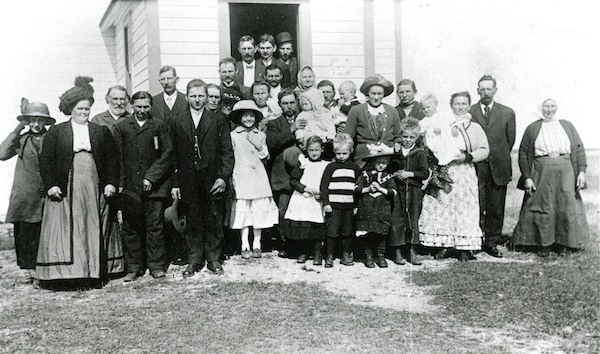
Hardy Latvian pioneers at the Fairville School north of Dauphin in the early 20th century where they held social functions and religious services. Photo credit: Ojārs Kļaviņš (deceased).

What started out as an article on the history of Latvians in Canada’s Manitoba province is now morphing into a book as more and more material gets uncovered. Why Manitoba? Before World War I, Manitoba had the largest concentration of Latvians, or the Lettish as they were called back then, in Canada. It was home of perhaps up to 1,000 Latvians living in three areas of the province.

The first Latvian in Manitoba was Jānis Ālers (John Aller) who settled near Sifton north of Dauphin. He arrived there in 1895 via the United States after spending five years in South Dakota. He invited friends and relatives from the Bauska area to join him. Land was cheap and the climate was similar to Latvia’s. And $10 bought you 160 acres, as long as you cleared a quarter of it and put up a dwelling within three years. Nineteen families followed over the next 10-15 years. They settled around Sifton, Fork River, Fishing River and Oak Brae. For the most part, the arrivals were peasants who were pursuing the dream shared by many Latvians of that time, namely to own a piece of land that they could farm.

Other Latvians homesteaded northeast of Winnipeg in Libau, Lac Du Bonnet, further east in Lettonia, Lee River and still further east in Bird River where the Prairie gives way to the boreal forest of the Canadian Shield near the Ontario border. Among the Bird River settlers were a number of families who had arrived via Brazil which they abandoned because of the heat and tropical diseases.

The area east of Lac Du Bonnet was also home to Latvians who fled Czarist retributions following the 1905 Revolution when workers and peasants inspired by Marxist teachings rose up against the hated Russian factory owners and Baltic German landowners who ruled most of the countryside. They made their way to Manitoba through the United States. Some were committed Marxists or Socialists, others were caught up in the events of the time, while still others fled to avoid conscription.

There is documented evidence that the “politicals” continued to meet in Manitoba well into the 20th century holding lectures and discussion evenings in some cases with visiting speakers. Some gravitated to the nascent Canadian Communist party while others joined the socialist and labour movement on the Canadian Prairies. Many became disenchanted by what they saw in Stalinist Soviet Union. Still others abandoned their youthful zeal and farmed or became entrepreneurs.

Then there were those who preferred cities and settled in Winnipeg. In 1912 Jānis Šmits founded the Lettish Friendly Association of Winnipeg and in 1913-14 published Kanadeetis, the first Latvian newspaper in Canada. It was written in old Latvian orthography using Gothic script. When Latvia gained independence, Šmits and his family moved back to Latvia only to be deported by the Soviets in 1941 and then perish.

The Latvian pioneers maintained their traditions. There were community events. Christmas and Easter were celebrated the Latvian way. So was Midsummer Night’s Eve or Jāņi. There were dances to phonograph records sent from Latvia. Local musicians played. They read Latvian books and newspapers. Some even visited Latvia or had relatives come over for visits. Once or twice a year visiting Latvian, Estonian or German Lutheran pastors held services and christenings. The first generation born in Canada typically spoke Latvian at home with their parents and in some cases grandparents who had also come along.

There were rural schools where 75% of the students were Latvian. Teachers ordered the children who only knew Latvian to speak English. Community halls were built in Lettonia and Lee River. The one in Lee River is still standing today. Businesses were formed and some still exist – Lindenberg Seeds in Brandon and Osis Lumber in Lac Du Bonnet.

Over time assimilation took its toll. Many of those born in Canada or in turn their children married locals. Many moved away to cities looking for jobs. However the early pioneers were still there to “greet” the Post World War II refugees who had fled the Soviet occupation of Latvia. They came from European Displaced Persons camps to Manitoba as contract farm workers, lumberjacks, construction and hospital workers or domestics. They were free to go after two years and many then headed for cities like Winnipeg. The Post War Winnipeg Latvian community was born.

For the most part, the earlier pioneers and their descendants, got along well with the new arrivals. There were intermarriages and some bought properties or farms in the original colonies. Throughout the 1950s, Latvian pastors from the newly founded community headed out to the countryside to hold services. Local Latvian theatre troupes from Winnipeg also entertained those in the pioneer communities. The two groups often celebrated Jāņi together. But as the original settlers grew old, the pioneer communities petered out by the late 1950s.

Meanwhile throughout the 50s, 60s and 70s, there was a thriving Post War Winnipeg Latvian community. Perhaps numbering up to 500 at its peak, there were two Lutheran congregations, the Winnipeg Latvian Society, the Daugavas Vanagi veteran’s organization, a university student alumni organization, a youth group, a Sunday School and many functions ranging from formal commemorations on November 18 when Latvia celebrated its independence to dances and outings. For decades, the Society published Informators, a monthly news bulletin. Among its subscribers were the pioneers and their children or at least those who could still read Latvian.

The Post War Winnipeg community went into decline in the 1980s. The earlier refugees were ageing. Their Baby Boomer children had gone to university, started careers, intermarried, were raising families or moved away from Manitoba looking for better jobs. Manitoba was also isolated and far from the larger and still thriving Latvian communities in Canada and the United States. The community stalwarts who had run things since day one held the fort but by 2007 everything in Winnipeg had been shut down.

This September it was time for me to head out west to Manitoba and to supplement my research by seeing the pioneer colonies with my own eyes and meeting contacts that I had established by phone or email. Over the course of 6 days, I covered 1,400 km or 870 miles.  I met with several dozen people, most of them descendants of the early pioneers but some post-war arrivals and their children. Several joined me as we visited buildings on pioneer homesteads still standing although in disrepair, as well as cemeteries where Latvians lie. We stopped in Libau and Lettonia, two of the Latvian place names in Manitoba. On the trip east of Lac Du Bonnet, I was joined by local historians.

In Swan River about 6 hours northwest of Winnipeg I met Aina (Gulbis) Turton. Originally from the other side of Manitoba, her family was one of those who arrived from Brazil around 1910. Aina was born in 1926 and grew up in Bird River. Several years ago she authored a delightful book of personal memories called The House Beside the Rock Hill – A story of pioneer life in a Latvian settlement.

Although few descendants of the early pioneers could still speak Latvian (but none had problems pronouncing Latvian names), I was pleasantly surprised that most were cognizant and proud of their Latvian roots. I was shown recently-printed books on Latvia and its history. There are readers of Latvians Online in rural Manitoba. Some have visited Latvia. Some have been down East to attend Latvian Song Festivals. Others have shopped for Latvian goods online or stopped by the Latvian Centre in Toronto. There were Latvian hockey jerseys and t-shirts. Some had immersed themselves in family histories, digging through archives and tracing their roots back to Latvia.

One of the projects that a couple of us decided to see if we could make happen is getting the province to set up several official historical markers attesting to the Latvian footprint in Manitoba. This year, the Lac Du Bonnet Historical Society is planning a Latvian-themed annual wine & cheese reception.

While their numbers are not huge, the descendants of the Latvian pioneers in Manitoba represent a constituency to which the Latvian community in Canada has given little thought. Manitoba is perhaps unique in that there are few places where the pioneers or veclatvieši as they are called in Latvian, settled in numbers. Alberta is the only other place in Canada and the numbers were smaller and the communities dissipated sooner. There is Wisconsin in the United States and the Boston, New York and Philadelphia Latvian communities trace their roots back to the late 19th century.

The story of Latvian pioneers is a fascinating one and my project continues as I try to digest and work new information, stories, photographs and artefacts into my manuscript. It is also an important story for the Latvian community abroad to ponder as the ranks of the veclatvieši are swelled by descendants of the post-war Displaced Persons as they get assimilated into the fabric of Canada and the United States. The dates their parents or grandparents arrived may be different, the stories of their predecessors may be different, but they represent a similar constituency with connections to Latvia and the Latvian heritage that cannot be ignored.


image

93 year old Arnold shows his family’s homestead near Lettonia. His parents arrived from Latvia in 1910. Photo: Viesturs Zariņš.