
Powerful biography traces mother’s life through prose, photos

Portrait of a Latvian Beauty

Portrait of a Latvian Beauty, a book of 113 pages and more than 120 photographs, presents a powerful visual odyssey of a Latvian refugee family after it is forced to leave Latvia for Germany and then Canada.

The author, Ilze Berzins, focuses on her mother’s story and provides a vision of the past as perceived by the “Latvian beauty” through many of her life’s wrenching changes.

In general one can trace very similar patterns for thousands of Latvian refugees who fled from the menace of the Red Army and a Stalinist occupation with all of its death threats and repressions. To be sure each family’s story has its own unique characteristics. This particular story is coloured in part by the reminiscenses of a dutiful daughter, intermingled with a touch of hero worship and a certain innocent nostalgia for a lost mythical paradise whose images have been passed down from one generation to the next.

The mother, Ilze Henriette Bērziņš (née Beldavs), was born in the Russian Empire in 1912, and died in Canada in 2008. Ironically, at the age of three, her family fled into Russia, running away from the Germans, but in 1944 she was forced to flee to Germany, running away from the Russians. This aspect of Latvia, as a major crossroad for foreign armies and killing fields, is briefly but well captured by the author in her broad overview of Latvia’s history.

The idyllic life of her mother in pre-war Latvia is described in almost poetic paragraphs. The mother spent winters in the city of Valmiera, a historical jewel on the banks of the Gauja river, but her most fervent emotional attachment was to the summer residence near Stende in Kurzeme, called Bēķi. Indeed the first chapter in the book describes the mother’s first trip by herself to Bēķi, recounting emotions and details which no doubt the author has heard countless times in the family’s kitchen.

The memory of Bēķi suffuses the book and the book well describes the dream-like impact and the virus-like contagion of such a mystic vision:

The sun always shone at Bēķi. Despite her beautiful gardens in Canada, Bēķi always remained for my mother her special enchanted place, shining all her life with untarnished nostalgia. From her rose-tinted storehouse of memory, an idyll emerged and I too became enchanted by Bēķi.

This dream of course could not survive reality and certainly not the heavy burden of Bolshevik kolhoz imprimatur. Indeed throughout all Latvia this period of occupation has left the most ugly scars and broken cement jetsam in the countryside where once natural beauty reigned. The author visited Bēķi after Latvia’s independence and was glad that her mother had not seen the devastation.

Nevertheless this corner of paradise provides the bookend statement of the importance of Bēķi. A superimposed photo of a young girlish mother walking above the tree tops is framed by the dream of Beki as stated in the mother’s “own words”:

I have been promised that, when my turn comes, I will be taken to Bēķi and to our ancestral resting place where my grandparents lie, and my parents, and my beloved husband. There I will again be free to race with the wind through the fields and meadows, wander the burgeoning woods, and then, when exhausted, happily throw myself down in the orchard under the fragrant apple trees and turn my gaze up to the limitless sky.

The book’s clear advantage is its compact nature. It can be offered to friends or younger family members who would otherwise not read a bigger and fuller tome. It offers a visual and punchy answer to anyone asking “how did you (or we) end up in Canada?”

The photographs alone provide a portal into a lost world of ancient Latvia and the Displaced Persons camps of Germany where Latvian culture pulsated as never before or after. No doubt many will be surprised by the elegant clothing worn by Latvians in czarist and independence days. Only Bolshevik anti-bourgeois ideology was able to dent this tendency for Latvians to present themselves in the best garb. One photo in particular intrigued me. As a result of wartime fuel shortages, a vintage family car was outfitted with a gasification carburetor enabling wood to be used for the internal combustion engine. Is this the next big idea that could counter the demands of a $300 oil barrel?

On a personal note I should point out a certain resonance of the experiences of my own family that parallel those of the author’s descriptions. The author’s parents met as agronomy students and married May 31, 1941. My father (born in 1914) also studied agronomy and did his practicum duties at Auce. Indeed, he might have attended the same classes. My parents married in June 1941, immediately after the Soviet army retreated ahead of Nazi Germany’s “Operation Barbarossa.” Turbulent times did not allow for the luxury of drawn-out trial “common law” cohabitation. Our family also boarded a ship from Liepāja, braving the Soviet attack planes and submarines to reach DP camps in Germany. Our trip to Canada was also rough and sea sickness was rampant. I also remember the first view of Canada at Halifax, when our ship docked at the same Pier 21 described by the author as the equivalent of Ellis Island in the United States. I do remember the ugly warehouse building of Pier 21 now a recognized historical memorial. Thereafter the view of Canada from the train window improved immeasurably with the alternating fields and forests and the many waving schoolchildren. Finally I share a common year of birth with the author and can visualize many of the described events from a similar age platform.

While the book has many positive qualities, one can always find room for alternative approaches. For example, the introductory chapter could have been better placed after the next chapter, which outlines the mother’s essential background and ancestry. The second half of the book dealing with Germany and Canada seemed at times uninspired although providing some individual masterful paragraphs. The reader is also left to guess about the last few years of the mother’s life when she became more “difficult.” Given the title it is obvious that the mother would receive the most attention. Nevertheless the father, who is mentioned almost en passant seems deserving of a much larger part in the book. Indeed, his diary and his numerous photos form the basis of much of the book’s content.

One index of the strength of attachment to Latvia by the author’s parents is the retention of the original Latvian names by their children. The author’s brother, who became crown attorney for Canada’s capital region, was frequently seen on Canadian television as Andrejs Berzins rather than “Andrew,” which was a common practice among many intent on blending in. Similarly the author herself has retained her original Latvian version of Ilze.

In conclusion I should mention that Ilze Berzins has written many books. One of these, Happy Girl, dealt with her return and experiences in Latvia. The murder mystery Riga Mortis was a book I could not lay down before having read it from cover to cover.

Details

Portrait of a Latvian Beauty

Ilze Berzins

Ottawa:  Albert Street Press,  2009

Notes: The book is available from the author’s website, www.ilzeberzins.com.
Latvian refugee’s memoir captivates reader at many levels

Description of image

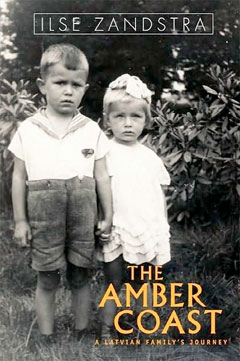
Sometimes the best way to absorb the events and flow of history is through autobiography, especially one that manages succinctness with an elegant style. The Amber Coast: A Latvian Family’s Journey by Ilse Zandstra, née Ilze Zālīte, is captivating at many levels.

The saga of one family’s contented life in Latvia rudely interrupted by the Soviet and Nazi occupations and then ejected like refugee flotsam to many countries is both similar and different from that of several hundred thousand Latvians who fled the Red Army and ended up in the West. The Zālīte family, with two children and carrying only minimal possessions stuffed in a few suitcases, was forced to leave Latvia to avoid a one-way trip to Siberia. They left their prized possession of an Opel Kadett automobile on the docks of Liepāja.

The post-Latvia odyssey was determined in large measure by the nautical engineering profession of Jānis, the sometimes gruff and wilful head of the family. His reputation as a competent and unusually loyal ship specialist became a guarantee of sustenance and survival in chaotic circumstances. The family settled first in Poland, then in Germany, followed by Sweden and finally Montreal, Canada. All these locations provided work in shipyards for Jānis.

The memories of the disruptive changes are recorded from the perspective of a small girl, called Ilzīte by her father, and from her extended interviews of father Jānis, together with information gleaned from letters, documents, clippings, photographs and testimony of a large bevy of relatives.

The major framework of the book and the catalyst for a renewed interest in the history of her family’s wartime and post-war experience was precipitated by a return trip to Latvia in the summer of 1990. Together with her father, Ilse was signed up for a trip on a special chartered Swedish ship, the Baltic Star, also known as “Happy Ship” and the “Baltic Bible Banana Boat.” At that time, Latvia was still a part of the USSR but undergoing profound changes that ultimately led to full independence one year later.

Valuable insights are provided by the initial clash of beliefs, values, ideologies and guilt placement as the Western branch of the family interacts with the relatives “left behind” in Latvia. Misunderstandings and disappointments from both sides reflect the experience of most Western Latvians on their first contact with the homeland.

The author’s keen eye for the subtleties of human interaction and body language provides much material for reflection on what a half century of separate Communist and Western socialization (brainwashing) can accomplish. The trip to Latvia becomes a catalyst for Ilse’s newfound interest in her own background: “My trip to Latvia awakened in me a desire to know more about my past and that of my family.”

Ironically, Ilse, like many immigrant children, had been reluctant to publicize her Latvian heritage, preferring to blend in with the local Swedish and then Canadian culture and language. She even rebelled at her parent’s insistence on using Latvian in conversations with her older brother, Peter. Yet, half a century later, the seeds of Latvian attachment, so adamantly inculcated by her parents on a reluctant soul, finally found a resonance in their daughter. This ancestral echo bloomed and renewed a curiosity about her Latvian roots and the fate of her extended clan both in Latvia and abroad.

Besides the incursions into various episodes of refugee life, tribulations and survival adaptations, the book provides a very detailed portrait of the indomitable patriarch, Jānis Zālīte. He is the type of individual who best represents the protestant work ethic and the Germanic attachment to ordnung. Indeed, his mother was of German origin and taught him this language and culture. His Latvian father, an upwardly mobile teacher, ended up working in Moscow where Jānis was born in 1907.

Throughout life, Jānis abided by the motto of his Latvian fraternity, Tālavija, “darbs ceļ vīru” or “work makes the man.” His type is also the ideal fountainhead of self-reliant entrepreneur who adapts to all curve balls thrown by unusual circumstances. His industriousness was best reflected in a Displaced Persons camp in Oldenburg, Germany, where he decided to start a woodworking shop employing 30 people rather than sitting and waiting for orders from the United Nations Relief and Rehabilitation Administration. The shop successfully created wooden clothes pegs, clogs, toys, benches and large solid suitcases for future expected moves. However, this example of free enterprise did not sit well with the bureaucrats and the shop was forced to close. Fortunately, at that point Janis received an invitation from a Swedish shipyard in Goteborg and the family left this deadend, crowded refugee camp.

There was also the other side to Jānis that permeates many of the conversations between father and daughter, best reflected by the phrase, “Do not interrupt, Daughter!” Indeed, this father-knows-best philosophy was very deeply ingrained in most Latvian families of that vintage. The author summarizes the essence of this cultural thread: “In many ways, my Father was much like his father. Both were strict disciplinarians, and both expected their orders to be obeyed without question. No talking back. No questioning authority.”

The book incorporates many vignettes of Latvian history and culture in a style similar to that of Modris Eksteins in his book, Walking Since Daybreak. Indeed, Ilse claims that she was inspired to write her own story after reading Eksteins book.

The dialogue for the most part is punchy and easy to follow. Stylistically a major contribution is the author’s almost poetic capture of certain emotional events that most Latvians hold dear. For example, her description of the Latvian Song Festival in 1990 on the eve of Latvia’s independence, in an outdoor stadium with over 200,000 attendees and 20,000 singers is a classic of concentrated visions and emotions:

All of a sudden, a loud hum fills the air like a giant swarm of bees as the singers start to limber up their vocal chords. First and second soprano,alto, tenor, and bass, their voices vibrate in an ageless, mystical Ooommm. Folk songs are my homeland’s prayers, its collective memory, its history and lament, even its armour during times of siege or occupation. The refrains can be poignant as the end of summer, or as happy as sunlight dappling white birches. Music is the voice and mood of my people, with one recurring theme, love of their country, and tonight is a night for unrestrained patriotism, for celebration. High up on a specially erected platform and looking no bigger than an insect, a white-gloved conductor stands; with a leap and great sweeping motions of his arms, he starts up the twenty-thousand massed choirs. Sweet notes burst from the singers’ mouths. The conductor sways this way and that, and the music follows him. He spreads his arms wide, and then lifts them, and the melody swells, filling the night with music. The audience is enthusiastic, rivalling the best rock concert crowd. We clap and cheer and shout bravo, over and over.

The book is of obvious interest to all Latvians and a great resource for children and grandchildren of Latvia’s refugees. It is a great source for Latvia’s inhabitants whose knowledge of the exodus of their brethren is woefully inadequate. More importantly, the book has the literary and psychological qualities that can be used as a base of study by all those who want to delve deeper into the psyches of new arrivals in a new land.
One can of course question certain sequence divisions of the book and the purposely stilted phrases attributed to Latvian relatives in the homeland. Another edition of the book should very definitely include an introductory scheme outlining all names and their relationship to the main characters.

The book will suscitate introspection and comparisons for many Latvians abroad. It will bring back memories and may be a catalyst for conversations between generations. In any case, the book is “a good read”” and very entertaining in its own right and should help to provide valuable context to those interested in researching Latvian history, culture and interpersonal relations.

Details

The Amber Coast: A Latvian Family’s Journey

Ilse Zandstra

Tamarac, Fla.:  Llumina Press,  2010

ISBN 978-1-60594-569-9

Where to buy

Purchase The Amber Coast: A Latvian Family’s Journey from Amazon.com.

Note: Latvians Online receives a commission on purchases.

Uzticības deficīts varas iestādēm

Latvijas Satversmē rakstīts, ka “Visa vara pieder Latvijas tautai”. Diemžēl, vairums Latvijas iedzīvotāju atrodas bezvaras stāvoklī un jūtas atsvešināti no valsts vadības un valsts iekārtas.

Šī neapmierinātība un plaisa starp varu un tautu šodienas Latvijā izpaužas daudzos veidos, piemēram – Baltic Data House aptaujas liecina, ka 52% latvieši bijušo vienpartijas komunisma sistēmu vērtē pozitīvi, toties tikai 49% dod pozitīvu vērtējumu patreizējai politiskai sistēmai. Starp krievvalodīgajiem 72% pozitīvi vērtē bijušo sistēmu, bet tikai 39% līdzīgi atsaucas uz patreizējo demokrātisko sistēmu.
2004. gada aptaujā, tikai 39,04% piekrita ka procesi Latvijā kopumā noris pareizā virzienā, toties 53,2% tam nepiekrita.

Eurobaromether pētījumā 2004. gada jūlijā un 2004. gada rudenī tikai 35% valsts iedzīvotāju bija apmierināti ar demokrātiju Latvijā.

Atmodas gados lielais vairums cilvēku cīnījās par demokrātisku valsti pilnā cerībā, ka brīvība nesīs līdzi paaugstinātu labklājību, saticību, ekonomisko uzplaukumu un pilsoņu līdzdarbību valsts politikas veidošanā. Toreiz vairums cilvēku cerēja, ka atgriešanās Eiropā ļaus Latvijai drīzumā baudīt līdzīgu dzīves līmeni un politisko stabilitāti, kas atrodama rietumu demokrātijās. Toreiz gandrīz neviens neapzinājās, cik grūts būs šis ceļš, cik daudzi šķēršļi būs jāpārvar un cik daudz upuru būs jānes šī mērķa sasniegšanai.

Viena no smagākajām sekām šim procesam ir tāda, ka lielais vairums Latvijas iedzīvotāju ir zaudējuši ticību valsts iestādēm – valdībai (26%), Saeimai (21%), tiesām un politiskām partijām (6%). Cilvēki ir atsvešinājušies no saviem politiskiem pārstāvjiem un katrās vēlēšanās meklē jaunu “glābēju” partiju vai jaunu “godīgu cilvēku” grupējumu, lai izskaustu korupciju un ieviestu valstī kārtību. Un pēc katrām vēlēšanām daudziem cēlās cerības ir smagi iedragātas un bieži rodas cinisms pret visu politisko un kādreiz pat pavīd naids pret Latvijas patreizējo iekārtu.

Esmu dzirdējis, ka inteliģenti cilvēki saka:”Es mīlu Latviju, bet ienīstu šo valsti.” Šī uzticības krīze, kura manāma samērā plašos slāņos, pārāk ilgi uzņemta vienaldzīgi. Tikai nesen šī problēma sīkāk apskatīta valsts prezidentes izveidotās stratēģiskās analīzes komisijas pētījumā “Cik demokrātiska ir Latvija – Demokrātijas audits”. Pēc Baltic News Service pētījuma atreferējuma lielākie mīnusi demokrātijas attīstībai ir lielais nepilsoņu skaits, tiesu varas finansiālā un institucionālā atkarība, partiju finansiālā atkarība no šaurām interešu grupām, augsta līmeņa politiķu iesaistīšanās koruptīvos darījumos, divu valodu mediju informatīvo telpu pretnostatījums un dialoga trūkums starp tām, zemais iedzīvotāju īpatsvars, kas iesaistās sabiedriskās aktivitātēs, kā arī zems vietējo pašvaldību finansējums autonomā līmenī. Domāju, ka viens no svarīgākajiem šķēršļiem ir PSRS mantojums, kurš atstājis dziļas pēdas cilvēku domāšanā, un vērtību apziņā. Varētu likties paradoksāli, bet daudziem, kuri piedzīvojuši komunistisko sistēmu grūti iejusties brīvības vidē. Un šī problēma atrodama pie visām pēckomunisma iekārtas valstīm. Neapšaubāmi, ka pati brīvība daļēji novedusi pie daudzu cilvēku neapmierinātības. Ja kādreiz Latvijas PSR Augstākajā padomē visi runāja un balsoja 100% saskanīgi, tad tagad valda domu un ideoloģiju atšķirības un konflikts. Viens saka tā, bet otrs galīgi pretēji! Un cilvēkiem grūti saredzēt, kur atrodas taisnība. Ja kādreiz prese pamatā slavēja iekārtas sasniegumus un ļoti reti runāja par netaisnībām, korupciju, noziegumiem, vardarbību, tautību konfliktiem, tad tagad plašsaziņas līdzekļos galvenais uzsvars ir uz negatīvām ziņām, kritiku, un pat atsevišķu politiķu un partiju nomelnošanu. Ja kādreiz valstij piederēja ražošanas līdzekļi un iekārtas, zeme un lielais vairums māju un dzīvokļu, tad šodien cilvēki var brīvi pirkt un pārdot, iesākt uzņēmējdarbību, pieņemt citus darbā vai atlaist, vadoties no tirgus, no darba konkurences un personīgiem uzskatiem. Arī bezdarbs agrāk nebija, bet tagad rada izmisumu un psiholoģisku krīzi. Līdzīgas pārmaiņas notikušas visās bijušajās komunisma zemēs un visās šī brīvība atstājusi plaša mēroga rūgtumu un vilšanos.

Brīvība atvedusi ekonomisko polarizāciju un nevienlīdzību, kur zināms procents pelna lielas algas, bet vairums tik tikko spēj samaksāt par dzīves nepieciešamībām. Šādu strauju pārvērtību apstākļos Latvijā izveidojusies neuzticības krīze politiskai iekārtai, jo tā nav spējusi situāciju ievērojami uzlabot un negatīvās parādības izskaust. Bez tam atsevišķi cilvēki, partijas un iestādes ir zaudējušas tautas uzticību, jo darbojušās savtīgiem mērķiem, nevis visas tautas labklājības celšanai. Arvien vairāk tautas masa neuzticas politiskai un valsts varai un savukārt vara pašos pamatos arvien biežāk neuzticas tautai. Rodas spriedze starp elitārismu un tautas populismu, un diemžēl Latvijā komunikācijas brīvība un regulāra mijiedarbība starp vadošo eliti un tautu ir aizsērējusi vai vēl nav pilnībā izveidota. Toties jāatzīmē arī atklātības iedīgļi, kas sākušies valsts varas kulāros. Apmēram 120 nevalstisko organizåciju piedalās valsts sekretāru sanāksmēs un dažas arī tieši sadarbojas ar ministrijām lēmumu pieņemšanā. Tomēr visumā vēl arvien valda lēmumu un informācijas slepenības sindroms. Lai sasniegtu pilnvērtīgu pilsonisku sabiedrību, mums jāsaskata valsta varas ķēdes vājie posmi un jādod alternatīvas šo vājo posmu aizstāšanā vai stiprināšanā. Vēlos pieskarties sekojošiem četriem vājiem ķēdes posmiem:

  • Vēlēšanu sistēmai.
  • NVO lomai demokrātijas attīstībā.
  • Nelatviešu integrācijai varas iestādēs.
  • Valsts pārvaldei un ombudsmena jeb tiesībsarga ieviešanai.

Patreizējā vēlēšanu sistēma neveicina saišu stiprināšanu starp varas eliti un tautu. Proporcionālā vēlēšanu sistēmā pirmā lojalitāte tiek dota partijai nevis vēlētājiem, jo katra partijas biedra iespēja ierindoties vēlēšanu saraksta augšgalā atkarīga no viņa partijas biedriem. Bez tam šajā sistēmā neviens deputāts neatbild par zināmu ierobežotu teritoriju un tās iedzīvotājiem. Simts deputāti atbildīgi par visu Latviju, kas bieži nozīmē, ka neviens nav atbildīgs par konkrētu pilsētu vai konkrētu vēlētāju problēmām. Zemēs, kur ir iecirkņu jeb mažoritārā sistēma, vismaz katrai teritorijai ir savs deputāts, kuram tur izveidots savs birojs ar darbiniekiem, kuri uzklausa vēlētāju sūdzības un palīdz atrisināt viņu problēmas, ar valsts ierēdņiem un sistēmu. Jo deputāts uzmanīgāks, uzcītīgāks, jo viņam lielākas garantijas tikt ievēlētam turpmākajās vēlēšanās. Bez tam jāatzīmē, ka proporcionālas vēlēšanas biežāk noved pie minoritāšu koalīciju valdībām, kur neviena partija nenes atbildību kā par kļūdām tā arī par paveikto. Manā uzskatā ideālais atrisinājums būtu ievēlēt 75% deputātu ar mažoritāro jeb iecirkņu sistēmu, un 25% lietojot tagadējo proporcionālo sistēmu.

Lai augšas varētu labāk sazināties ar tautu un apzināt esošās problēmas, tad ļoti svarīgi ir izveidot spēcīgu nevalstisko grupējumu tīklu. Jo biezāks un aktīvāks būs šis tīkls, jo veiksmīgāk tiks savaldīti populisma impulsi no vienas puses, kā arī varas elites pārmērības no otras puses. Valsts nespēj sagremot neorganizētas lavīnveidīgas individuālas prasības. Interešu grupējumi dažādos laukos kā piemēram, lauksaimniecībā, uzņēmējdarbībā, patērētāju slāņos, kultūras biedrībās utt. izsijā un saliedē savu biedru daudzās prasības dažās konkrētās un reālās prasībās, kuras tad var nodot tālāk politiskai varai. Grupējumi arī var noteikt savu prasību hierarchiju jeb secību, liekot manīt, kas svarīgāks un, kas mazsvarīgāks. Latvijā šādas apvienības veidojas lēni un viņām vēl vāji regulāri sakari ar varu. Latvijā vispār šāda veida “lobisms” vēl nav gluži pieņemts kā leģitīma demokrātijas sastāvdaļa un tiek uzskatīta par “savtīgu interešu” veicināšanas metodi, kas vērsta pret tautas vispārējām intresēm. Tāpēc, ka vāji sistematizētas vai strukturētas, šāda veida lobisma izpausmes, tad bieži vien interešu grupu prasības izpaužas ar veidiem, ko mēs šodien dēvētu par korupciju.

Latvijā pastāv divas galvenās valodu kopienas, kurām savā starpā ir minimāla mijiedarbība. Tās abas varētu dēvēt par divām vienatnēm. Šajā sakarā Latvijā viens no vājākiem ķēdes posmiem ir nelatviešu zemā reprezentācija kā Saeimā tā valdībā, tiesās un valsts pārvaldē. Latvijas interesēs ir atrast lojālus un spējīgus nelatviešu pārstāvjus visās šajās institūcijās, jo, ja šī solitude jeb vienatne tiks ignorēta, tad to var viegli pievākt svešas intreses un virzīt sev vēlamā virzienā.

Politiķi paši nespēj valsti administrēt. Tāpēc arī kā Latvijā, tā pasaulē demokrātijas ietvaros izveidota pārvalde, kas risina valsts ikdienas darbošanos un ilgtermiņa plānošanu. Te mēs pieskaramies vēl vienam demokrātijas problēmu lokam. Cilvēku saskarsme ar valsts varu notiek caur valsts iestādēm. Bieži vien šī saskarsme ir patīkama un veiksmīga, bet gadās, ka tā ir taisni otrāda. Teorētiski ierēdņi ir iedzīvotāju kalpi, kuru algas nāk no iedzīvotāju nodokļiem. Reāli toties dažas iestādes un daži ierēdņi savu varu izmanto ne vienmēr godīgi un pienācīgi. Vairāk nekā 100 pasaules valstīs, kā arī Igaunijā`un Lietuvā ir izveidots ļoti populārs mehānisms, kas palīdz iedzīvotājiem risināt viņu problēmas ar valsts ierēdņiem. Šāda ombudsmeņa institūcija jeb Latvija dēvēta par tiesību sargu vēl arvien nav reāli ieviesta, kaut it kā šī loma uzgrūsta uz Cilvēktiesību biroja pleciem, bez jebkāda papildus finansējuma. Šāda rīcība var novest pie abu organizāciju pārslodzes un neveiksmes. Diemžēl daži cilvēki domā, ka tas arī darīts tīšām, lai abas šīs uzraudzības organizācijas izmirtu “dabīgā nāvē”. Bez ombudsmeņa jeb tiesību sarga, varam ieviest tādu iestādi, kas labi darbojas Somijā un Igaunijā –  valsts kancleru. Kanclers ir cilvēks, kuram dota vara izskatīt visus jaunizdotos likumus, lai pārbaudītu, ka zemākie likumi nav konfliktā ar hierarchijā augstākiem likumiem kā arī, lai nebūtu līdzīga līmeņa likumu nesakritība. Tādā veidā patreizējo 536 Latvijas pašvaldības likumdošanas nepilnības un pretrunas tiktu konsekventi apietas.

Uzticības plaisa rada virkni nopietnu problēmu. 2000. gada aptauja liecina, ka 44% Latvijas iedzīvotāju piekrīt, ka “pašreizējā situācijā” ir attaisnojama daļēja nodokļu nemaksāšana, toties tikai 40% nepiekrīt šādai domai. Cilvēki arī biežāk iesaistās korupcijas gājienos. 2004.g. 18% aptaujāto atzina, ka viņi pēdējā gada laikā, devuši kukuļus. Tātad apmēram 400 000 Latvijas iedzīvotāju gadā piedalījušies šādos darījumos. Nereti jaunie cilvēki sāk domāt par politiku kā labāko ceļu uz bagātību. Valts Kalniņš, atzinis, ka “valdošajās partijās ir daudz cilvēku, kas politiku uztver kā ienesīgu biznesu”. Uzticēšanās plaisa arī radījusi citas problēmas. Daudzi cilvēki grib braukt prom no Latvijas un dzīvot pastāvīgi citās zemēs. 2004. gada aptauja starp 16 gadus veciem jauniešiem, norādīja, ka 27% latviešu valodas skolās un 42% krievu skolās, labprātāk pārietu pastāvīgi dzīvot uz citām valstīm.

Demokrātijas institūcijas piedzīvo uzticības lejupslīdi un pat krīzi visā pasaulē. Cilvēki vairs akli napakļaujas autoritātēm vai valdošām elitēm, bet ir daudz kritiskāki nekā viņu priekšteči, kuri bija daudz bijīgāki pret varas nesējiem. Diemžēl mazajā Latvijā šī neuzticības plaisa ir dziļāka un draudīgāka, jo mūsu divkopienas valsts situācijā, kur trūkst ne tik vien komunikācijas ar varu, bet arī saprašanās un mijiedarbe starp pamata tautību vienatnēm jeb divām solitūdēm, Latvija var zaudēt savu ceļu Eiropas Savienībā un plašajā pasaulē. Lai Latvija pastāvētu, kā stipra vienība 100 gadus, tad mums visiem jārūpējas par šīs mazās zemītes politisko un citu valsts institūciju veselīgumu – plaisas samazināšanu un uzticības stiprināšanu starp tās vadību un plašāko sabiedrību, tas ir Latvijas tautu. Lai arī tiešām visa vara piederētu Latvijas tautai.