H1N1 claims two more lives in Latvia

Two more deaths associated with the H1N1 flu virus have been reported in Latvia, the state-run Infectology Center of Latvia reported Nov. 25. In addition, the center has noted a dramatic increase in the number of confirmed cases of the illness.

The latest deaths were of a 49-year-old man in Rīga and a 60-year-old woman in Jēkabpils. Both of them were identified as being in the high-risk group and had suffered from chronic illnesses. As a result, flu symptoms were elevated in both patients, according to spokeswoman Liene Johansone.

The first death from H1N1 complications was reported Nov. 9 in Rīga and involved a 56-year-old woman who had caught the flu while visiting the Russian enclave of Kaliningrad.

The number of confirmed cases of H1N1 flu has risen dramatically in the past three weeks, according to data reported by the infectology center. While just 88 cases of the flu had been confirmed through Nov. 5, another 658 were added to the tally from Nov. 6 through Nov. 24.

The infectology center issued a reminder that H1N1 symptom and seasonal flu symptom are similar. Persons who feel ill should contact their family physician and limit contact with other people.

In its latest bulletin on the spread of the H1N1 flu in Europe, the World Health Organization noted that the intensity of the pandemic is at medium in Latvia and Estonia, but has risen to high in Lithuania.

Andris Straumanis is a special correspondent for and a co-founder of Latvians Online. From 2000–2012 he was editor of the website.

Compilation features Latvian road music

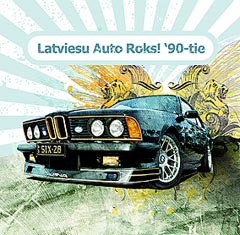
Get your motor running: Earlier this year, the MICREC recording company released the first Latviešu Auto Roks compilation of road music, covering the 1980s. Now the second in the series, Latviešu Auto Roks 90-tie, has dropped, the company announced Nov. 24.

The songs, the company announced, sound as if they were meant for a fast and energetic road trip—but that’s probably not a good idea given Latvia’s track record as having among Europe’s worst drivers.

The guitar rock band Līvi accounts for four of the tracks on the compact disc, while Tumsa and Linga each score two.

The 15 tracks on the album, with the performer noted in parentheses, include:

  1. Nāc dejot (Linga)
  2. Piedod man (Līvi)
  3. Kad Mēness jūrā krīt (Jauns Mēness)
  4. Zibens gaismā tavas acis laistās (Pērkons)
  5. Neprāts (Tumsa)
  6. Beng, beng (Alex)
  7. Atdodies man (Linga)
  8. Viva (Līvi)
  9. Nāc ar mani (Melnā Princese)
  10. Sex lai dzīvo (Opus Pro)
  11. Kādā brīnišķā dienā (Līvi)
  12. Dziļāk, dziļāk (Pienvedēja piedzīvojumi)
  13. The Rebel Riders (Rebel)
  14. Es karājos tavā bizē (Līvi)
  15. Bums (Tumsa)

The first compilation, titled Latviešu Auto Roks 80-tie, was released in May and included tracks from Līvi, Jumprava, Credo, Pērkons, Rūsa, Vaidava and Opus Pro, as well as two songs from Monro and Neptūns that previously had not been released.

Latviešu Auto Roks 90-tie

Latviešu Auto Roks 90-tie is the second in a series of Latvian road music compilations.

Where to buy

Purchase from BalticShop.

Note: Latvians Online receives a commission on purchases.

Andris Straumanis is a special correspondent for and a co-founder of Latvians Online. From 2000–2012 he was editor of the website.

Updated version of ‘Manai tautai’ recalls desire for Latvian unity

The unofficial anthem of the late 1980s National Awakening in Latvia was the moving “Manai tautai,” a song performed by Ieva Akuratere and penned by California-based Brigita Ritmane and her father, Andris Ritmanis. Now, two decades after the song rattled Soviet authorities in occupied Latvia, a group of young performers has recorded a new version.

The project to record a new version was led by Mārtiņš Otto, who assembled 11 performers for the song and video:  Intars Busulis, Artis Dvarionas, Goran Gora (real name Jānis Holšteins), Linda Leen (Linda Feldberga), Jānis Šipkēvics, Māra Holšteine Upmane, Martin Confused (Mārtiņš Dambis), Linda Ivanova, Evija Smagare, Andis Grīva and Ervīns Ramiņš.

The song calls on God to help reunite the Latvian people, who are scattered around the world. Akuratere first performed the song during the 1988 “Liepājas Dzintars” music festival. As Soviet authorities watched, the audience rose to its feet.

Akuratere, in an interview with Latvian State Television, noted that the call for unity remains relevant today.

The new version’s video, which begins with film of Akuratere performing the song, became available online on Nov. 18. Watch it on YouTube.

Linda Leen

Among performers of the new version of “Manai tautai” is singer Linda Leen.

Andris Straumanis is a special correspondent for and a co-founder of Latvians Online. From 2000–2012 he was editor of the website.